I haven’t been shy over the years in criticizing the LMS. Students have consistently told me to stick with my website instead. Downside: they can’t see their grade up-to-the-minute. Upside: it’s organized to make it simple and easy to use. Plus all the stuff I’ve mentioned before (openness, availability outside semesters, etc.) Still, my critique …

Confessions of a Computer-Mediated Communications Addict
Yes, I’ve been going through the closets lately. Here’s something I caught that might be of interest: a closing keynote address I presented at the 2002 Mary Washington College Faculty Academy on Instructional Technology.
It was an interesting in-between time. Our Assistant VP for Instructional Technology, David Ayersman, had left MWC in 2001. Our first CIO, Chip German, would arrive and begin his work in the fall of 2002. I had led the Instructional Technology Advisory Committee for several years but had not yet become an administrator. That step occurred in the summer of 2003, at Chip’s instigation, and would change all that followed in my career.
And I had not yet read Doug Engelbart’s Augmenting Human Intellect: A Conceptual Framework, or Vannevar Bush’s As We May Think, or any of those writings. I had never even heard of those people. I had no clue whatsoever about the “resonant frequency” of this stream of thought. No blogging, no podcasting, no Bluehost Experiment, no domain of my own, nothing. As you’ll see from the talk, it was all listservs (surprisingly sturdy and useful then) and what turned out to be ugly, slow, and ultimately disappointing Blackboard discussion forums. (I don’t think I’d discovered the Steve Hoffman Music Forums at that point, either–a new moment in my experience of discussion forums that would eventually turn me away from Blackboard and its ilk for good.)
So this paper tumbles out of my closet, and I caught it. In this talk I see that nearly a decade of working with computer-mediated communication had brought me into the thought world of dreamers who’d imagined and helped to build my future–ironically, unmet dreamers whom I had yet to discover. I see that my discovery of those dreamers ended up radicalizing me, in a way, as what I would read just two years later awakened me to the scope of those dreams and their liberatory potential for teaching and learning. Those dreams, and those dreamers, seemed to me a secret history of shared yearning, flawed and stained as all human endeavors are, but one that asked the central questions about the most salient concerns. It was an intellectual rebirth for me, but also the beginning of a trial-by-fire in some respects.
I see how ready I was for my next teachers to appear. I see a discontinuous moment ahead that I could not have anticipated. (I see that I am already using the word “bootstrapping.”)
I am trying to draw some lessons from this moment that comes into a new focus, fourteen years later.
I also like the muddle-mull-meal idea, which I’ve never used since in any talk I’ve given or any paper I’ve written. Maybe you’ll like it too.
Confessions of a Computer Mediated Communications Addict_final-2
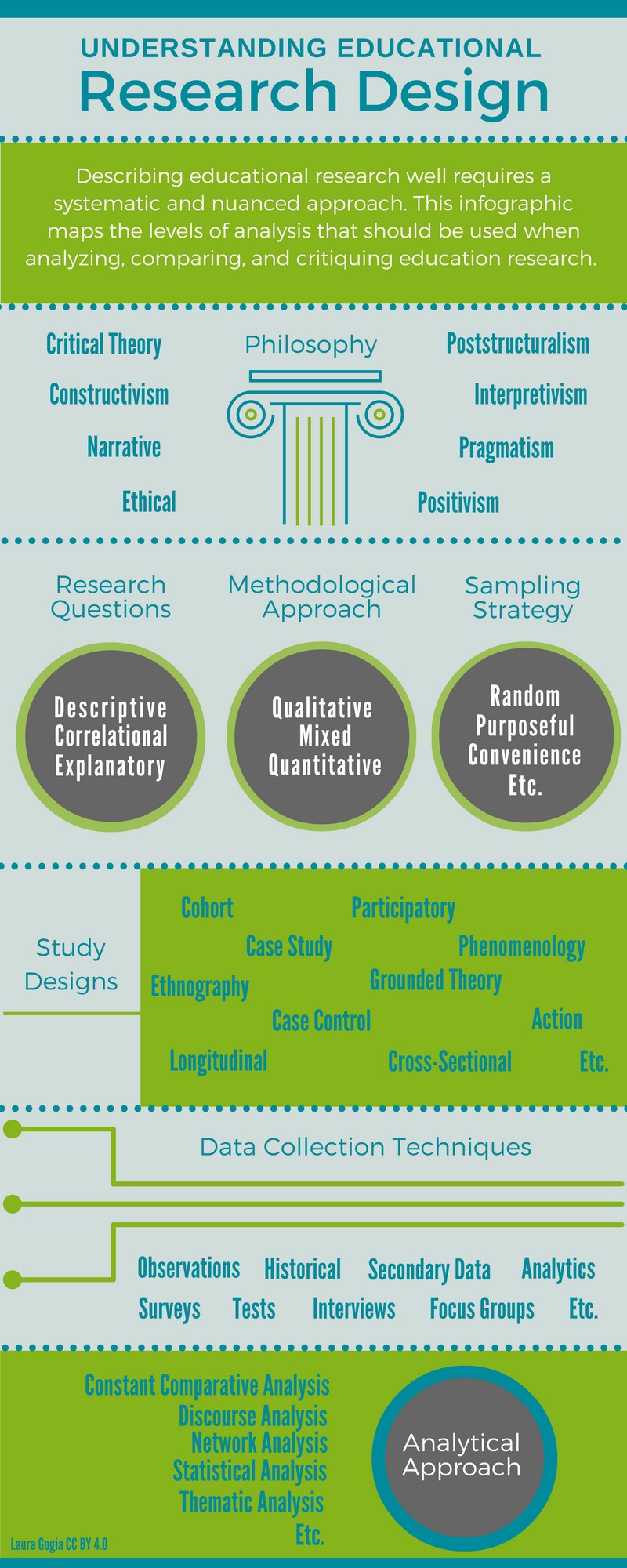
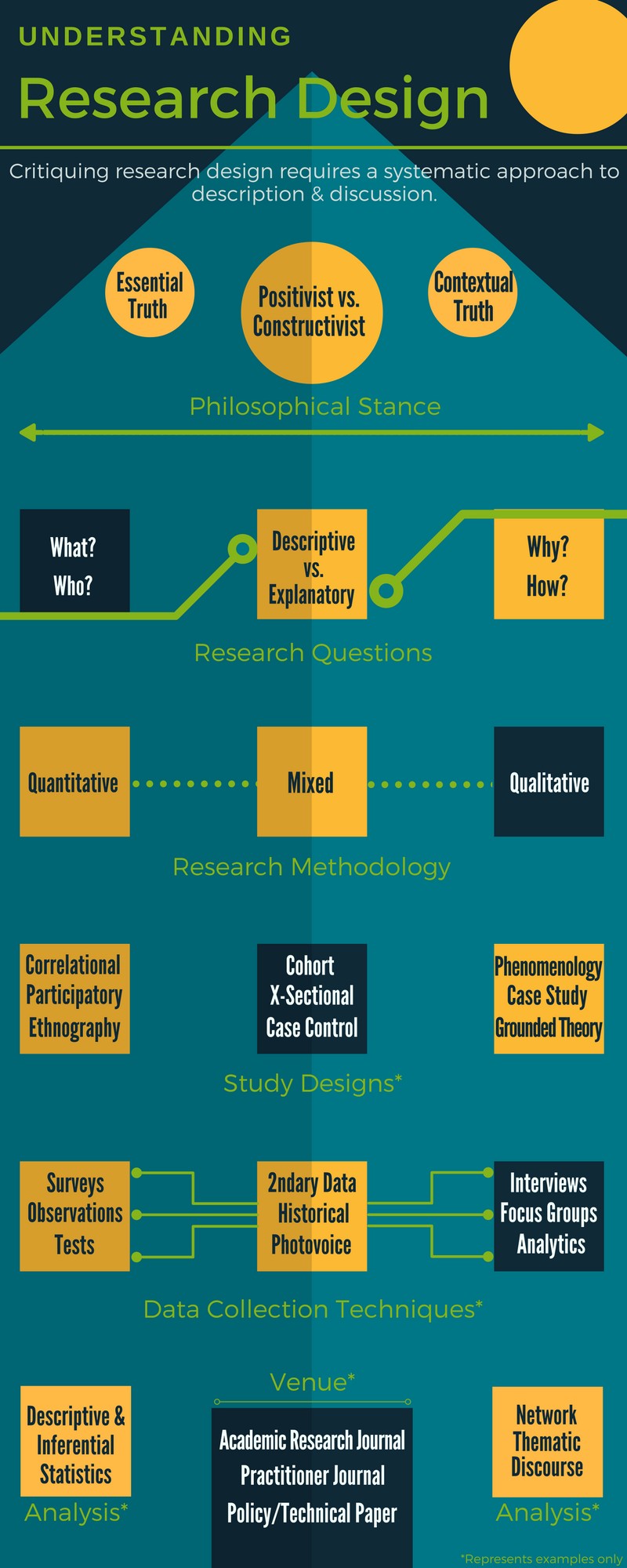
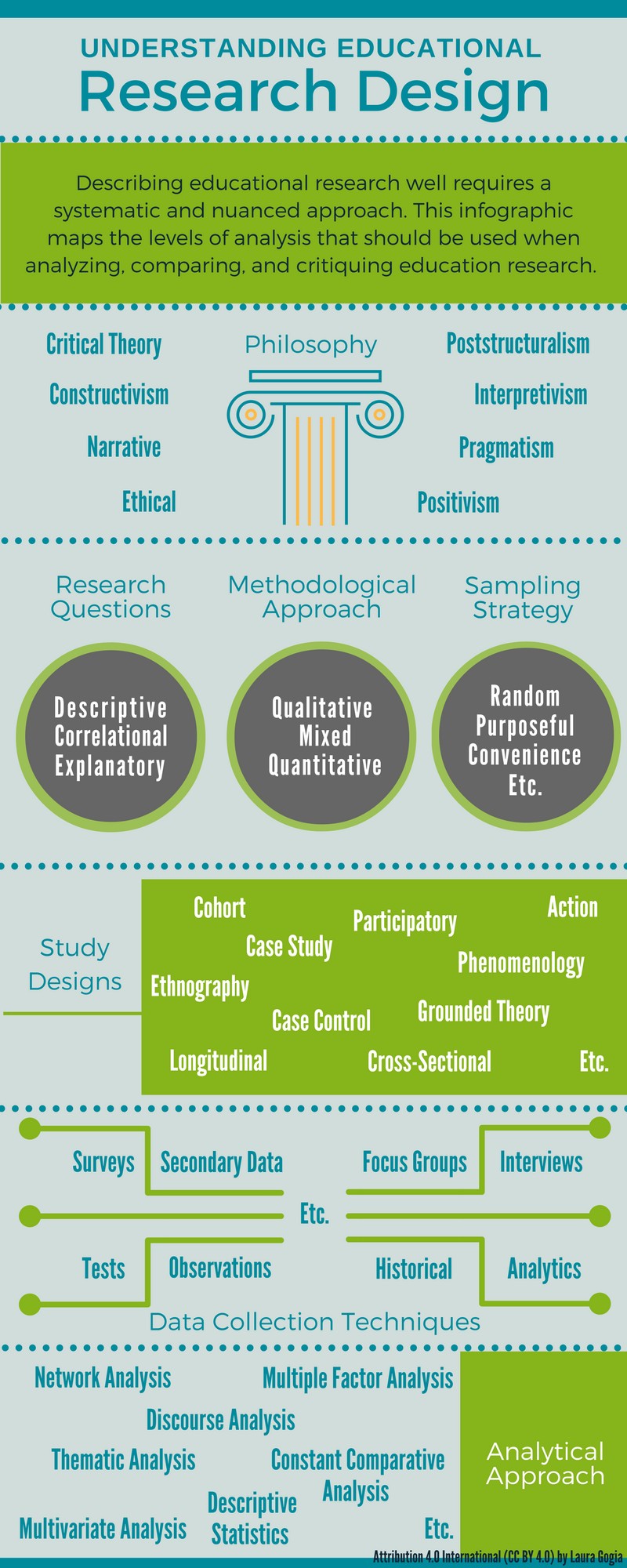
Understanding Educational Research Design: The Infographic
I.
This infographic represents a love letter, from me to the educational research community at large. Over the last year, I have engaged in two large, systematic literature reviews, designed an educational research instrument, co-written an educational research grant, and completed and defended my dissertation research in educational research and evaluation. These projects have not been limited to one field; rather, they have spanned subdisciplines (e.g. library, social media, student engagement), sectors (e.g. K-12, adult, higher education), stances (e.g. policy, psychology, teaching and learning) and funding structures (e.g. academic, professional, and independent).
I have been brought onto several of these projects as a methodologist. My role was to describe and critique the approaches and methods used by researchers within these different educational research communities. In this capacity, I have reviewed approximately 800 educational research articles this summer alone. What I have found is systematically alarming, but it is a story that will unfold through a series of published articles, conference presentations, and blog posts over the next year. This blog post and downloadable infographic marks a starting point for the story.
II.
In engaging with colleagues, authors, students, and casual readers of educational research literature, I have discovered that many people have a narrow perspective on how to talk about published research. Oftentimes, their discussion stops and starts with the terms “Qualitative,” “Quantitative,” or “Mixed Methods.” Alternatively, it will start with data collection techniques: “This is a survey” or “The authors did a bunch of interviews” are common ways to describe work.
The problem with this approach is that it ignores the fundamental truth that an author’s philosophical stance (critical, constructivist, postpositivist, etc) will impact every other aspect of their work. As my friend Maha Bali has argued, positivists and constructivists can both produce qualitative research, but it will have very different flavors to it. To call something “qualitative” is not enough to describe exactly what it is.
Furthermore, the pathway from constructivist to qualitative to data collection (think interviews) and analytic methods (think thematic coding) is not automatic and cannot be assumed. Some interviews are almost as prescriptive as questionnaires while others are free-flowing. Observations can yield qualitative or quantitative data. Thematic analysis can be inductive or deductive, emerging or compliant with a pre-existing framework.
All of this is to say that we must think and talk bigger than data collection and analytic methods when we describe research. If we fail to identify the underlying philosophies and assumptions of the work, we fail to understand the shortcomings, biases, and strengths inherent to it. We fail to ask the right questions and grasp the bigger picture.
III.
Every research design textbook I have ever read includes a single sentence: “Research questions drive the design, not the other way around.” This is true of good research. Therefore, when trying to describe the quality of a corpus of research literature, it behooves us to look to the nature of the questions being asked. Are they focused on describing the nature of what is? How things relate? What causes what?
Paying attention to these things is essential for critiquing the structure of the individual study, but there’s more – Identifying trends in research questions can tell you a lot about the field itself. For example, young or rapidly changing fields need to establish what is before they can move to why things happen. Funders need to learn to value strong descriptive research in these areas. However, a continued reliance on descriptive designs in the presence of previously established understanding suggests something may be broken in terms of the scholarship being performed, maybe a systematic lack of funding or support, vision or strategy, researcher understanding or training. Further investigation is warranted.
The point: Research questions matter. Pay attention.
IV.
Obviously, research methodology matters as well. Qualitative, quantitative, and mixed methodologies have definitions and criteria and support specific research frameworks or study designs. There are textbooks. There are articles. There are classes. There are teachers. There are methodologists who can help others do these things well when they don’t have an interest in learning it themselves.
I bring this up because of a tweeted conversation I had with my former dissertation advisor, Jon Becker, earlier today. He let me know – probably just to irk me, because this will always work – that he was peer reviewing an article that had self-identified as “mixed methods” because it had included one open-ended question on the end of a quantitative survey.
I doubt that Creswell and Plano Clark would approve any more than I did.
I trust Jon to be an impenetrable wall against this sort of behavior, but unfortunately Jon does not peer review every educational research article. Let me say this loudly:
The widespread sloppy or ignorant handling of the “mixed methods” or “qualitative” labels within the educational research literature is shocking. When critiquing articles or a body of literature as a whole, it is essential for all of us to question how authors are using these labels. Are they accurate? And if they aren’t accurate, what can we surmise about why or how they are being used?
- Can you really perform an “in-depth qualitative case study” based on the findings of one quantitative survey (true story; no)
- Can you report out a proper phenomenology or ethnography without a single quote or rich description of participant context (true story; no and no)
- Should you be able to read over 100 self-identified qualitative studies without a single reference to memberchecking or auditing? (true story; no)
- Can you claim mixed methods with just one open-ended question on the end of a survey (true story; no)
- Should you publish a paper on the basis of a single focus group conversation (30 minutes) with an n of three? (true story; no)
- Why did these examples get through peer- and editorial review? And what are we going to do about it?
V.
Therefore, I offer up this infographic as a place to start a conversation: a conversation with students, researchers, publishers, peer-reviewers, and ourselves. It is not comprehensive. It is not an expert piece (although it has gone through a form of peer-review on Twitter, led by the marvelous Maha Bali herself). However, this infographic serves as a reminder of the following facts:
The misuse of methods is rampant and labels are not to be blindly trusted.
Research questions tell a story oftentimes bigger than the article itself.
Data collection and analytic tools can be used in different ways by different research traditions to produce very different outcomes.
Philosophy shapes everything.


Been Wanting to Do This for a While
Edit 11/21/16 *for those of you just reading this on 11/21/16 or later, I’ve been working on another draft via Twitter with much help from everyone but especially Maha Bali. I’ll be putting out another, bigger better blog post. When I do, I’ll link it <here.>
Edit 11/22/16 But until the bigger better blog post comes out, I’ve added version 2.0 below version 1.0.
–LG
Since moving on from my postdoctoral fellowship I’ve been doing some educational research and development consulting. I’ve noticed a trend in some of the work I’ve been offered. People tend to bring me on to projects (paid and unpaid) for one of two reasons. First, I am usually a good bet to be a wildcard – if you want a different perspective or someone to blow audience/stakeholder expectations out of the water, I can do that sometimes.
Second, I have experience in synthesizing large amounts of information, leading me to a lot of work reading, organizing, analyzing, and critiquing entire fields and bodies of educational research. A lot of my work will be coming out in conference presentations, blog posts, and publications soon. However, through this process I’ve discovered that a lot of people have difficulties understanding how to describe research in terms of its underlying assumptions, design, and methods. This is a problem, because educational research is so decentralized and generally messed up that a systematic approach is essential to making sense of any of it. Making sense of something and being able to communicate what you’ve found is essential to critique and reform…which, in my opinion, the educational research desperately needs.
Therefore, I made an infographic to describe how I think about organizing research literature. It’s an infographic and not a power point slide or a set of bullet points because I’m trying to develop my infographic skills. Would love to hear your thoughts.


Free(ish) Images, Not Open. For 300,000 Bones

It does make a decent news story to announce the offering of a free, as in no cost to taxpayers, database of local photos for a city.
New Online Archive of Freely-Available Albuquerque, NM Images – https://t.co/3mCAQktV8y
— Tara Calishain (@ResearchBuzz) November 19, 2016
“Freely Available” is… well ok.
As told in the story from Albuquerque TV station KOB4:
Stunning images of Albuquerque and surrounding areas aren’t hard to come by, but finding them online free of charge is.
Really? I just found more than 100,000 Creative Commons licensed flickr images of Albuquerque, many stunning. Or I can use Mediachain to locate more than 1000 fantastic open-licensed photos from flickr, 500px, pexels, and dpla.
Wow, that was hard to come by. Snicker.
The “new internet database” has 400 high quality photos, produced by a local studio, at a cost of $300,000 paid by the city and private investors.
That’s $750 per image.
They do have some interesting videos and timelapse, so my math is unevenly distributed.
But of course, there is this possibility “the site has the potential to be a viral marketing tool”.
Let’s go look at some free photos.
Oh.

Okay, it is “free” to register. No big deal.
Is it necessary?
Registering allows us to better track metrics on downloads. We believe this is especially important since this project is partially funded with public dollars. We will never sell, give away, or otherwise distribute your information.
As far as I can tell there are no open licenses attached to the collection. You can find on the registration page the long set of license agreements, with boilerplate lawyer fee language (for fun if you view source on the license you can see it was written in MS Word) that is much more clear if a Creative Commons license was used instead; it’s more or less the same result:
Your exercise of the Licensed Rights is
expressly made subject to the following conditions.
- Attribution.
- If You Share the Licensed Material (including in modified form),
You must:
- retain the following if it is supplied by the LICENSOR with the
Licensed Material:
- identification of MarbleStreetStudio.com as the creator(s) of the
Licensed Material;- a copyright notice;
- a notice that refers to this License by the City of Albuquerque;
- a notice that refers to the disclaimer of warranties;
- a URI or hyperlink to the Licensed Material to the extent
reasonably practicable;indicate if You modified the Licensed Material and retain an
indication of any previous modifications; andindicate the Licensed Material is licensed under this License, and
include the text of, or the URI or hyperlink to, this License.You may satisfy the conditions in Section III(a)(1) in
any reasonable manner based on the medium, means, and context in which
You Share the Licensed Material. For example, it may be reasonable to
satisfy the conditions by providing a URI or hyperlink to a resource that
includes the required information.If requested by the LICENSOR, You must remove any of the
information required by Section III(a)(1)(A) to
the extent reasonably practicable.Share Alike. In addition to the conditions in
Section III(a), if You Share Adapted Material You
produce, the following conditions also apply.
- You must include the text of, or the URI or hyperlink to, the
Adapter’s License You apply. You may satisfy this condition in any
reasonable manner based on the medium, means, and context in which You
Share Adapted Material.- You may not offer or impose any additional or different terms or
conditions on, or apply any Effective Technological Measures to, Adapted
Material that restrict exercise of the rights granted under the Adapter’s
License You apply.
As far as I can tell there is no API so the collection can be integrated into other apps or other parts of the information ecosystem. The database is a small, unconnected island. It’s a pretty island. It bears no indication (from viewing source) that it is anything but a custom designed database.
The photos are really really good, do not get me wrong:

But the only metadata visible is an image file name and a list of tags. You get way more data in flickr- this is just a bit of what flickr provides for the image I used at the top of this post:

Why would the city of Albuquerque not participate in a commons, say by adding their images to the Flickr Commons? Or working with their libraries, make the collection part of the Digital Public Library of America?
I am not critical of the project. I am definitely not critical of the media produced. And if I was able to get a big money grant to produce media, I would love the opportunity.
I am critical of harping over this idea of free being virtuous in terms of cost of access. By not participating in a larger ecosystem of media, by not using standard infrastructures for data management, by not deploying open licenses in use by billions of pieces of other media, it’s a huge opportunity loss.
But hey, potentially it might go viral.

Top / Featured Image: Found this photo by searching mediachain for Albuquerque (after misspelling it a few times)- the source of the image is in flickr, so I used my own preferred attribution tool to give credit got flickr photo by jghil https://flickr.com/photos/jghil/4239029954 shared under a Creative Commons (BY-NC-ND) license.
Admittedly, not running my attribution through Mediachain means I am not adding to the chain, so here is their attribution code, just for the blocks.

The post “Free(ish) Images, Not Open. For 300,000 Bones” was originally squeezed out of the bottom of an old rusted tube of toothpaste at CogDogBlog (http://cogdogblog.com/2016/11/free-not-open/) on November 19, 2016.
Work This Week – Week 1
Since I’ve been falling off on my weekly photo posts, I figure I’ll start a weekly work series. While that doesn’t seem to make sense . . . it does. I am really bad about keeping track of the good things, the progress, the little bits that add up. I am very good at looking at large, looming disasters. I’m hoping that documenting progress will help convince me that I am making progress, that I am doing small things to help people do a bit more.

VCU Qatar – Online Art History/Museology Courses
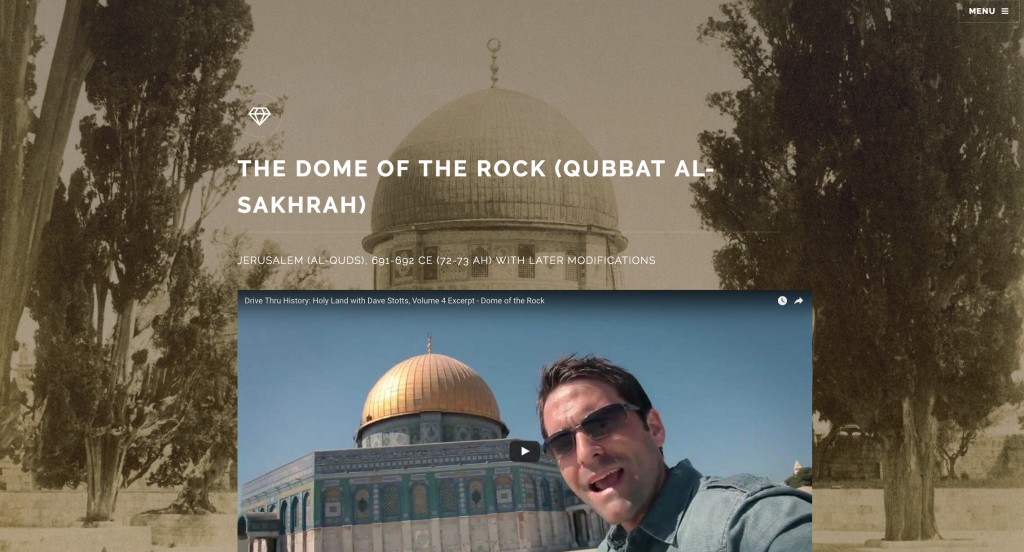
This is part of three online courses being created to help teach art history and two other arts/museology related courses for VCU Qatar. My role in this is more of a consultant (web design is being done externally by CHIPS NYC1) but I’ve built a few things to help get us past (or into) some sticking points.
I used one of the HTML5up templates to make this super quick example. I’m not thrilled to have a white guy doing the video but it was the highest production value I found after a quick search (that might be shaped by having to use English). The text is from one of the professors although I chopped it up a bit. There’s the ugly start to a Timeline JS project in there.2
Instagram Shortcode

After getting frustrated with the requirements for the Instagram API stuff, I made a plugin that uses the PHP scraper so I can grab a certain number of images by user or tag without having to authenticate. It’s an evolution of the page template version I made a while back. It’s one of those moves from a one-off item to something that’s more flexible in a variety of scenarios. I need to figure a better way to show that kind of progression of time/energy/tools.
Random Post
Dan wanted a random post from his Sports Law Spotting site. Facet WP made it easy for me to do that without doing any custom work. Just make a new template. In this case, it’s getting posts that are in the question category and the “orderby” => “rand” gets us the random post. Now we can stick it wherever via shortcode. Nothing fancy but far handier than creating a whole child theme . . .
<?php
return array(
  "post_type" => "post",
  "post_status" => "publish",
  "orderby" => "rand",
  "order" => "DESC",
  "posts_per_page" => 1,
  "tax_query" => array(
    array(
      "taxonomy" => "category",
      "field" => "slug",
      "terms" => "question"
    )
  )
);
H5P – Empty Library
Michael mentioned that after creating content using the H5P plugin his library remained empty. I hadn’t noticed that but it proved to be the case for me as well on another site in our install. On my local development install things worked correctly. I’m still trying to figure out why it’s not finding content (I suspect either our divided database or maybe NGINX) but in the meantime, I went to create a new H5P element and took note of the URL. Even with an empty library we can navigate through the content using the URLs. https://site.edu/site/wp-admin/admin.php?page=h5p_new&id=3 gets us to the edit page for our 3rd item. Not a solution but a temporary way to limp along and proof the items are saving, they just don’t show up on the library page for some reason.
Flux Tower & Other Rice Center Data
I had a meeting with the VCU Rice Center group and will be working with them around constructing some explorable explanation options for the data they’re capturing around all sorts of environmental variables. Some of this is driven by the installation of a Flux Tower but there’s also just a ton of data they gather that will be fun to figure out. There is much, much data. I’m looking at options like Crossfilter to deal with both scale and getting some of the interaction done without tons of custom work.
Digital Humanities History Syllabus
I’m co-teaching a digital humanities history course next semester with Dr. Ryan Smith. We’re working on the syllabus now. It’s going to be an interesting experience as it’s a new course for VCU. I was a history major as an undergrad but it’s been a good while for me. Just thinking about some general skill/disposition/tool relationships has been a bit intimidating. There is a lot to consider. I threw some hypothes.is notes on one of the readings Ryan suggested as a bit of practicing what I preach and trying to get a better handle on how digital humanities thinks about itself. It’s kind of weird in that I think about this stuff all the time but not really through the same lenses/words. At times “digital humanities” feels a bit confining.
Montessori
I’m reading Maria Montessori’s works from Project Gutenburg. I may re-read some Papert and, if I can take the depression, Illich.
Sports, Social Media, and Freedom of Speech
I did a guest spot in Dan’s Sports Law class to talk about issues involving student-athletes and social media restrictions. Once upon a time I played football in college and then went on to be an academic coordinator for student-athletes for a few years. That gives me a bit of credibility beyond the social media stuff. I did a little research getting ready and was really impressed by this article (and a bit dismayed by the comment). The presentation is embedded below. Click on it once and then you can navigate with your sideways arrow keys.
Sites in Progress
I’m working on Footsteps on the James and revising the Text Set site I did about 3 years ago. It’s always crazy to look back at how bad I was at things. I did all sorts of crazy stuff to make this particular site work and I won’t be able to easily undo them.
The one semi-interesting thing that I did to improve things was to deal with associating books with particular units. Originally, I’d sort of made this work by filling in a Gravity Form field via a URL parameter. So when you make a Unit that has many books associated with it, you’d end up with a URL that would fill in the right tag for the book. That works fine until you navigate away and come back to the naked URL (no ?tag=item777).
With a bit of javascript I am now able to set that field no matter what.
Luckily, I have the tag written in the body of the post (although this could be better and it could be in a specific div with an id).
So with some jQuery . . . I can get the item and then set the field.
jQuery(document).ready(function($) {
	if (jQuery(".items").find("strong").html()){

	var unique = jQuery(".items").find("strong").html(); //get item
	document.getElementById('input_1_18').value=unique; //set field

	}

});
Odds & Ends
I presented a one hour workshop on Rampages/WordPress. Not sure how effective that is with low attendance (~6 people). At some point it seems you’re so small there’s no size benefit and you just lose out on individualizing the conversation. I think targeting by discipline or something might make more sense. It also feels like any sessions ought to getting increasingly specific – move from a survey to more particular items with increasing specificity/sophistication.
Also sat through any number of meetings. Some beneficial. I continue to assure people that ALT Lab (my department) still exists and will continue to exist.
1 Who do seem pretty awesome. Their work is really nice and I love thinking about this move from a FileMaker Pro/AppleScript solution into WordPress.
2 I’ve had issues with that site loading very slowly in Chrome Canary so I’ve been linking to the version I keep on GitHub to increase speed.
The Pretty Good, Not So Bad, and Conference Conundrum of #OpenEd16
In which this tired blogger fails to summarize a conference experience, and gives up before even trying…
With clocks flipping in some corners of the world, last night I’m just home from a week in Virginia for the 2016 Open Education Conference. That’s it’s 13th iteration, maybe my fourth.
Here is the usual conference after feeling, sniping slightly at the challenge of the conference format, of schedules a bit jammed with sessions, wondering “is there a better way to do this?” It seems hard to figure out how at a three day event, I could manage to miss people I knew were there.
Were it not for text messages, I would have missed seeing my friend/colleague Alisa Cooper from Maricopa, and over lunch I got to meet one of her faculty colleagues from Glendale Community College. But in three days of conferencing, I managed to miss meeting for first time Mark Morvant
@MarkMorvant Thanks for sharing post from @greeneterry (hi Terry). Trying to figure out how our #opened16 paths never crossed.
— Alan Levine (@cogdog) November 7, 2016
And the presentation of information that might be done other ways… useful? Do we have enough space for conversation? In one session, the ever gracious Gail Morong brought this up in a session David Wiley was present, even offering to give up her presentation slot. Is the idea of this balance at conferences elusive?
At the same time, the feeling of presence in person, the genuine interactions, the stuff that happens in the interstices or larger gaps of the schedule, the late night conversations, all seem incredibly enriching. I enjoyed many rich hall conversations, during scheduled sessions, with folks like Ken Bauer, Laura Gogia, Jim Luke, Lee Skallerup-Bessette, seemingly always in the rocking chairs. And a very memorable one on Friday with Kate Bowles.
Thus the highs of the conference experience (the time with people) tend to average out, or more the negatives of the usual format.
Less a summary, no, not one at all I drain the brain of semi random, semi chronological memories.
I should include the trip to University of Mary Washington, the day before Open Ed, at the generous invitation from Jess Strommel to be on a Town Hall panel on “Ethical Online Learning” (there is an archive somewhere out there) along with Sean Michael-Morris, Kate Bowles, and Liz Losh.
I’ve not been back to UMW since 2013, and it was my first visit to the gorgeous Convergence Center that was just braking ground when I left UMW in 2012. Beyond meeting the current team at DTLT, I was eager to visit Martha Burtis, and I got to sit on her Digital Identity class. There is always so much good energy from UMW students, I miss that.
The big prize was getting some morning walk time with Kate- this was the first time we met in person. I had only learned the week before that she was coming to UMW and Open Ed, I made that assumptive mistake of guessing she would video in from Australia.
One of Kate’s posts made a reference to UMW and Fredericksburg, all a way to get around to the decision to take a walk along Sunken Road, the site of the Battle of Fredericksburg during the Civil War.

leading to conversation in the National Cemetery and her daughter’s mission to purchase civil war bullets for her Dad.
See what happens? I start out to write a short post about the Open Education Conference, and I wander elsewhere.
Break. Let’s get to Richmond, where the conference took place.

It was also a bit of a UDG Agora reunion with Ken Bauer (with whom I shared an Airbnb) and Tannis Morgan (with whom we share a love of a taco tshirt).

I will surrender before starting to do justice to summarizing Gardner Campbell’s opening keynote, featuring a piece of opening video art including clips of Bob Dylan, as a Nobel badged literacy genius, dealing with the relentless questions of the press. A misunderstood artist, to whom the media sought insight. I will say again, that Gardner is maybe the only speaker I actually enjoy being read to. If you want more, see David Kernohan’s notes (how the heck does David do that?).
While the keynotes were not streamed / recorded / archived, that does not stop someone like Robin DeRosa for grabbing a periscoped one. That’s how this stuff works — people, not systems.
I also learned at this confirmation there is a transformation of many ed-tech practitioners to a similar “look” (not sure how this will work for female colleagues):

Watch your hair, you might be next.
And there was music in the air Thursday night… or in the lobby of the Hilton Hotel (I bet they are wondering about their decision to let a bunch of ed tech bring in amps and guitars and drums..)
Annual #OpenEd16 jam at Richmond Hilton featuring @rasebastian @tjbliss. Thank you, @opencontent, for the fun night (and conference). pic.twitter.com/bb5tx511e4
— Joanne C. Anderson (@joannecanderson) November 4, 2016
#OpenEd16 jam with @philosopher1978, @dkernohan pic.twitter.com/Zhe3LEin1B
— Dr. Preston Davis (@LazyPhilosopher) November 4, 2016
Wish she'd played all night long! @VivienRolfe brings it home at the #OpenEd16 jam. pic.twitter.com/e7jYs1ymvR
— Robin DeRosa (@actualham) November 4, 2016
It is worth noting that the “annual” musical jam that Jim refers to really goes back to the brilliance of Scott Leslie’s conference planning in 2012, when the jam took place on a boat floating around Vancouver.
Jim Luke captured well the “aliveness” of this night, the idea that it’s about people sharing an experience together.
I think the same is true with students and learning. Alive matters. Alive gets us the real learning, not the “picture of the learning”. But for learning to be alive, somebody has to be actively creating something. We have to be part of a live experience. To me, the core of open learning is being in that space where things and ideas are created. The best space for that is for both instructors and students to create, share, and publish their own work. Simply reading or viewing the flawless, peer-reviewed, polished, perfected work of some publisher is like listening to an album in public. It becomes background noise. If directed, we can attend a small part of it, maybe. But mostly, we it has no affect on us. On the other hand, reading, viewing, and listening to each others’ creations in the same time and space as they’re being created engages us. It even inspires us to create ourselves. The flaws don’t matter. The creating does.
The music “jamming” works as a metaphor, but it’s not just the people with instruments. Many there joined that aliveness not by being just passive listeners, it was just being present together that I bet will cement the memories, even those in the bar playing Jenga and others just sitting in the lobby, tapping toes or dancing.
And do not believe Daniel Lynds when he says he “only knows three chords.” I spotted at least four. And the dude has an intense guitar face with a musical presence that says, “I am more than creating sound.”
Here is @daniellynds at #OpenEd16. Feel free to use if this works for your needs 😉 @econproph pic.twitter.com/KxEaNGFYRs
— Jennifer Maddrell (@JenM) November 4, 2016
And seeing super talented friends like David Kernohan and Vivien Rolfe play/sing can bring up the familiar “imposter syndrome” if you spend time with those two, they do so much to encourage everyone.
And then… Open Ed Hero costumes.

Blame me. This was a response to one of our Creative Commons Certification twitter activities that ended up seeing Robin DeRosa’s photos of her in a CC cape. I dared her to bring her costume, and dredged out my left overs from Western DS106 — if you do not recognize mine… well I do not blame you. But think of me as The Man With No Attribution, who brings justice to the wild frontier in the Spaghetti Ed Tech classic “The Open Licensed, Fair Used, and the Copyrighted.”
Thanks Robin, for being game to be goofy with me, and as well to Rajiv Jhangiani for his anti open washing outfit
Grateful for @creativecommons “Super Heroes” @actualham + @thatpsychprof #OpenEd16 #OER pic.twitter.com/AQZDsn1sk0
— Cable Green (@cgreen) November 4, 2016
And Vivien Rolfe, for embodying MOOC data

I was on site buddy for two Virtually Connecting sessions (we set an ambitious record for the number of sessions) on Friday, the first with David Kernohan and Vivien Rolfe
And one right after with Karen Cangialosi, Samantha Veneruso, and the always frenetic Chuck Pearson (note to self, do not conflate with some NBA player, his twitter handle is @Shorterpearson).
I think I met Karen at talk I did at Keene State College (she plays a great blues harmonica by the way) and enjoyed meeting Samantha. I the session we found a common Maryland connection- Karen went to a high school near where I did in suburban Baltimore, and Samantha teaches in Montgomery County.
Oh I also co-presented on the Creative Commons Certification project with Paul Stacey

That will be a more full blog post maybe tomorrow.
And if I ever moan and groan about keynote presentations, remind me of the one by Sara Goldrick-Rab…

Many described their reaction as “with tears”, mine was more of a reality gut punch as Sara, sharing the stories and research from her book Paying the Price, peeled back the harsh reality of the price students pay trying to play the education game. See the presentation Paying the Price: College Costs, Financial Aid and the Betrayal of the American Dream or again, check David Kernohan’s detailed notes .
My take away– OERs, open education, open textbooks are virtuous, worthy efforts, but are almost a veneer of the reality of higher education for students like Chloe and Nina, and many more, who are sold a dream of education and left short by the false hopes of financial aid.
This one is sitting heavy still. Get the book, everyone needs to read this book
Required reading for everyone in, around, not in, not around higher ed. Thanks @saragoldrickrab #OpenEd16 pic.twitter.com/KRC8Tvfpkp
— Alan Levine (@cogdog) November 4, 2016
Sigh. I said I would try not to get detailed, and I did. And I left so much out. So much.
I’ve said this a few times, but I go back to my first ed tech conferences I went to in 1990s. I was green as a leaf. At these events, I had little way of knowing people ahead of time. I had no mobile phone to stare at (my Motorola flip phone made calls and let me play Snake). I did not even carry a laptop. Meeting people meant awkward name tag glancing. The social aspects were both intimidating and, well, so much less than now.
For all of its problems, the abuse, the likely failing as a business, twitter provides such a catalyst for the conference experience. We come knowing much more about each other, professionally and often personally, and amplifying it more by the shared in-person experience, and back out again to the digital, and back again. As a social layer, as an information layer, as a human layer, twitter + conference is a fine combination.
All in all… the conference experience still leaves me wanting… more. Yeah, it’s the people.
One day after #opened16 pic.twitter.com/rGVUa1nnHy
— Alan Levine (@cogdog) November 5, 2016
The post “The Pretty Good, Not So Bad, and Conference Conundrum of #OpenEd16” was originally pushed out of the bottom of a purple jar of Play-Doh at CogDogBlog (http://cogdogblog.com/2016/11/conference-conundrum/) on November 7, 2016.
Weekly Web Harvest for 2016-10-30
- Wiki Education Foundation – Wiki Education Foundation
- » BC Open Educational Technology Collaborative
- Of Course Westworld’s Costumes Are 3D-Printed, Too – Racked
With the exception of some places in Italy or maybe England, you honestly can’t find beautiful, intricate fabrics anymore. It’s really sad! So we had to hire 3D printers in Los Angeles to reprint all our vintage fabrics so we could have more — and then beg them to work around our crazy TV schedules.
Stories as a Way of Being
This morning at #OpenEd16, I presented as part of a panel on “Floating on a Sea of Data: Why Higher Ed Needs #SoNAR. I was a last minute addition, joining Kate Bowles, Kristen Eshleman, Bonnie Stewart, Dave Cormier, and Amy Collier when another panelist became unavailable. The position was offered to me as an opportunity related to my recent collaboration with Kristen on using Sensemaker. “Yes” was the obvious answer, even I had never heard of #SoNAR and my formal experience in narrative inquiry was fairly scant.
I sat quietly in the first planning session listening to the others. As they spoke, I looked for holes in their expertise (there were none) and ways in which I was different from them (there were plenty), as a means to understand how I might best contribute.
At first, I couldn’t find an answer, but around the same time a friend of mine sent me a collection of vignettes and journal entries that he had written in the aftermath of an life-altering event. More than any philosophical conversation, his work reminded me of the power of stories as a way of being in the world: a way of remembering, understanding, and healing.
In reading his stories, I remembered that I had written my own in the year after I left medical practice, a collection of ten essays that I felt captured the essence of my medical education and practice experience. And as I considered his stories and how they related to mine, I realized what I could contribute to the conversation at #OpenEd16: a story of my own, one that might be as powerful for the audience as my friend’s had been for me.
Today I shared the tenth story of my collection in a Peroscoped conference session and in front of a packed audience. The aim was to set the stage for Kate, Kristen, Bonnie, Dave, and Amy to discuss the need to harness narrative inquiry for systemic change. However, this was also an opportunity for me to be more open and honest about who I am. It was an opportunity to be brave.
Only one other person had ever read these stories before today. Sharing this part of my life with other people in ways that are complicated, half-written, and raw has never been a priority for me, in part because I have been afraid that people would not understand. Even the “good” stories seemed too risky to share. Maybe I wouldn’t be believed. Maybe I would be accused of being arrogant if I showed myself in too good a light. Maybe people would find bad things in my story where I had originally thought there was good.
Today, I made a decision to trust the OpenEd community. When you asked if you could Periscope the session, I said yes because I trusted you to take care of me if things went wrong. You have supported me through my dissertation, professional trials, and bouts of self-doubt and despair. You are my professional family, and this conference is my home. If I were going to share these things anywhere, it would be at OpenEd, with you.
The sharing was not easy. If you watch the video, you’ll hear that I almost stopped before I started. You’ll hear how slow I was because it was hard to get the words out. You’ll hear me speed up as you laughed and responded in ways that made things easier. You’ll hear me finish, grieving all over again at the end of the story, but satisfied that I had said everything that needed to be said.
I am so grateful to all of you.
—
Transcript
Stories are a way of being in the world, with other people. I am here to offer an example. As many of you know, I used to be a gynecologist practicing alone in a small remote hospital in Virginia. For a lot of reasons, I burned out and left medical practice. But in the year after that happened, I wrote down ten stories that I felt captured the essence of my experience as a medical student, resident, and physician. I wrote down these stories so that I could remember, try to understand what had happened, and to begin to heal.
This is Chapter 10 pretty much as I wrote it five years ago.
My last four months were some of the busiest of my career, but I had looked up from the work just long enough to notice that it was springtime in the countryside. I was counting down the days by this point. On the tenth day before my last, I was enjoying my pre-dawn commute through the country when I saw Andy’s (pseudonym) text come across my phone: “Laura. Please tell me you are already here.”
Andy was a former chiropractor, now rural ER doc, and my only friend in the Emergency Department. I immediately picked up speed and called him back. A woman in labor with her second child was lying in the trauma bay. I only had to observe one set of contractions to know she was moving from latent to active labor right before my eyes.
Active labor is notoriously unpredictable in second babies. It could take thirty minutes, two hours, or stall out altogether. My little rural hospital did not technically offer obstetrical care so it had minimal obstetrical equipment available for me to use. In this particular case, the lack of equipment it put me in a very tight spot. I was a trained and board certified obstetrician as well as a gynecologist and could be held accountable regardless of access to equipment; I had to make the decision on whether to transport her to another hospital and risk her delivering en route or keep her at this hospital, which was unprepared for a laboring woman who wasn’t in act of giving birth.
I will be honest: I cannot remember what this woman looked like or what her name was, but I remember every part of her story. Her midwife, whom she loved, was over an hour away in the city. The diversion to my hospital had been about policy, not about her choice. And I could feel this: This woman felt very much alone.
I knew the roads between my town and the city well. I knew the woods, the deep isolation, the very spotty cell service. I knew there would be no help for us if we got in trouble along the way. But as I felt the rhythm of her labor, my instincts told me that we could make it if we left immediately with the right sort of drivers. The woman and I considered the options briefly. We made the decision together, as best as we knew how.
I walked out of the trauma bay to eyeball the drivers, because I was only going to try this if I thought they would drive with a special sort of passion. One was a tall skinny kid with two large earrings. The other was only slightly older, with a serious neck tattoo. In other words, they looked perfect to me. I literally held my hands over my heart as I asked them to drive me and the woman as fast as they could.
There was something hypnotic about that ride. Without access to drugs or monitors there was nothing doctor-like for me to do. I had nothing to offer but myself and the confidence of another woman who had given birth before. The woman and I sat in silence, holding hands, her eyes closed. The drivers rarely used the sirens as they moved over the empty roads. The rush of the wind and the rocking motion of the rig only heightened the feeling of acceptance that wrapped me up together with this woman. I watched the sun rise over the tiny fields that marked the edges of the forest.
With a definite air of victory, the drivers turned on the sirens as we burst onto the city’s morning traffic. The sun was fully up. The woman sensed the change and opened her eyes between contractions, which were now only one minute apart. I smiled and looked down at her, announcing – only when I was absolutely sure – that this baby would be born in the hospital. I asked her if the baby had a name. She looked at me but only had time to smile before another contraction began.
Reaching Labor and Delivery was anticlimactic. The midwife met us at the elevator doors. We transferred the woman to the hospital bed, stopped for fresh linens and coffee, and like all good EMTs, slipped away unnoticed.
The drivers sat up front, and I rode home alone in the back of the rig, ripping a Styrofoam cup into bits on the cold, vibrating metal floor. My phone buzzed in my pocket and it was a text from the midwife. She had wanted me to know of the delivery – a baby girl. Baby Serenity had been born 20 minutes after we had arrived at the hospital. Both mom and baby were fine.
The rig rattled enough that the drivers in the front couldn’t hear me so I let myself l cry and laugh and cry a little more. The baby’s name was Serenity and she had done her job. I had just traversed the riskiest scenario that I ever would in my medical career and it had never occurred to me to be afraid. It had been an ending and a beginning, both simple and good, a true journey through the woods that the woman and I had both gotten through.


eCampus Ontario Open Learning Modules
We have added 6 new sets of shareable learning modules on our Open UToronto website. These projects were funded through the MTCU Shared Online Course fund. Each consists of a set of shared curriculum resources that can be re-used in multiple … Continue reading