Tag Archives: 9X9X25

Squad Goal Number One – Met

This is the Ontario Extend 9x9x25 Challenge post #…2? for the Squad Goals Network Team

Do you want in? Okay, you’re in.

I’m a new member of the Squad Goals Network. I’m grateful to have been invited in  by John Stewart (but you don’t need an invitation) when we connected to record an episode of my podcast. He told me about this group of folks doing this strange thing… working to bring people together, share each other’s stories, and (more than anything) lift each other up. It shouldn’t be so strange, but it is a little.

It’s is a bit like a PLN (professional learning network) already built for you because guess what? According to Squad Goals Network member Angela Gunder, as soon as you think you want to be involved, you are a lifelong member. And what does membership get you? Access to people who may have some of the experience you could use right now. People who can answer your questions and point you in good directions. People who can lead you to other people that you can learn from. And what we get from you is the same. We get access to you, your experience. We would be lucky to have you.

Now what is this “met” squad goal I mention in the title of this post? It’s my own goal: to truly connect with one of the members. I already knew John Stewart and Keegan Long-Wheeler and have connected on Twitter with more, (including Ryan Straight, who is masterfully leading the spooky Squad Goals Network social media for October) but to actually have a chat with someone is a big step to being truly connected. So I asked Angela to come on to my “Gettin’ Air” podcast. She was kind enough to spend her lunch hour at the Global Online Learning Summit to chat about her work, and the squad. I also seem to remember being roped in to running the Squad Goals Twitter for November. If you want to hear more about the squad, have a listen!  It will be published here on Friday. Also, if you’ve read this far, that means you have read the words “Squad Goals Network” over three times. and you are now a member of the squad. It’s kind of like Beetlejuice that way.

Come and be strange with us.

In fact, if you want to hear the podcast right now, sneak on in here and listen to it, or read the (editing in progress) transcript before it comes out!

Photo by Adam Jang on Unsplash

featured photo: “Goal” flickr photo by mripp https://flickr.com/photos/56218409@N03/32007742921 shared under a Creative Commons (BY) license

Hark! An #OpenEd18 Reflection

Last week the Open Education Conference was held in Niagara Falls, New York. I am going to hark back on my experience there for my third post of the Ontario Extend 9x9x25 Reflective Writing Challenge.

I had a barrel of fun, but I am going to reflect on things I wish I did differently while there. I’ve been lucky enough to attend the last three Open Education Conferences. I’ve also been lucky enough to meet and become friends with many people in the community. I get excited to see them and eager to catch up.

So here is the first thing I wish I did differently: I wish I did not skip the speed networking that followed Jess Mitchell’s very, very wonderful keynote on the opening day. And I wasn’t the only OpenEd “veteran” to do so. In my haste to see some people I already knew, I missed the chance to connect and help people newer to the movement. I could be a helpful node in your Open Education network, and I missed a chance to offer that help. Maybe it’s not too late though, if you’re reading this and want to connect, please do!

OpenEd is truly full of people who would LOVE to chat with anyone interested, would LOVE to bring more people in to the fold. It’s been billed as the family reunion of Open Education. Which can be great, but can also seem like a club that is hard to get in to. And “club members” may say that you just need to say hi and we are happy to get to know you, but that is intimidating, and frankly kind of hard to pick the right time when someone you want to meet is deeply engrossed with catching up with an old friend. I will do better to offer up my network connectivity status to others in the future.

Another thing I wish I’d done differently is a more long-term missing out. I can’t believe it has taken me this long to truly recognize the importance of Wikipedia in Open Education. I got the opportunity to try to contribute a little bit to Wikipedia in an edit-a-thon run by Bonnie Stewart and Amy Collier. The prep work that went in to this was unbelievable.

The simplest (simple, but not easy) way to introduce a non-disposable assignment to your class was sitting right there the whole time! Add to Wikipedia. Believe me, the process is academic as heck. As Robert Cummings said in his session on teaching with Wikipedia: (paraphrasing here) Academic writing is too often writing what you think and then finding things to support that. Wikipedia writing flips that so that you are working  with nothing but truth. This is probably so obvious to most, but I’ve been busy looking at other ways to embed open in our teaching and learning. Wikipedia was just too “already there” for me to think hard enough about. Not anymore. So what I wish I did differently at #OpenEd18 is to learn more directly from Amy Collier and Bonnie Stewart about how to Wikipedia while I was in the same room as them. Luckily though, Daniel Lynds is hard core and has already pushed me to meet with him on a regular basis going forward to finish what we started.

Which takes me to the final thing that I wish I did differently while there.  I wish I thought and acted more directly about what to do next. Make not just connections, but plans to connect and take action. It all comes at you so fast, but making solid plans to do something with someone holds more weight when you make those plans in person. I saw others taking action. Ken Bauer and Joe Murphy promised to complete their patches of The Open Faculty Patchbook for me (woot woot!). It’s not like I have no plans, I just wish I made more direct plans with people while I was there. One thing I did nail down is that I will be interviewing Billy Meinke for my podcast! NICE.

We can make a huge impact with each other. Maybe it would be cool to try to have a daily theme at a future conference. Day One, helping newcomers feel welcome and connected, Day Two: normal conference day stuff, Day three: plan for action together. And sprinkled all throughout, making connections to those who couldn’t be there a la Virtually Connecting.

We’re going to need a really big barrel to fit us all in together as we go over the falls.

Photo by Elevate on Unsplash

The Ghost of Questions Not Asked

This is IDIGOntario‘s 2nd post of the #9x9x25 Challenge

When I signed up to be on the IDIG team I very vaguely said that I would like to write something about the “Front End Analysis” phase of Instructional Design. Also known as the “what are we doing and why” part.

If you do this part well you can avoid making big mistakes down the road. You might even realize that you shouldn’t even do it at all. You also tend have that “come on, come on, let’s get going!” feeling buzzing around you. I am feeling that right now as we prepare to try a new way of delivering Ontario Extend in January. But no matter how many angles you try to anticipate, something will surprise you when you implement it.

A good example of this came from the scholarly project I worked on to complete my Master’s of Instructional Design. I created an instructional Alternate Reality Game (ARG). It was designed to help youth identify problem gambling behaviours and to know how to reduce their harm. I completed a lengthy front-end analysis in which I tried to anticipate who the learners would be and what needs I should meet to help them complete the game. I never considered that some kids might not be up for suspending their disbelief in what was meant to be a fun way to learn.

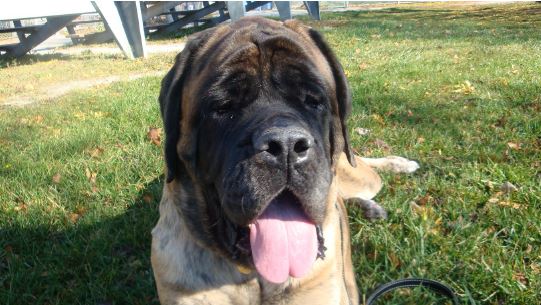
Tyra aka Chance the “missing” dog

The first test went great, with a group of ninth grade students who were asked to participate and agreed of their own accord. They had fun and were successful in taking the story to its conclusion. The final test run, however, was a different story. In working with the program facilitator for the gambling awareness group, we chose to bring the game to test it out on an entire class of (I think) 11th grade students at an “alternative” high school. I don’t recall too much about the make up of the class or the reasons they had enrolled in a “different” kind of high school. In general you could say that the students were rightfully kind of pissed off about how their education was going so far.

They didn’t want to pretend. They didn’t want to suspend disbelief. They didn’t give a damn about rescuing a fake dog. They completed the game activities, but it would have probably served them better to give them a handout describing the harm reduction strategies and to just have a frank discussion about how these things have affected their lives. I remember clearly the look one student gave me when he realized I was trying to trick him into playing along. That’s when I knew that this program was not even close to the right thing to bring to them. It was utterly deflating.

The results of the test run were that yes, students reached the objectives. Learning was measured to have happened. But the feeling in the room was not the fun buzz I was working toward in the back of my mind. It was a stark opposite.

I’m going way over 25 sentences by digging in to that anecdote. My point is that I did not anticipate, at all, that this idea of learning via a game would resonate so poorly with these students. I didn’t ask the right, or enough, questions in my front-end analysis. JR Dingwall’s post in which he did ask the right questions to help bring about a great result, is what got me thinking about what questions to ask in the beginning.

So I ask you, what are the big questions you ask yourself and others when you first sit down to analyze a potential ID project? How can you avoid making something that leaves students feeling flat and misunderstood?

“Question?” flickr photo by spi516 https://flickr.com/photos/spi/2113651310 shared under a Creative Commons (BY-SA) license