Tag Archives: Ed-Tech Thinks

Let’s Get Explicit

How can I explain it? If you’re all down with OEP (Open Educational Practices), I think that it’s time to make one thing clear… we’re a bunch of wannabe hip hop artists and I couldn’t be happier about it.

I’ll take you frame by frame it.

According to The Zulu Nation, there are five essential elements of hip hop. In this post, I hope to describe each of them a little bit and then try to relay them into a metaphor for Open Educational Practices, or just open education in general. I am more of an expert in the latter than the former, but I learn more (and love more) about hip hop every day. As we’ll see, there are different roles to play in each of the elements. Some people are known for one over the other although everyone crosses boundaries, here and there.

1.  Lyricism (Rapping)

In hip hop, emcees are the ones rhyming on the mic. They smith the words, make the rhymes, and deliver it to you with rhythm and flow. There are absolutely endless examples of different, riveting ways to rap. Just listen to a few of the greatest rappers of all time

To me this is the easiest and most obvious category to relate to Educators. Our emcees are the faculty members, out in front of students, spittin’ hot content. It’s not just what they say, it’s how they say it. I mean yeah it’s definitely more what they say than how they say it, but sometimes it’s just a mixture of both. I mean, I would listen to any of Rajiv Jhanghiani, Robin DeRosa, Jesse Stommel, Jim Groom, Maha Bali or countless others talk about anything just based on how they deliver to be honest.

So who do you think are our Missys, Tupacs, Biggies, and Weezys?

2.  Turntablism (DJing)

Grand Wizard Theodore took a piece of equipment that was supposed to just need a little bit of your input to get started, and turned it into a dynamic instrument that could blow your frickin’ mind. The record player was made to just dutifully sit there and turn in clock wise circles after you carefully place the needle at the outermost part of a record. Grand Wizard Theodore thought “fuck that” and dropped that needle wherever he pleased, and manually took over just which way that record was spinning. It most surely did not say to do that in the manual. The results are that every single damn record ever made and ever will be made are now a portal to endless new sounds and new worlds. Just watch Mixmaster Mike do it here (start at around 1:45):

If someone could have a look at the LMS and do that with it, that would be great. I’ll wait.

That said, I’ll go right out and say first that the DJs/Producers of Education are the ed-tech folks and the instructional designers. There are folks in ed-tech who try to master, mess with and straight up own the technology like hip hop DJs/ producers have. Some of the results are absolutely mind blowing and I would love to see more and more and more of it. And then some more.

If you’re a faculty member looking for a DJ to make some tight beats for your content, find yourself a Martha Burtis, an Alan Levine, or a Tom Woodward to make the technology do just what you want it to do and not the other way around. And keep pumping out Open Educational Resources so we have more material to sample.

So who are the Large Professors, Dr. Dres, RZAs, J Dillas of Open Education?

3.  Breaking

Hip hop doesn’t care if your knees and back don’t want to dance. There’s a b-boy or b-girl inside of all of us ready to lay it down at the altar of hip hop. Sometimes, an altar is made of cardboard and the DJ leads the service. You don’t want to get raptured, so you better get to poppin’ and lockin’.

https://vocalo.org/playlists-the-5-elements-of-hip-hop/

If all has gone well with numbers 1 and 2 in your work developing learning experiences, guess what? We all turn into a bunch of b-boys and b-girls for each other. I have never been a part of a community so supportive of each other, who constantly pumps each others tires by liking and sharing their work, making connections and just generally heaping praise all over the damn place. And you know why we can do it and want to do it? Because we know each other. Because we are open.

So the next time you’re retweeting and liking the work of a fellow open educator, just remember that you are figuratively doing for your friends what Bag of Trix are literally doing below.

4.  Graffiti

Graffiti is a controversial inclusion as an element of hip hop, but there’s no denying that it shows up everywhere, and that it can be quite beautiful. If graffiti is a visual expression of hip hop, then maybe openly licensed imagery is the graffiti of open education.

Where would our emcees be at their lectures and keynotes without a slide deck full of some bomb ass (openly licensed) photos? And I’m going to put this out there that Alan Levine, also one of the listed great “DJs” of Open Ed is also its greatest graffiti artist. Just look at the 50 million images he’s put into the Commons on his Flickr page (actual count: 65547). Have look at your attributions on your slide decks and you probably have a cogdog in there somewhere.

Perhaps another side to the graffiti metaphor is all the annotation that we can put all over any page of the Web done via Open Web Annotation using tools like hypothes.is. If that’s not tagging stuff up and adding our piece, I don’t know what is.

Let’s have a listen to someone who began his hip hop journey as a graffiti artist, and then went on to become on of its greatest emcees: KRS-ONE.

5.  Knowledge

The last essential element of hip hop that we’ll cover here is knowledge of its history.

“Don’t come at it without being willing to learn and grow alongside it.”

https://vocalo.org/playlists-the-5-elements-of-hip-hop/

I think we can all relate to that over here in Open Education. Avoiding the historical amnesia that Martin Weller refers to in his book 25 Years of Ed Tech is obviously a good idea, and a tack that helps you gain acceptance into the folds of both hip hop and the open education communities.

You’ll also find that as you learn from the people who share their experience of the history of Open Education or Ed Tech, like Martin, you can actually connect with many of them and build yourself into the networks.

Kendrick Lamar couldn’t make something this good with out knowing what and learning from what came before him.

So there you have it. In the midst of the pandemic, online learning is maybe having its biggest moment. If this is a fork in the road, I want to take the path that has more of the community, the innovation, the creativity, the control and everything else except probably the fat stacks of cash. We should follow hip hop’s lead and get as explicit with it as we can.

Photo by Emiliano Vittoriosi on Unsplash

Pitter Patter

Soon you’ll be hearing the pitter-patter of little feet is a bit of a weird saying when anticipating the birth of a child. You hear a lot of other stuff for months before any footfalls. Maybe it should be the screamy- shouty of little lungs.

Speaking of pitter-patter, it’s time for me to get back at ‘er. I’ve been off on parental leave since early June with our third daughter, Hattie. It’s been a fantastic, sleep-deprived, caffeine-fueled, tear-and-some-giggles-filled summer. But today I return to the team of Program Managers at eCampusOntario which is also wonderful and caffeine-fueled with some giggles (less tears, for sure).

This post is written for me to get my head around where to go from here. Below I will list the challenges I put to myself for the foreseeable future. If you have any thoughts or would like to wrestle any of these challenges with me, let me know.

Ontario Extend

Ontario Extend is a program designed to help educators better use technology to enable learning experiences. It has a set of modules as well as a suite of websites designed to connect Extend community members together to share what they are learning. It’s good fun and it requires daily care to keep it growing.

So, two fun challenges for me here:

One is that Extend had Alan Levine running the show all summer, showing Extenders how to take it to the next level with weekly meet ups and a Domain Camp. A series of weekly posts Alan made has left us with some fantastic fundamental resources for educators who want to stake their claim to  their digital teaching and learning spaces. I plan to catch up on all that he has done and keep building from here. The GIF below represents what I hope not to do here.


A second challenge with Extend is that David Porter and Valerie Lopes are zeroing in on completing some research about the Extend Community. Which means we will learn about what works and what doesn’t. Which means we will get the chance to do some revising to make it better. A great opportunity.

Gettin’ Air

This is my podcast on voicEd Radio. It’s time to kick off Season 2! On the show I chat with those working in open and technology-enabled learning. The idea is for people to ‘get some air’ time to share what they do in the hopes that some people listen and get inspired to try new things or even share what they do as well. I challenge myself to increase the diversity of the voices coming on the show. The show has focused mostly on chatting with those working in Ontario, since we are here to serve Ontario Post-Secondary. But now I think that hearing what is happening outside of Ontario will serve us well to hear, too. Look for a mix of Ontario educators as well as some more global voices this season. If you want to chat with me on air, I want to chat with you! Let me know by commenting below.

The Catch & The Pitch

These two blogs are designed to regularly share quick snippets of goings-on in open and technology-enabled learning in Ontario. The Catch is focused on things from an educator’s perspective while The Pitch will collect the stories of learning with technology.  The Catch ran all last year, but The Pitch is yet to throw its first post out there into the great wide open. Stay tuned for posts from both soon. The challenge is to get these two working off of each other and connecting the stories and people from both perspectives.

The Open Patchbooks

The Open Learner Patchbook and The Open Faculty Patchbook are ongoing projects to collect stories/how-to advice for teaching and learning and putting them together into something resembling a bigger picture. My challenge is to get more contributions, especially for the Learner Patchbook, and put them together and publish it as an open book in Pressbooks (or maybe the sequel for the faculty one!) If you have any thoughts or know anyone who might want to contribute, let me know in the comments below! I am very excited to get to speak on this topic at OpenEd18 next month. Maybe I will see you there!

Now, time to dig in to these challenges.

featured image: Hattie’s itty-bitty feet.

Interrupt Yourself

Yesterday morning I had a moment where I realized I wasn’t too sure what to do next, work-wise. So I decided to take the moment to check in on Benjamin Doxdator‘s writing, because that stuff will fill you right up with things you maybe need to think about. It’s so good.

I think I was drawn to click on a post called “What Should Give Educators Pause in 2018” because I was kind of taking a little pause from just constantly trying to “do stuff” and taking a moment to read a few things. I mean, obviously I check out and read things often enough, but I haven’t been consciously telling myself to stop and take in rather than just trying to keep putting things out there. As a self-described open educator, I want to remind myself to take and take as well as give from the commons that we have. And by take, mostly I mean take in more the openly shared thoughts, ideas and plans that open educators tend to share on their blogs or podcasts.

Benjamin’s post was a two phase thing in which he originally asked people to contribute audio about “what should give them pause” and he then put it all together into a podcast and updated the post with the final product. It’s a wonderful, peaceful piece with eight responses from around the world. I especially enjoyed joining Alan Levine on a walk with Felix.

It just so happens that later that day I was chatting with Helen DeWaard and she brought up something that fell together with Benjamin’s “productive interruptions”, for me. That was the #OneWordONT challenge in which you choose a word to focus on for the year. Helen chose “frames” so she will spend the year being cognizant of the frames she sees the world through and see if she needs to do something about it.

I am going to take a simpler route and choose “pause”. I’ll take a cue from the cows above and look at the vista views. I’m going to interrupt myself when I feel the wheels are spinning, stop, and just take in what’s around me. I guess I don’t have an answer to Benjamin’s question “what should give educator’s pause?” other than to say, “Good idea! Let’s pause.” Maybe I’ll even pause the pause to track what I’ve read during these little pit stops so I can see how productive my interruptions have been.

Featured image: “pause” flickr photo by amysphere https://flickr.com/photos/amymichon/2482489038 shared under a Creative Commons (BY) license

Don’t Save a Thing For Later

My tanks aren’t empty, but I want to try my best to use it all up while I’m here.

I’ve been on secondment to eCampusOntario for two and a half months now. Its official end is March 31st, 2018. I know it could possibly go longer, But I want to work with what I for sure have to the best of my ability. I feel it’s time to make a concerted effort to extinguish all my resources, connections, and ideas while I’m here.

By that I mean I want to try to make and share out all the connections I can. Not just between myself and the people of Ontario’s Post-Secondary Education-isphere. I also want to help connect others together, connect people with resources, connect resources with resources.

eCampusOntario has a lot of cool stuff going on. I’m going to list a few of the things I’m involved with and beg of you to help me make some connections.

Let’s try to run out of ideas together.

The Catch – This is a “fortnightly” blog post. The idea is reporting on the technology-enabled learning things that the four eCampus Program Managers catch on to in their day to day program managering. It’s doled out in bite-sized categories. So, would you like to see something you are working on written about with levity and brevity and shared to all? Nominate yourself or your friend or an idea here > thecatch@ecampusontario.ca. You can see one of the recent issues of The Catch here.

Ontario Extend – These are resources that can help educators fill their buckets in the different areas of Simon Bates’ “Anatomy of the 21st century Educator”: Teacher (obviously), Experimenter, Scholar, Curator, Collaborator and Technologist. What I would love from you is your take on one of the activities to add to the Ontarioextend.ca site. This will help to help bring it all to life and leave a trail of participation for those that follow to learn from. It will also help to build a community of “Extenders” who like to dabble in this stuff. Call dibs on an activity here. You don’t need to have done the whole kit and kaboodle to add your take on something. You can also just email me tgreene@ecampusontario.ca to chat about it.

Gettin’ Air – Another way I’m trying to connect with the people who do the things we admire (namely open and/or technology-enabled learning experiences) is through a radio program on voiced.ca radio. The program is called “Gettin’ Air”.  Each episode I connect with someone to get them some air time to share a bit of their story. I have done two episodes so far and I really enjoy hearing about what people are up to, how they got there, and where they are hoping to go with their work. So, if you’re up for a 30 minute chat on the air (or recorded beforehand), I would love to chat with you! Email me and we can set up a time for a call: tgreene@ecampusontario.ca

Here’s a “rough cut” of episode 2, which is a chat with Dr. Aaron Langille of Laurentian University. We chat about his work with gamification and how he also plans to leverage open educational resources into that world.


As I said, I want to try to empty the tanks. Help me use up all the ideas and plans and connections we can and let’s see where it takes us. I hope to hear from you.

“Empty Empty” flickr photo by DaveFayram https://flickr.com/photos/davefayram/4744862344 shared under a Creative Commons (BY) license

Sliding In

A fantastic new opportunity begins for me this week. I’ll be joining the wonderful folks at eCampusOntario as a Program Manager! Three other PMs are already well into the work: Jenni Hayman, Peg French, and Joanne Kehoe. The program managers work to aid Ontario colleges and universities in the pursuit of great technology-enabled learning. I’m more than pumped to join this team and get in on some of the amazing work they’ve been doing. Get your coattails ready for me, friends!

I know a few little tidbits of what I’ll be focusing on at first. Including helping to extend the Ontario Extend project (is that meta-extension?). What I promised to do for eCampusOntario in my interview is shared below. They asked for a three slide presentation. I went for minimalism; only adding one main word to each slide and to highlight the areas of the Anatomy of 21st Century Educators that these one-word promises hit hardest.

I missed one very important word that supersedes the others. It may be implied, but here I want to make it explicit.

I will listen.

And I mean Chuck Pearson levels of listening.

This listening, writing, speaking and (community) building will happen on the Web, in person, and on the radio. By promising to do these things, I don’t mean to just do it by myself. I will share the spaces, in any opportunity that arises, with any educator willing to share stories, plans, and ideas. This can help us all have a shorter climb to the top.

I hope you’ll join in. I think it’s going to be a wonderful experience and I can’t wait to get started. Add a comment below if you want to connect.

“Slide…..” flickr photo by Jinx! https://flickr.com/photos/span112/2350360329 shared under a Creative Commons (BY-SA) license

A Hoot

We used Kahoot briefly yesterday in the Fleming New Faculty Experience. It’s a quizzing tool that lots of people seem to really enjoy. It was easy to set up, easy to deliver and, I think, quite fun.

The way Kahoot works was involved in making it fun, but here’s what I found the most fun about our “hooting”: the banter.

See, we’re just beginning to build a community or culture of we’re-in-this-togetherness with each other. We threw the “hoot” together to get us to start thinking about what we do know and don’t know about learning outcomes and also to show Kahoot as a possible tool to use in the future. I enjoyed the banter more than the “hooting” itself in that we kept talking throughout about how we may or may not have any clue about the answers to these questions yet. We may not be activating any prior knowledge but instead getting the ball rolling on knowing our first things about the topic at hand. And that is more than okay. I especially enjoyed the banter coming back at me (Mary) about my choice of words in some of the questions and whether or not they made any sense. Talking about the wording drew us more deeply into the topic we were introducing. I’d like to say my poor choice of words was therefore planned, but I’m grasping at straws here.

But please, keep up the banter. I also really hope my incessant ‘verbing’ of Kahoot sessions as “hooting” will catch on.

Hoot, hoot!

Featured image: “Owl” flickr photo by Matt Biddulph https://flickr.com/photos/mbiddulph/4681820992 shared under a Creative Commons (BY-SA) license

Things Open

How did I become involved in things open? Funny you should ask because I’ve been asked to contribute to www.101openstories.org to tell my Open Education origin story. I’ll be on a live video call on that site on July 27th telling this story. If my past video experience can predict the outcome of this one, it should be funny for you and embarrassing for me. Luckily for me I haven’t been in the open game long, so I seem to still have access to most of the memories. I’ll tell you the story here, too. Spoiler alert if you want to watch the video!

It was a dark and stormy night way back in the fall of 2015. And by dark and stormy night, I believe it was actually quite mild and the middle of the day. I was in the office of Judith Limkilde, then the Dean of General Arts and Science of Fleming College, for my performance review. As any good boss would do, Judith asked me what I would like to do for professional development over the next year. I knew this question would be coming and I had prepared an in depth answer that was probably something like: “Umm, I’d like to brush up on some, like, digital skills and stuff.” I had come across some weird, free thing that was called ds106 that promised to show you a thing or two about digital storytelling. I wanted to do it, but I wasn’t sure exactly why at the time. Judith said okay, go right ahead.

I know what it was that drew me in now. There’s a lot of that free learning stuff on the Internet: Coursera, Udacity, Lynda, whatever. It all looks slick and umm… what’s the word? Lifeless. ds106 was different though. It wasn’t all that polished looking, but here’s a lesson for all the other slicker than snot venture capital funded bore-o-systems: You could see the work of the students everywhere. What? I get to see what the other people do with these instructions? I can take their ideas and build off them? I could add my ideas for how to participate in the course? I might see my own stuff on this site?  That was my fire for open all lit up right there.

I’ve been opening up ever since.

Since then, and directly or indirectly from participating in ds106, I have been able to:

  • Grow a pretty darn good professional learning network on Twitter where I can actually ask questions of and get response from superheroes in Open Education. You can, too.
  • Volunteer with Virtually Connecting, where I get to be involved with and help others get access to educational conferences all over the world that we would not otherwise have access to. Another chance to connect with and have access to open thinkers around the world.
  • Participate and practice regular, reflective and creative open practice through a few different domains. These include one for my own personal professional learning banter (this one), a weekly professional learning blog for Fleming College faculty which adds about 500% more fun to my day job (The Teaching Hub) and The Open Faculty Patchbook. (More about that one in the next bullet point.)
  • Help create a how-to-teach manual for higher ed pedagogy called the Open Faculty Patchbook in which faculty from all over tell us how they deploy specific pedagogical skills. What we’ve collected so far is being published into the first iteration of the manual. You can see it on its Pressbook site here. All of the patches are wonderful tales of the trials and tribulations from people in the thick of higher ed teaching and learning. It’s a testament to the wonderful character of the people of open that these 21 people took the time to write a chapter of our book and share it openly with everyone for no incentive other than the desire to contribute.
  • Use and contribute to the Creative Commons by openly licensing my work and using the openly licensed work available. For those of you out there who openly license your photos, my blog posts and slide decks thank you dearly for the added panache!
  • Be added to the roster of Ontario’s Open Education Rangers by eCampusOntario. I believe this means I am able to deputize people into the movement.
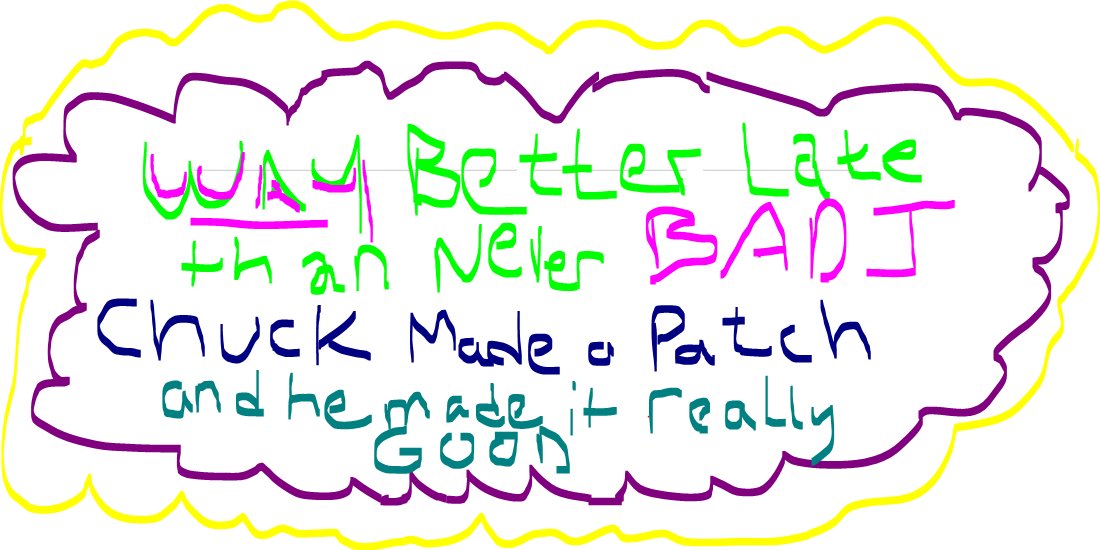
  • Become known in certain open circles as the #crapbadge hander-outer. I wrote a reflective blog post after attending the Open Ed conference in Fall 2016: An Opening Move. In it I awarded a very poorly drawn badge to someone whom I thought did a great presentation. I now use my sub-par artistic skills and the Snipping Tool to award crap-badges for simple but awesome deeds on request. Sometimes on demand. Here’s my latest, awarded to Chuck Pearson for his amazing patch of the Open Faculty Patchbook. You can just see the artistry oozing out of it:DFQjOlNUMAADMlS.jpg
  • Oh and, to me, the ultimate sign of making it as a member of ds106 culture and open in general; look up and to your right and see that I am an Official Talky Tina character of the Internet. This fact will be on my gravestone or urn or whatever I end up in.

It’s been a pretty great time opening up so far. Join in! You can find me in twitter @greeneterry

“Open the door” flickr photo by hernanpba https://flickr.com/photos/hernanpc/15475728248 shared under a Creative Commons (BY-SA) license


Is There a Problem Here? An Instructional Alternate Reality Game

Creative Commons License
This work is licensed under a Creative Commons Attribution-ShareAlike 4.0 International License.

It’s not too late to share this. This is the biggest thing I can give to the Creative Commons. I made it well before I knew about The Commons and am only now remembering to do this. This is many many hours of my time. This is the scholarly project which completed my M.Sc. in Instructional Design and Technology.

It is an exercise in embedding instruction into an alternate reality game. Or it’s an exercise in deeply embedding narrative into learning. Either way I tried my best and I want the commons to have it.

It is an alternate reality game in which players need to learn about problem gambling behaviors and harm reduction strategies in order to bring a story to its end. That story is the dognapping of a mildly famous and much-loved English Mastiff.

Oh and it’s so low tech it’s hardly ed-tech at all.

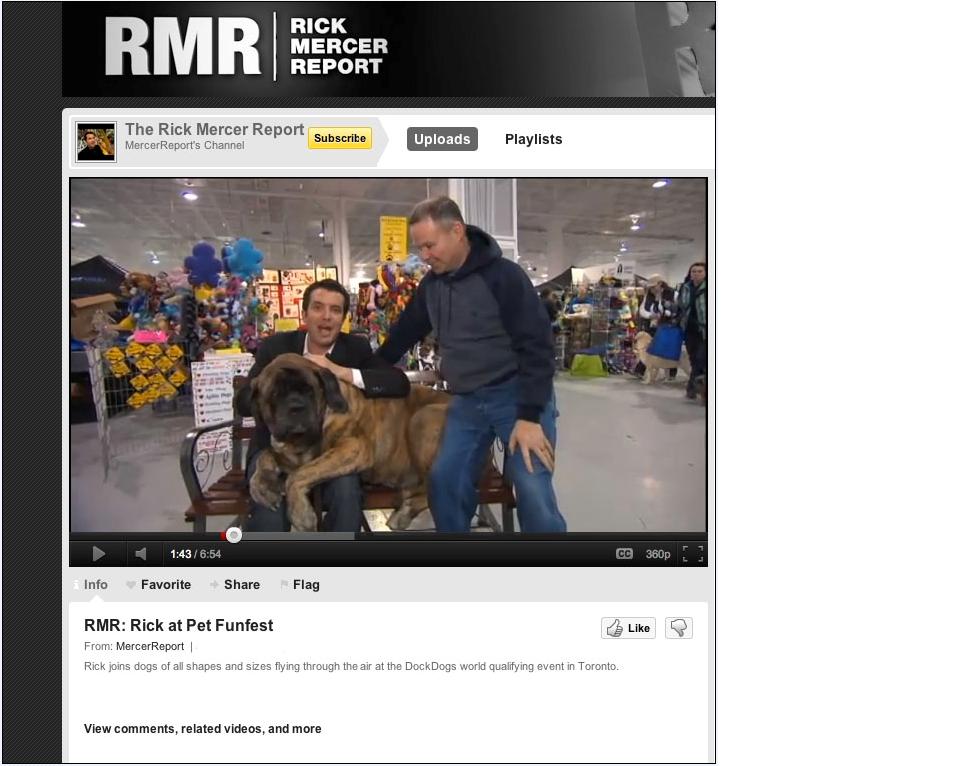
Chance on the Rick Mercer Report

Here is the zip file of all the pieces to the game Missing Chance. The main piece to look for to guide you through are the ‘Puppet Master Instructions’. Here is a little excerpt:

The Story:
Jack Berlian is a YMCA board member who fought to get the original funding for the Youth Gambling Awareness Program. He was one of the first people to realize the potential harm that gambling is doing to our youth and was in a position to do something about it. We just found out that his dog, Chance, has gone missing from the YMCA and there was a clue that made him think that Chance was stolen to help pay off a gambling debt. Chance is actually a bit of a celebrity dog, so she is worth quite a bit of money. Since we know a little something about risky gambling behaviours and ways to reduce the harm, we are in a unique position to help Jack. You (the puppet master) have been up all night, prior to coming to the YGAP meeting, preparing a plan to help Jack. You feel like this is our chance to pay back Jack’s efforts in creating YGAP, by helping to find Chance. You also feel like this is an opportunity to truly validate all of the work that YGAP does.
The Rabbit Hole:
The beginning of an alternate reality game (ARG) is called a ‘rabbit hole’. This is the point at which we enter the alternate reality of the game. For this game, the rabbit hole is simply the lost dog poster that Jack has prepared to try to get people to help find Chance. This poster will be posted in and around the site that you are running the game, in places
where your game players will likely see it before coming to your session. This will add some ‘reality’ to the story when you tell them that we will be spending our time today trying to help find this dog.
The Puppet Master:
The remainder of the document is a set of instructions for you, the Youth Outreach Worker, to follow in order to take this game to its conclusion. You will be in front and behind the scenes, pulling the puppet strings.

If you know of any organization that works with problem gambling behaviours that might like to use this, let them know about this and let me know if I can help them.

Featured image from: https://unsplash.com/@bkotynski CCO

The Ghost of CC Future

The whole reason the Ghost of Christmas Future shows up is just to say “Don’t eff this up, Ebenezer. Get your act together and avoid your terrible future”. It worked for that cranky old bastard and it could work for us.

On Saturday at The Creative Commons Global Summit in Toronto, Ashe Dryden showed us some of our past futures. Things that we used to think might be our future. What I take from that is the need to think about the things that could have happened, the things we hoped would happen, the things we hoped wouldn’t happen and what actually did happen to help us try to forge the best future that we can. The ruby red-lipped, shark people of Jupiter with 8-pack abs have not yet taken over, but we still want to avoid it. Maybe they are super chill, though, so who knows?

So in that spirit, I want to make sure I don’t squander the opportunities that attending the #CCSummit afforded me and forge the best path that I can from here. If Scrooge can do it, I can, too.

Here’s my quick list. It is not exhaustive of all the things I want to take from the summit, but it’s my start:

What’s your CC future?


Feature photo: https://unsplash.com/@luisdelrio

Creative Commons License
This work is licensed under a Creative Commons Attribution 4.0 International License.


Digital Pedagogy: It’s Like Riding a Digital Bike

The saying, ‘it’s like riding a bike’ means you just don’t forget. Even if you don’t use a skill for a long time. You can pick it right back up. I can see that has truth to it, but it got me thinking about what it is actually like to learn to ride a bike.

It starts out with just about as much support as possible. A grown up literally supporting you, balancing you, giving you instant feedback and encouragement. And oh the rush of emotion when you actually do it on your own! Just a few months ago, I witnessed this happen. The boy shouting “I’m doing it! I’m doing it!” as he rode away for the first time. It struck me that I witnessed an event that boy would probably remember for the rest of his life.

After that first time you ride away from your support person, what kind of ‘formal’ instruction do you really get or want in your bike riding skill acquisition program? Not much at all, really. Now it’s all about experiential learning. You learn from the crashes what not to do. You learn from exhilaration what to do. You try different bikes and they feel weird at first, but then you figure it out. You roll over new terrain shaky at first, but then you get used to it and enjoy the challenge.

I can remember most of the actual instructional events in my life to do with biking. Probably because they are so few and far between. Any formal tips or tricks for biking have been searched and sought out on my own here and there in magazines or from other cyclists and I have just been ‘experientially learning’ the rest of the way (the experientalliest learning being the year I spent as a bike courier.)

But I digress and lose sight of the point I haven’t yet made. So, to review what I’ve been trying to say: learning to ride a bike includes large amounts of start up support and then you’re mostly on your own.

I think that the bike-learning methodology is kind of what it’s like to wade into the digital world as an educator. You can find those opportunities for the start up support to get going, but from there you’re on your own to choose your path. Going into new systems is like trying out a new, different bike. WordPress might be your all purpose commuter and a flat-tired unicyle might be your Learning Management System. And like biking, you can get more out of it by adding some accessories (Slack, Twitter, etc) and joining a club or community (Virtually Connecting, #OpenLearning17, #ds106 etc.). Your friends are here to help, but it’s up to you to ride through new terrain and feel the wind blow your hair back. It’s great fun that you have to work for.

“Bike near campground First Landing State Park” flickr photo by vastateparksstaff https://flickr.com/photos/vastateparksstaff/33089545372 shared under a Creative Commons (BY) license

featured photo: “riding bikes” flickr photo by jonny.hunter https://flickr.com/photos/jonnyhunter/1043775061 shared under a Creative Commons (BY) license