Tag Archives: #oer17

Post #OpenedSIG Webinar, Pre #OER17 #OpenEducationWk

Reading Time: 3 minutes

This morning, I had the honor of being a guest with the warm and welcoming Teresa Mackinnon on an #OpenEdSIG webinar that’s part of Open Education Week and also a pre #OER17 session.

I will embed the slides once I get to a computer, but for now, here’s a link.

I will post the recording as soon as it’s up also.

I am so grateful for this session. It was such a useful opportunity for me to meet with a sample of the OER17 conference participants, not to have a fully equitable conversation, but to still get to interact with them a little.

Teresa’s Introduction made a huge difference. It was very personal and very warm. I wanted to cry because i was so touched. I remember my keynote announcement making me feel like I had been hugged. Teresa’s intro did that today. And it’s a reminder when we introduce someone, how much of a difference it makes if we personalize our intro rather than just read a bio. It automatically affected the atmosphere and I think warmed people towards me also.

(immediately before we started, btw, I had squeaky voice syndrome related to mic issues – this happens to me occasionally and Martin had helped me troubleshoot it before for hangouts – and today I followed the same steps before figuring out where the audio wizard was on the Bb Collaborate).

It was lovely to see some people I know well (like Frances Bell and Christian Friedrich) and new friends (like Debbie Baff and Sheila MacNeill) and several folks I am just getting to know on Twitter as well.

I felt that the impostor syndrome slide resonated a lot. Which is hilarious coz I removed it from my keynote. But I guess it will come out in some form or another as I speak. How could it not, right?

I talked about my process of thinking about my keynote and how difficult it is for me to give a one-way keynote and all the ways I hope to make it interactive both in the room/live and virtually/asynchronously.

For example, I will ask some questions of the audience. Some are prepped to participate and some will be surprise questions (not too many). I also plan to have my slides open to comments and to have a link for feedback at the end. All the links are scheduled to go live on my website April 5 just before I start keynoting at this link: www.mahabali.me/oer17

I also talked quite a bit about Virtually Connecting and shared the link to our signup form: http://bit.ly/OER17VC – hopefully some people now know more about it – also we published today a blogpost on the OER17 blog about vconnecting. 

I loved how Teresa stepped in and talked about how she felt about vconnecting and that it clicked for me that Simon Ensor (who had introduced me to Teresa originally) was doing virtual buddying for OER17 inshallah next week.

I tried to respond to questions on the slides as I spoke and I occasionally lost my audio while trying to do that 🙂

One other thing that seemed to resonate a lot with participants was my ending quote from Sarah Ahmed on how we need space outside our institutions to be able to speak about issues we cannot speak about within our institutions. And that’s what open has given me and it seems many others.

Frances asked a really good question about when sometimes those spaces need to be private rather than open. And that is absolutely the case, of course, and some things are too risky to talk about in the open. Some things are better done privately. And it reminded me of a post of Kate Green’s where she talked about open not being the opposite of private. I don’t remember the details. Will try to link it here later.

I also like that people seemed to like my ending Oscars type slide where I have photos of all the people I learn from about open (and I am sure I have forgotten someone important).

Again, this was a really helpful session to me personally because it gave me a warmup that was low-stakes prep for the keynote and gave me a sense of what to expect from the audience f2f inshallah.

Fixing the shirt but spoiling the trousers #OER17 Open Call for Your Stories!

Reading Time: 2 minutes

So I am finally getting around to solidifying (inasmuch as someone like me can solidify something this far ahead of its date) my OER17 keynote. There are slides, people. 90 of them. Some will have to go, because I also intend for my keynote to be a bit interactive and imagining time for that will be difficult to gauge.

So here is one way to give myself a bit more flexibility and options.

There is a part of my keynote where I plan to refer to an Egyptian expression, which, literally translated, means “when you tried to fix the shirt you spoiled the trousers” (must remember to say trousers not pants in the UK or they’ll think I mean underwear). It conjures up an image of comedy of errors or such, where trying to fix a problem creates new problems.

I think of “open” as having many such problems that arise out of its solutions, and I already have some examples in mind, but would love for the community to offer me more examples of this. I also want to make sure I don’t just bring in privileged white male voices (the people most likely to raise a hand in a crowded room, I think) or to privilege the people in the room – hence asking in advance. The easiest way for me to track these responses would be for you to either

  • Comment here
  • Tweet to #oer17 tagging me
  • Blog and send me a link here or on Twitter

If you’re present at #OER17 I might ask if I can call on you to tell your story quickly to the audience instead of me telling it when you’re sitting right there 🙂

It could be a story of something you have observed in others, or it could be a story of something that happened to you. It could be a personal story, or a story about a larger policy/issue. I have both kinds in mind.

Are We Spectators or Actors?

Reading Time: 2 minutes

​(this blogpost is influenced by recent discussions with friends from my digped community – i say “my” because I feel like I belong among them, that kind of “my”)

Photo by me. Please don’t reuse

So much going on in the world right now, keeping everyone’s emotions on a roller-coaster and we are so busy reacting to that, and so little energy left for anything else…

What can/should we be doing to address how people are feeling right now? What’s the place for open learning and open education in the context of what’s happening in the world today? Are the challenges of open learning greater now?  E.g. Because of risks of surveillance and cyberbullying? Is the need for open learning more urgent? E.g. To counter hegemonic discourses that are anti-social justice? What can open learning do to help us cope with the world as it is unfolding in front of us?

Egypt is right now playing against Cameroon in the African Cup final. It made me think of emotion in spectator sports. How we have such emotional reactions to something we have absolutely no control over. Maybe audiences in the stadium can make a little difference because players can feel their energy and support…but viewers at home, on TV? The players aren’t influenced by them at all. Those people watching together are only influencing each other and not the players. What is the point? Some psychologist must have discussed this stuff at some point, I bet.

Are we all mere spectators of the politics unfolding around us, only able to cheer and shout out disagreement, give out orders that no one follows, or are we actors on that stage, able to effect change? Are we cheering and resisting in our own echo chambers, or are we able to build something together to truly challenge the status quo?

Education isn’t like sports. You don’t have to have access to the big stage to make a difference. Working on the small stage is also important work of resistance. But we still have to ask ourselves why we do what we do, and whether it’s achieving what we thought we were hoping to achieve.

How important is it for the work of resistance to be able to seek comfort in communities where we feel we belong, knowing together that we need to venture out into the wild to see what we can do beyond the safety of our community?

I have no idea where I am going with this. But maybe you have ideas?

Imagining and Visualizing Little Miss Open and Mr. Open #openlearning17 #oer17

Reading Time: 4 minutes

I have been doing a lot of reading and thinking ahead of #oer17 but what I am reading MOST are books to my little kid each night and throughout the day. Because I am neurotic about raising a kid who loves to read more than I am neurotic about anything else in parenting, and because the technical teaching of reading in school is OK but it doesn’t give kids the confidence to read and does not nurture a love of reading. So she is currently addicted to the Mr. Men and Little Miss series.

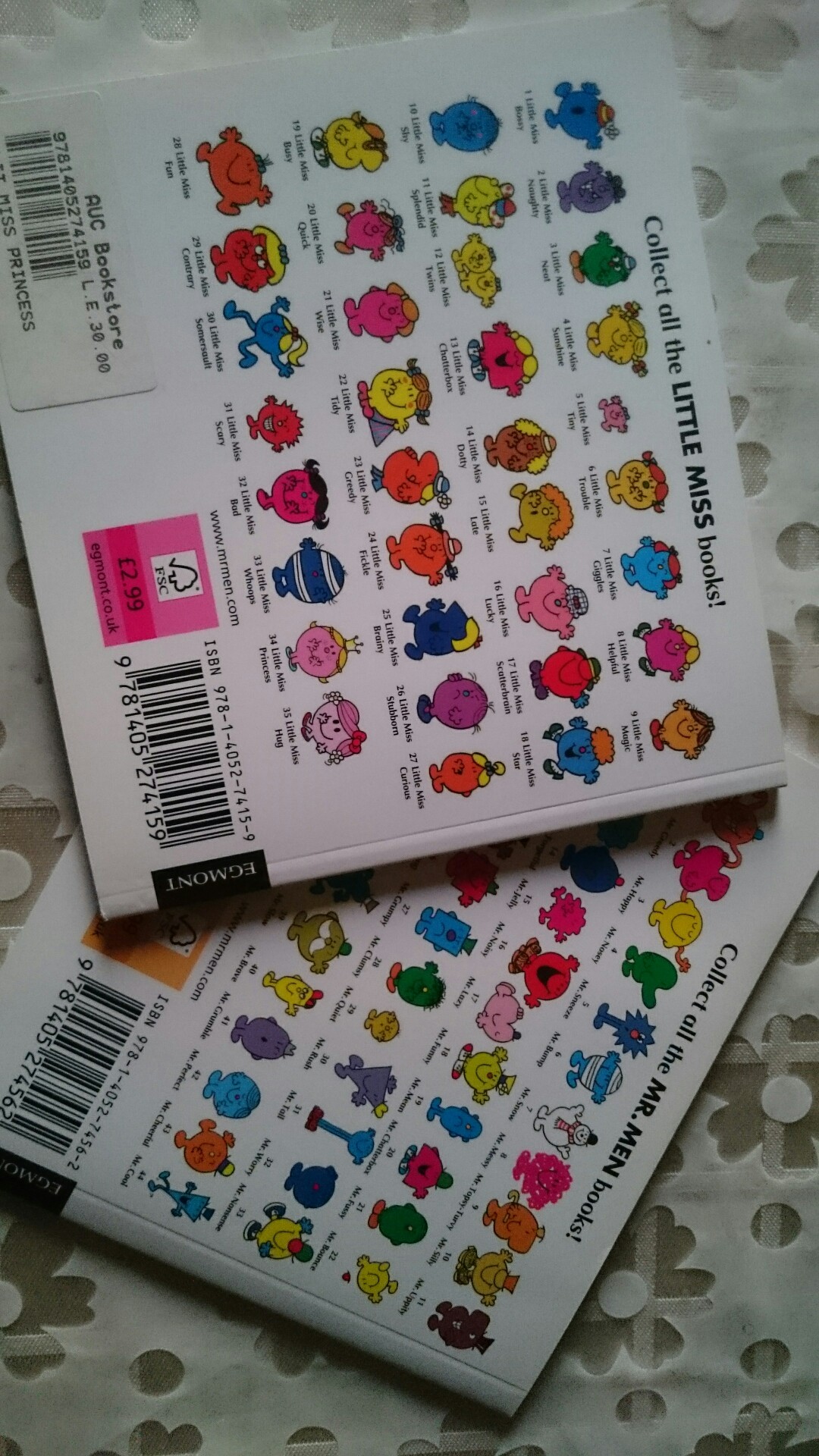
(back of Little Miss/Mr. Men books flickr photo by me (just took a photo from my phone

Now I buy these books for 3 main reasons

  1. They’re cheap 🙂 and abundant (so we haven’t yet run out of new ones)
  2. They’re small and light and portable so I can put several in her backpack wherever we go
  3. They remind me of my own childhood coz I used to read them to myself when I was a bit older than her (this means she can’t read them on her own yet, but she can read parts and she enjoys the reading together process so much the words “Read it Yourself” on some of her other books seem to traumatize her! This was a funny but worrying revelation. Making me wonder if she enjoys reading simply because it ties me to her rather than enjoying the reading intrinsically)

I have a lot of objections to the books, though. I don’t understand why the male characters are fully Mr but the female characters are Little Miss. Why little? I read about the original author (Roger Hargreaves) inventing the series to answer his (at the time young) son’s question “what does a Tickle look like?” and I love that the son in question, Adam, continued to add more books to the series after his father passed away.

I often think a book has so much potential but ends up falling waaaay short of what it could have done (like Mr. Nobody – imagine how meaningful such a book could be! But it was rather silly in the end). And sometimes the storyline is downright annoying. And often the humor is really difficult for my child to understand… Though I get most of it, lilk the time Mr. Wrong said, “What? I was right? That’s so strange because I am usually…” [turn page over ] “…left!”.

I do love how these books help my child learn the meanings of difficult words that are the descriptions of the characters (I don’t think even I knew exactly what Fickle meant before). I also think it’s interesting how they choose to illustrate each character to represent the adjective (or occasionally noun) that is their name. I sometimes joke with my kid and call her one of the characters when she does something. Occasionally I will make one up, like “oh, you’re Little Miss Thoughtful” (and of course I am then asked to explain what thoughtful means).

Anyway. All this long intro is just to explain that immersion in these books has got me thinking of all kinds of other books and characters that could exist…but copyright and all that… I don’t think Adam Hargreaves is on Twitter so I hope he doesn’t mind what I am about to do…

I started imagining what a Little Miss Open or a Mr. Open might look like. I started to visualize what their character would look like, and to draw one on my phone (I remembered partway through the frustration of that…that I am actually much better at drawing by hand than I am drawing graphics on a machine, so I will make time to do that, and maybe invent a few extra characters for my child in the process! Why not, right?)

So here is my caricature of Little Miss Open and it’s still in progress.

How does Little Miss Open Look? 

Some ideas:

  1. Wide-eyed because she is open to looking at everything and curious?
  2. Open-mouthed because she talks about everything openly
  3. With perked up ears because she listens well?
  4. Transparent?
  5. Open-hearted? (we can see an open heary in her transparent self – at which point i realized that these characters have huge faces with tiny legs/arms but no body so nowhere to put the heart… So maybe wearing heart on her sleeve? Err arm?)
  6. Open-minded – would we draw an opening in the head, or just never really close the head and have the mind popping out, or have a gear icon on her head symbolizing open process?
  7. Participatory – should her head be filled with thoughts/ideas of other people?
  8. Open arms? Open to collaboration with others?

Beyond the character’s looks, her behavior could take any number of directions…

  1. Open door to her house and whether this is always a good thing
  2. Sharing things, and whether sometimes she ends up oversharing to the point she might hurt someone
  3. Overly transparent to the point that she makes herself too vulnerable sometimes?

And then something interesting occurred to me. There is a book about Mr. Good who originally lives in Badland (poor fellow) where he is unappreciated (duh) but eventually stumbles upon Goodland… And I was wondering if maybe Little Miss Open is born Open but lives in Closed-Land then eventually moves to Open-Land.

Then I realized I am pretty much describing myself here, right?

I am Little Miss Open in my office and in my personal life. I am married to Mr. Private and have some colleagues who are  Miss Secretive and Miss Careful and Mr. E-Safety and such 🙂 but I also have my Open-Land, my online PLN of all the many Opens… Who are each open in their own way but generally more geared towards open than closed. So the Miss Vulnerable and the Miss Welcoming and the Mr. Collaborative and Mr. Narrator-of-Process and Mr. Share and Miss Amplify

I dropped the “little” before the miss coz it’s so sexist but it’s one of those cute things that’s sexist

Anyhoooo just needed to get this silly little brainstorm off my chest… If you’re interested in working with me on visualizing this, I may use it in part of my keynote 😉 I hope that’s not too silly.The rest of the keynote is kind of serious, I promise. But one of the beauties of being a parent is that in this horrible world, you get to be silly by duty for part of your day. And that’s a blessing.


Imagining and Visualizing Little Miss Open and Mr. Open #openlearning17 #oer17

Reading Time: 4 minutes

I have been doing a lot of reading and thinking ahead of #oer17 but what I am reading MOST are books to my little kid each night and throughout the day. Because I am neurotic about raising a kid who loves to read more than I am neurotic about anything else in parenting, and because the technical teaching of reading in school is OK but it doesn’t give kids the confidence to read and does not nurture a love of reading. So she is currently addicted to the Mr. Men and Little Miss series.

(back of Little Miss/Mr. Men books flickr photo by me (just took a photo from my phone

Now I buy these books for 3 main reasons

  1. They’re cheap 🙂 and abundant (so we haven’t yet run out of new ones)
  2. They’re small and light and portable so I can put several in her backpack wherever we go
  3. They remind me of my own childhood coz I used to read them to myself when I was a bit older than her (this means she can’t read them on her own yet, but she can read parts and she enjoys the reading together process so much the words “Read it Yourself” on some of her other books seem to traumatize her! This was a funny but worrying revelation. Making me wonder if she enjoys reading simply because it ties me to her rather than enjoying the reading intrinsically)

I have a lot of objections to the books, though. I don’t understand why the male characters are fully Mr but the female characters are Little Miss. Why little? I read about the original author (Roger Hargreaves) inventing the series to answer his (at the time young) son’s question “what does a Tickle look like?” and I love that the son in question, Adam, continued to add more books to the series after his father passed away.

I often think a book has so much potential but ends up falling waaaay short of what it could have done (like Mr. Nobody – imagine how meaningful such a book could be! But it was rather silly in the end). And sometimes the storyline is downright annoying. And often the humor is really difficult for my child to understand… Though I get most of it, lilk the time Mr. Wrong said, “What? I was right? That’s so strange because I am usually…” [turn page over ] “…left!”.

I do love how these books help my child learn the meanings of difficult words that are the descriptions of the characters (I don’t think even I knew exactly what Fickle meant before). I also think it’s interesting how they choose to illustrate each character to represent the adjective (or occasionally noun) that is their name. I sometimes joke with my kid and call her one of the characters when she does something. Occasionally I will make one up, like “oh, you’re Little Miss Thoughtful” (and of course I am then asked to explain what thoughtful means).

Anyway. All this long intro is just to explain that immersion in these books has got me thinking of all kinds of other books and characters that could exist…but copyright and all that… I don’t think Adam Hargreaves is on Twitter so I hope he doesn’t mind what I am about to do…

I started imagining what a Little Miss Open or a Mr. Open might look like. I started to visualize what their character would look like, and to draw one on my phone (I remembered partway through the frustration of that…that I am actually much better at drawing by hand than I am drawing graphics on a machine, so I will make time to do that, and maybe invent a few extra characters for my child in the process! Why not, right?)

So here is my caricature of Little Miss Open and it’s still in progress.

How does Little Miss Open Look? 

Some ideas:

  1. Wide-eyed because she is open to looking at everything and curious?
  2. Open-mouthed because she talks about everything openly
  3. With perked up ears because she listens well?
  4. Transparent?
  5. Open-hearted? (we can see an open heary in her transparent self – at which point i realized that these characters have huge faces with tiny legs/arms but no body so nowhere to put the heart… So maybe wearing heart on her sleeve? Err arm?)
  6. Open-minded – would we draw an opening in the head, or just never really close the head and have the mind popping out, or have a gear icon on her head symbolizing open process?
  7. Participatory – should her head be filled with thoughts/ideas of other people?
  8. Open arms? Open to collaboration with others?

Beyond the character’s looks, her behavior could take any number of directions…

  1. Open door to her house and whether this is always a good thing
  2. Sharing things, and whether sometimes she ends up oversharing to the point she might hurt someone
  3. Overly transparent to the point that she makes herself too vulnerable sometimes?

And then something interesting occurred to me. There is a book about Mr. Good who originally lives in Badland (poor fellow) where he is unappreciated (duh) but eventually stumbles upon Goodland… And I was wondering if maybe Little Miss Open is born Open but lives in Closed-Land then eventually moves to Open-Land.

Then I realized I am pretty much describing myself here, right?

I am Little Miss Open in my office and in my personal life. I am married to Mr. Private and have some colleagues who are  Miss Secretive and Miss Careful and Mr. E-Safety and such 🙂 but I also have my Open-Land, my online PLN of all the many Opens… Who are each open in their own way but generally more geared towards open than closed. So the Miss Vulnerable and the Miss Welcoming and the Mr. Collaborative and Mr. Narrator-of-Process and Mr. Share and Miss Amplify

I dropped the “little” before the miss coz it’s so sexist but it’s one of those cute things that’s sexist

Anyhoooo just needed to get this silly little brainstorm off my chest… If you’re interested in working with me on visualizing this, I may use it in part of my keynote 😉 I hope that’s not too silly.The rest of the keynote is kind of serious, I promise. But one of the beauties of being a parent is that in this horrible world, you get to be silly by duty for part of your day. And that’s a blessing.
Some Open Questions for #OpenLearning17

Reading Time: 2 minutes

They say when one door closes, another opens (or a window, maybe). But we don’t usually talk about how sometimes opening a particular door might actually close another. For the same people, or different ones.


Open/Shut flickr photo by sarae shared under a Creative Commons ( BY-ND ) license

I’m really looking forward to #openlearning17, with a bunch of really awesome people discussing different dimensions of open learning…

I’m particularly interested in asking questions about open for whom, by whom, for what purpose? Can we think about issues like access, and recognize how just being “open” does not mean we are necessarily making something accessible for others? Just by being “free” (as in gratis, zero cost to the user) does not mean everyone has equal access to it? I want to ask about the privilege of open, and what our responsibilities are when we have the privilege of open… how can we think critically about the different approaches of open learning, from OERs to open scholarship to open pedagogical practices…and these aren’t issues no one has talked about before, and I’m particularly influenced by the work of sava singh, Robin DeRosa and Catherine Cronin and others on this…

Could a social justice orientation to openness occasionally mean being closed to a privileged group in order to create openness for marginal groups? Why do we, and why should “we” care about advocating for openness for marginal groups? What are the most respectful ways to do that as allies, and what’s the role of the semi-privileged open educator who lies at the borders/intersections?

Looking forward to some deep discussions. inshallah

On a more practical note, check out Creative Commons new “one-click attribution” tool in beta

Also, do you know about cogdog’s Flickr CC attribution helper bookmarklet? That’s how easy it is to do attribution for CC Flickr images on your blog, as I’ve done above… it’s possibly my favorite tool EVER. Now if only I could get my students to use it 🙂