All posts by @bali_maha

Perspectives on #OpenAccess During #OpenLearning17 hangout

Reading Time: 1 minutes

We just ended the first of two #OpenLearning17 hangouts, with Frances Bell, Chris Gilliard, Chris Friend and surprise guest, Peter Suber, whose book on Open Access we’ve been reading this week. The hangout was co-facilitated by Sue Erickson and myself, and I also invited folks from the community to participate, so Amy Nelson and Jim Luke joined us and enriched the discussion further. When putting together the guest list for this, I thought of reaching out to people with diverse approaches to openness, and I think while we all have a similar orientation towards openness and social justice, we definitely took different approaches to it in the hangout. From Chris Friend talking about openness in the Hybrid Pedagogy review process, to Frances Bell providing her perspective on open access over time, and offering critical questions (what Frances has to offer is so multi-faceted it’s difficult to summarize, honestly), and Chris Gilliard talking about digital redlining – and Peter Suber answering questions on different topics, but particularly giving his views on Gold Open Access that involves Article Processing Charges. There were some great questions from Twitter and within the hangout and some useful resources/links shared to the #OpenLearning17 hashtag on Twitter (Storify here). To watch the hangout:

The second hangout is planned for Thursday March 9th at 1pm South Africa time (6am EST) and will be a Virtually Connecting session from #OEGlobal (in Cape Town) with Laura Czerniewicz, Catherine Cronin, Rajiv Jhangiani and Caroline Kuhn. That session will be livestreamed and recorded also, and the link to watch is below:

See you around!

Categories Beyond Gold and Green #OpenAccess

Reading Time: 3 minutes

In case you don’t know, we’re reading Peter Suber’s book Open Access this week as part of #OpenLearning17 cMOOC week 7 and focusing mainly on chapter one for now. I’m co-facilitating the week w the wonderful Sue Erickson and there are a variety of activities throughout the week.

(updates to the book can be found here)

So I am a huuuuuge fan of open access from both an altruistic standpoint (I think all scholars should have equal access to published work) and a selfish standpoint (I want people to be able to read and cite my work). It also angers me that authors, editors, reviewers give free labor to publishers, then publishers sell it back to us through our libraries at very high subscription rates. Suber’s chapter one does a great job of outlining the justification for open access for scholars, and how, since we don’t make money out of our peer-reviewed scholarship anyway we have absolutely nothing to lose and everything to gain by going OA.

I am constantly frustrated by people who make assumptions about OA being lower quality and have no idea, to this day, how this irrational belief can be changed. Rationality doesn’t work for confirmation bias.

Anyway. My questions here relate to the usage of the terms gold and green OA (definitions by Suber here). I think the two terms have sub-categories and am wondering what the concise terminologies for those are.

Briefly: gold OA is OA granted by a journal so that if you’re on the journal website, you click the article, and it’s available to you for free (usually also w/o password or such). But within that category, there are the following sub-categories of gold OA (also different business models, but I am looking at it from an author perspective here regardless of underlying business model)

  1. A journal that is entirely OA and which doesn’t charge authors fees
  2. A journal that is entirely OA but which charges authors fees (even if those fees get waived for “member” institutions, this discriminates against people who aren’t affiliated or not affiliated w particular institutions).
  3. A journal that is NOT OA, but which allows authors to pay APCs (Article Processing Fees) in order to make their own article OA (this is usually not really paid by authors themselves but via the funders of their research). I have a problem with this model, and judging from Twitter yday, other people do, too. Because it basically rewards subscription-based journals for making our unpaid work open access. I understand why someone would be want to do it – to choose a prestigious journal better for their career but still publish OA. I just don’t understand why we tolerate this model. Even when there are waivers or reduced for developing countries (good, but not enough imho – because what about unaffiliated authors in developed countries?)

Green OA is based on archiving copies of an article personal or institutional repositories or such. But there are sub-categories of that:

  1. Immediate or after a time embargo?
  2. Using the reviewed manuscript or an earlier version?
  3. On a personal repository (harder for Google and others to find) or institutional repository or something like Academia or Research gate (easier for people and Google to find)

In the past, I have published with subscription journals that allow immediate self-archiving on personal repository and after an embargo period, the option to use institutional repositories.

Sherpa Romeo is a great resource for learning about open access policies of subscription journals:

http://www.sherpa.ac.uk/romeo/index.php

Also check out Sparca Open’s
useful resource for evaluation “how open is it?” https://sparcopen.org/our-work/howopenisit/

Again, check out the activities and resources for #OpenLearning17 cMOOC week 7

Open as a Need? #oer17

Reading Time: 5 minutes

One of the struggles I face as a developing critical pedagogue is addressing intersectionality fairly in the complex ways it deserves to be adddresse. So, where a certain situation calls for me to look at something like MOOCs with a critical eye on their limitations, other situations require me to recognize their potential. Often for the same constituencies. For example, I have written something with Patrice Prusko (yet to be published) related to potential empowerment of women via MOOCs, even while recognizing that in order for women to find something like MOOCs empowering, other factors need to fall into place (e.g. the woman to have some digital literacy, her own device to use to connect to a sufficiently suitable Internet connection, some free time away from household responsibilities which she can dedicate to learning). And while many of these factors don’t apply to many Arab women, when they do fall into place, their is so much potential. And then open education can offer something the woman would otherwise not have had access to in a paid or offline manner.

I remember once seeing a funny graphic that depicted Maslow’s Hierarchy of needs as having “wifi” at the bottom, as the most basic need. I think I made fun and made my own graphic at the time (somewhere on this blog or on Twitter) where I showed how much I disagree w Maslow’s hierarchy of needs. I often sacrifice sleep and food in order to fulfill my social and self-actualization needs. Very often. I also think about a recent time when my mom was unwell and I of course sacrificed everything for love. I didn’t think of any of my own physical needs, and only my child’s most basic needs. It’s very circumstantial and complex, how our needs stack up against each other. I should probably read up on how he came up with his list and how he ordered them. Was it based on research? How diverse were his subjects?

I was also recently reading a thesis where I challenged the student in her use of Maslow’s hierarchy of needs. I don’t remember details, but I do remember I was making a point about how African Americans didn’t feel safe in America in the way white Americans felt, as a group, on average. In terms of trust of the government, I think my point was. But they don’t let this lack of feeling of safety necessarily stop them from addressing their other needs – or they seek a sense of safety in other ways.

But let me get back to the title of this post. Something slightly similar to Maslow’s hierarchy of needs is something Stephen Covey wrote about in his book First Things First. That each of us set our life goals on 4 dimensions: “live, love, learn, and leave a legacy”.

Those correspond pretty roughly to Maslow’s hierarchy (Wikipedia mentions Maslow later added curiosity and self-transcendence which i never saw firsthand), but Covey talks explicitly about how our priorities shift between them in dynamic ways. I remember clearly the example of Anwar Sadat and how, despite being imprisoned, he came up with a lot of intellectual ideas which later empowered him as a president. I think many great people came up with incredible epiphanies while imprisoned: self-actualizations and legacies. Not the ideal setting for creativity? Or is it? I don’t know. Captivity may itself help people focus in ways less stressful situations don’t.

Another example he gave was when a woman gives birth, immediately, her priorities can shift. Career can be pushed to the back, even social and learning needs are often pushed back for some time. I think,however, that Egyptian society tends to expect women to continue to prioritize their kids and completely suppress their social and self-actualization type needs. And that was never gonna fly with me, because as much as I love and learn with/from my child, I need all the rest of it to feel fully human.

In any case, back to open as need. Or not.

I imagine if someone’s time is preoccupied with trying to make ends meet, of trying to earn enough money, as a consultant or any precarious position, producing open material may be far from their minds. But in reality, many people in that situation continue to participate in open spaces (whether producing material for others or just spending time interacting openly online) to fulfill social needs, they do it maybe for love, maybe for social networking (more goal-oriented). They may do it to learn, for the passion of learning, or because the learning will benefit them long-term in ways that would help their bottom line. And they may be doing it for higher needs (according to Maslow). Because they want to leave a legacy for others. This is such a tricky thing, because leaving a legacy sounds like it could be egotistical or altruistic.

In Islam, there is a saying by prophet Muhammad that when a person dies, their deeds are cut off except by 3 things that continue to “give” after their death

  1. A good child of theirs who continues to pray for them
  2. Ongoing charity they have made that continues to benefit others (e.g. providing clean water to a village that didn’t have it, or building a shelter or such that continues to be used)
  3. Knowledge that benefits others

The latter is my favorite. And also why I lose sleep over digital death (my blog’s hosting/domain won’t keep paying for itself…my digital books won’t be passed on).

So anyway. I’m recognizing that my personal “need” for open is not universal. I have a social need that’s fulfilled by open/online. I need to have people who think in certain ways to be part of my life to talk to them about certain things. I also have a need to learn from open/online that’s different from what I can (and do) learn offline. But it could have been another way, you know?

There’s a lot of ego and humility in blogging and openness in general. Of course when your work gets read and shared it helps boost the ego. It becomes more or less important depending on lots of things. Each post becomes less important if you post a heck of a lot (like me) but sometimes getting noticed by particular people matters. And it also involves a lot of humility because some of us share half-formed thoughts, seek help, share vulnerability, admit pain or failure or confusion. Or frustration. In ways sometimes doing it f2f doesn’t help.

And there’s also the question of benefiting others. Do we want our work to be reshared because it’s a good ego boost or because we hope we have helped someone else in some way along the way?

We often tell scholars that publishing open access can make their work easier to find and boost their citations. For me, what matters about choosing open access is making sure there is equity in reaching what I write. That scholars in developing countries or who aren’t affiliated can reach it. It’s also why I write in public spaces in less-academic language (which apparently sounds academic to non-academics but is more accessible to budding academics. Or something). It’s why Virtually Connecting matters also – it makes not only the  work of people accessible beyond a conference, but their way of talking about it, their informal persona, accessible.

What about you? Does “open” fulfill a need for you? A momentary or enduring one?

Open as a Need? #oer17

Reading Time: 5 minutes

One of the struggles I face as a developing critical pedagogue is addressing intersectionality fairly in the complex ways it deserves to be adddresse. So, where a certain situation calls for me to look at something like MOOCs with a critical eye on their limitations, other situations require me to recognize their potential. Often for the same constituencies. For example, I have written something with Patrice Prusko (yet to be published) related to potential empowerment of women via MOOCs, even while recognizing that in order for women to find something like MOOCs empowering, other factors need to fall into place (e.g. the woman to have some digital literacy, her own device to use to connect to a sufficiently suitable Internet connection, some free time away from household responsibilities which she can dedicate to learning). And while many of these factors don’t apply to many Arab women, when they do fall into place, their is so much potential. And then open education can offer something the woman would otherwise not have had access to in a paid or offline manner.

I remember once seeing a funny graphic that depicted Maslow’s Hierarchy of needs as having “wifi” at the bottom, as the most basic need. I think I made fun and made my own graphic at the time (somewhere on this blog or on Twitter) where I showed how much I disagree w Maslow’s hierarchy of needs. I often sacrifice sleep and food in order to fulfill my social and self-actualization needs. Very often. I also think about a recent time when my mom was unwell and I of course sacrificed everything for love. I didn’t think of any of my own physical needs, and only my child’s most basic needs. It’s very circumstantial and complex, how our needs stack up against each other. I should probably read up on how he came up with his list and how he ordered them. Was it based on research? How diverse were his subjects?

I was also recently reading a thesis where I challenged the student in her use of Maslow’s hierarchy of needs. I don’t remember details, but I do remember I was making a point about how African Americans didn’t feel safe in America in the way white Americans felt, as a group, on average. In terms of trust of the government, I think my point was. But they don’t let this lack of feeling of safety necessarily stop them from addressing their other needs – or they seek a sense of safety in other ways.

But let me get back to the title of this post. Something slightly similar to Maslow’s hierarchy of needs is something Stephen Covey wrote about in his book First Things First. That each of us set our life goals on 4 dimensions: “live, love, learn, and leave a legacy”.

Those correspond pretty roughly to Maslow’s hierarchy (Wikipedia mentions Maslow later added curiosity and self-transcendence which i never saw firsthand), but Covey talks explicitly about how our priorities shift between them in dynamic ways. I remember clearly the example of Anwar Sadat and how, despite being imprisoned, he came up with a lot of intellectual ideas which later empowered him as a president. I think many great people came up with incredible epiphanies while imprisoned: self-actualizations and legacies. Not the ideal setting for creativity? Or is it? I don’t know. Captivity may itself help people focus in ways less stressful situations don’t.

Another example he gave was when a woman gives birth, immediately, her priorities can shift. Career can be pushed to the back, even social and learning needs are often pushed back for some time. I think,however, that Egyptian society tends to expect women to continue to prioritize their kids and completely suppress their social and self-actualization type needs. And that was never gonna fly with me, because as much as I love and learn with/from my child, I need all the rest of it to feel fully human.

In any case, back to open as need. Or not.

I imagine if someone’s time is preoccupied with trying to make ends meet, of trying to earn enough money, as a consultant or any precarious position, producing open material may be far from their minds. But in reality, many people in that situation continue to participate in open spaces (whether producing material for others or just spending time interacting openly online) to fulfill social needs, they do it maybe for love, maybe for social networking (more goal-oriented). They may do it to learn, for the passion of learning, or because the learning will benefit them long-term in ways that would help their bottom line. And they may be doing it for higher needs (according to Maslow). Because they want to leave a legacy for others. This is such a tricky thing, because leaving a legacy sounds like it could be egotistical or altruistic.

In Islam, there is a saying by prophet Muhammad that when a person dies, their deeds are cut off except by 3 things that continue to “give” after their death

  1. A good child of theirs who continues to pray for them
  2. Ongoing charity they have made that continues to benefit others (e.g. providing clean water to a village that didn’t have it, or building a shelter or such that continues to be used)
  3. Knowledge that benefits others

The latter is my favorite. And also why I lose sleep over digital death (my blog’s hosting/domain won’t keep paying for itself…my digital books won’t be passed on).

So anyway. I’m recognizing that my personal “need” for open is not universal. I have a social need that’s fulfilled by open/online. I need to have people who think in certain ways to be part of my life to talk to them about certain things. I also have a need to learn from open/online that’s different from what I can (and do) learn offline. But it could have been another way, you know?

There’s a lot of ego and humility in blogging and openness in general. Of course when your work gets read and shared it helps boost the ego. It becomes more or less important depending on lots of things. Each post becomes less important if you post a heck of a lot (like me) but sometimes getting noticed by particular people matters. And it also involves a lot of humility because some of us share half-formed thoughts, seek help, share vulnerability, admit pain or failure or confusion. Or frustration. In ways sometimes doing it f2f doesn’t help.

And there’s also the question of benefiting others. Do we want our work to be reshared because it’s a good ego boost or because we hope we have helped someone else in some way along the way?

We often tell scholars that publishing open access can make their work easier to find and boost their citations. For me, what matters about choosing open access is making sure there is equity in reaching what I write. That scholars in developing countries or who aren’t affiliated can reach it. It’s also why I write in public spaces in less-academic language (which apparently sounds academic to non-academics but is more accessible to budding academics. Or something). It’s why Virtually Connecting matters also – it makes not only the  work of people accessible beyond a conference, but their way of talking about it, their informal persona, accessible.

What about you? Does “open” fulfill a need for you? A momentary or enduring one?

Are We Spectators or Actors?

Reading Time: 2 minutes

​(this blogpost is influenced by recent discussions with friends from my digped community – i say “my” because I feel like I belong among them, that kind of “my”)

Photo by me. Please don’t reuse

So much going on in the world right now, keeping everyone’s emotions on a roller-coaster and we are so busy reacting to that, and so little energy left for anything else…

What can/should we be doing to address how people are feeling right now? What’s the place for open learning and open education in the context of what’s happening in the world today? Are the challenges of open learning greater now?  E.g. Because of risks of surveillance and cyberbullying? Is the need for open learning more urgent? E.g. To counter hegemonic discourses that are anti-social justice? What can open learning do to help us cope with the world as it is unfolding in front of us?

Egypt is right now playing against Cameroon in the African Cup final. It made me think of emotion in spectator sports. How we have such emotional reactions to something we have absolutely no control over. Maybe audiences in the stadium can make a little difference because players can feel their energy and support…but viewers at home, on TV? The players aren’t influenced by them at all. Those people watching together are only influencing each other and not the players. What is the point? Some psychologist must have discussed this stuff at some point, I bet.

Are we all mere spectators of the politics unfolding around us, only able to cheer and shout out disagreement, give out orders that no one follows, or are we actors on that stage, able to effect change? Are we cheering and resisting in our own echo chambers, or are we able to build something together to truly challenge the status quo?

Education isn’t like sports. You don’t have to have access to the big stage to make a difference. Working on the small stage is also important work of resistance. But we still have to ask ourselves why we do what we do, and whether it’s achieving what we thought we were hoping to achieve.

How important is it for the work of resistance to be able to seek comfort in communities where we feel we belong, knowing together that we need to venture out into the wild to see what we can do beyond the safety of our community?

I have no idea where I am going with this. But maybe you have ideas?

Imagining and Visualizing Little Miss Open and Mr. Open #openlearning17 #oer17

Reading Time: 4 minutes

I have been doing a lot of reading and thinking ahead of #oer17 but what I am reading MOST are books to my little kid each night and throughout the day. Because I am neurotic about raising a kid who loves to read more than I am neurotic about anything else in parenting, and because the technical teaching of reading in school is OK but it doesn’t give kids the confidence to read and does not nurture a love of reading. So she is currently addicted to the Mr. Men and Little Miss series.

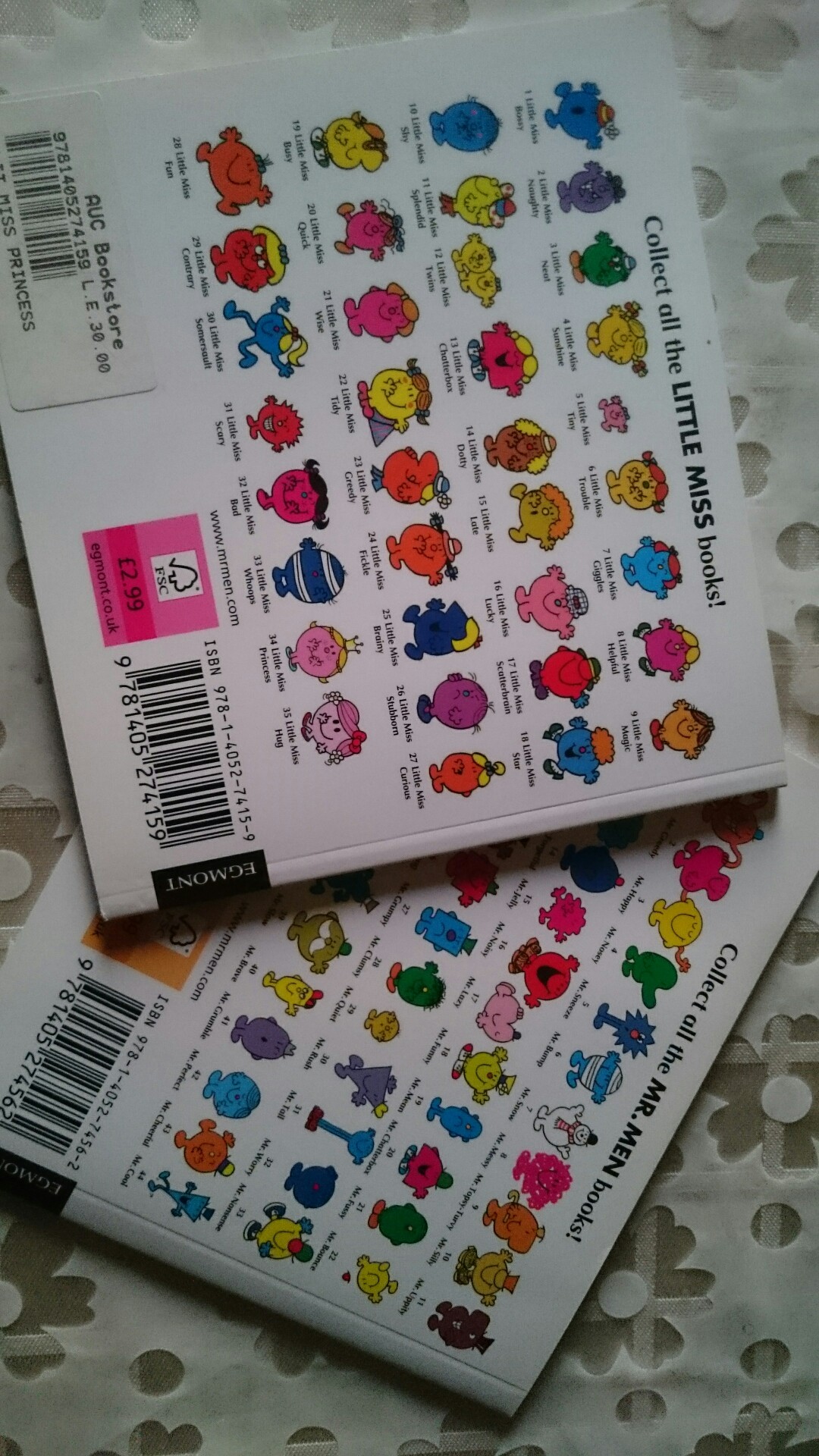
(back of Little Miss/Mr. Men books flickr photo by me (just took a photo from my phone

Now I buy these books for 3 main reasons

  1. They’re cheap 🙂 and abundant (so we haven’t yet run out of new ones)
  2. They’re small and light and portable so I can put several in her backpack wherever we go
  3. They remind me of my own childhood coz I used to read them to myself when I was a bit older than her (this means she can’t read them on her own yet, but she can read parts and she enjoys the reading together process so much the words “Read it Yourself” on some of her other books seem to traumatize her! This was a funny but worrying revelation. Making me wonder if she enjoys reading simply because it ties me to her rather than enjoying the reading intrinsically)

I have a lot of objections to the books, though. I don’t understand why the male characters are fully Mr but the female characters are Little Miss. Why little? I read about the original author (Roger Hargreaves) inventing the series to answer his (at the time young) son’s question “what does a Tickle look like?” and I love that the son in question, Adam, continued to add more books to the series after his father passed away.

I often think a book has so much potential but ends up falling waaaay short of what it could have done (like Mr. Nobody – imagine how meaningful such a book could be! But it was rather silly in the end). And sometimes the storyline is downright annoying. And often the humor is really difficult for my child to understand… Though I get most of it, lilk the time Mr. Wrong said, “What? I was right? That’s so strange because I am usually…” [turn page over ] “…left!”.

I do love how these books help my child learn the meanings of difficult words that are the descriptions of the characters (I don’t think even I knew exactly what Fickle meant before). I also think it’s interesting how they choose to illustrate each character to represent the adjective (or occasionally noun) that is their name. I sometimes joke with my kid and call her one of the characters when she does something. Occasionally I will make one up, like “oh, you’re Little Miss Thoughtful” (and of course I am then asked to explain what thoughtful means).

Anyway. All this long intro is just to explain that immersion in these books has got me thinking of all kinds of other books and characters that could exist…but copyright and all that… I don’t think Adam Hargreaves is on Twitter so I hope he doesn’t mind what I am about to do…

I started imagining what a Little Miss Open or a Mr. Open might look like. I started to visualize what their character would look like, and to draw one on my phone (I remembered partway through the frustration of that…that I am actually much better at drawing by hand than I am drawing graphics on a machine, so I will make time to do that, and maybe invent a few extra characters for my child in the process! Why not, right?)

So here is my caricature of Little Miss Open and it’s still in progress.

How does Little Miss Open Look? 

Some ideas:

  1. Wide-eyed because she is open to looking at everything and curious?
  2. Open-mouthed because she talks about everything openly
  3. With perked up ears because she listens well?
  4. Transparent?
  5. Open-hearted? (we can see an open heary in her transparent self – at which point i realized that these characters have huge faces with tiny legs/arms but no body so nowhere to put the heart… So maybe wearing heart on her sleeve? Err arm?)
  6. Open-minded – would we draw an opening in the head, or just never really close the head and have the mind popping out, or have a gear icon on her head symbolizing open process?
  7. Participatory – should her head be filled with thoughts/ideas of other people?
  8. Open arms? Open to collaboration with others?

Beyond the character’s looks, her behavior could take any number of directions…

  1. Open door to her house and whether this is always a good thing
  2. Sharing things, and whether sometimes she ends up oversharing to the point she might hurt someone
  3. Overly transparent to the point that she makes herself too vulnerable sometimes?

And then something interesting occurred to me. There is a book about Mr. Good who originally lives in Badland (poor fellow) where he is unappreciated (duh) but eventually stumbles upon Goodland… And I was wondering if maybe Little Miss Open is born Open but lives in Closed-Land then eventually moves to Open-Land.

Then I realized I am pretty much describing myself here, right?

I am Little Miss Open in my office and in my personal life. I am married to Mr. Private and have some colleagues who are  Miss Secretive and Miss Careful and Mr. E-Safety and such 🙂 but I also have my Open-Land, my online PLN of all the many Opens… Who are each open in their own way but generally more geared towards open than closed. So the Miss Vulnerable and the Miss Welcoming and the Mr. Collaborative and Mr. Narrator-of-Process and Mr. Share and Miss Amplify

I dropped the “little” before the miss coz it’s so sexist but it’s one of those cute things that’s sexist

Anyhoooo just needed to get this silly little brainstorm off my chest… If you’re interested in working with me on visualizing this, I may use it in part of my keynote 😉 I hope that’s not too silly.The rest of the keynote is kind of serious, I promise. But one of the beauties of being a parent is that in this horrible world, you get to be silly by duty for part of your day. And that’s a blessing.