
All posts by @librarianjoslyn

A day late…

I didn’t get around to making a post happen for #openlearning17 week 2 before it ended, but I did participate in our cMOOC in few (low-profile, lurker-y) ways.

A lot of people seemed to have previously read or heard of Vannavar Bush’s “As We May Think,” but this was my first exposure to it somehow (I swear I really did go to library school!). As my professional focus has shifted more toward scholarly communication over the last year, I was glad to have been introduced to such a foundational piece. Even more, I’m glad to be reading it for the first time as a part of a group of people who can really help me understand the context and application to scholarly communication now. Since I’m a day late, I’ll add just a few reflections, for brevity, in .gif format.

On reading Bush’s article and this blog post which really helped me think about what associative trails mean now (#meta-metacognition):
image

On reading this twitter exchange on note-taking (or rather, note-making!) as a research methodology:

image

And, on reading all the other tweets in Friday’s twitter chat and blog posts on the openlearning hub network that really illuminated this topic for me:
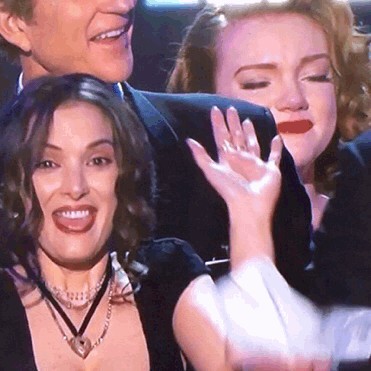
image

A day late…

I didn’t get around to making a post happen for #openlearning17 week 2 before it ended, but I did participate in our cMOOC in few (low-profile, lurker-y) ways.

A lot of people seemed to have previously read or heard of Vannavar Bush’s “As We May Think,” but this was my first exposure to it somehow (I swear I really did go to library school!). As my professional focus has shifted more toward scholarly communication over the last year, I was glad to have been introduced to such a foundational piece. Even more, I’m glad to be reading it for the first time as a part of a group of people who can really help me understand the context and application to scholarly communication now. Since I’m a day late, I’ll add just a few reflections, for brevity, in .gif format.

On reading Bush’s article and this blog post which really helped me think about what associative trails mean now (#meta-metacognition):

image

On reading this twitter exchange on note-taking (or rather, note-making!) as a research methodology:

image

And, on reading all the other tweets in Friday’s twitter chat and blog posts on the openlearning hub network that really illuminated this topic for me:

image

Gratis, Libre, and the Pursuit of Open

What a week to be discussing access and transparency as facets of open! Maybe because of the political events of this first week of a new presidential term, including the attempt to limit access to government funding scientific information, the access and transparency aspects of Pomerantz article “Fifty shades of open” resonated with me especially as I was reading.

In my workshops with faculty, we often begin with what most of us think of as the most impactful facet of open: gratis, or free of cost. This means a great deal to our students at this point and I think it will mean a great deal to our institutions soon as well, but it is a narrow focus to stop there. I have faculty ask if its permissible to employ fair use or to use licensed library resources as a part of their open courses. I tell them yes because I don’t want to limit their ability or motivation to provide a course free of costly materials to their students, and though I often want to add a caveat that its not truly in the spirit of open if they do it that way, I rarely do so. I struggle with how to frame that point without reaching so high into theoretical openness that would cause people to abandon practical openness.

But the article linked above got me thinking about the many ways we use that word, and what it really means in different contexts. We are careful to discuss definitions in our workshops and talk about the rights that we are looking for to make sure the materials we are using are useful in the ways we need them to be, but our focus in the end, is on gratis more than libre.

As Pomerantz points out, “openness breeds more openness” and I think maybe this is the way to frame my caveat about freely accessible and all the other rights that come with something that is open. “Openness is not free [of costs]” he continues. We need our students to become working people who contribute to that “virtuous cycle” of creating knowledge and who see the value in a culture that shares knowledge and learning freely. Without this part of an open education, I’m not sure if open can really be sustainable. As the saying goes, “freedom isn’t free.”