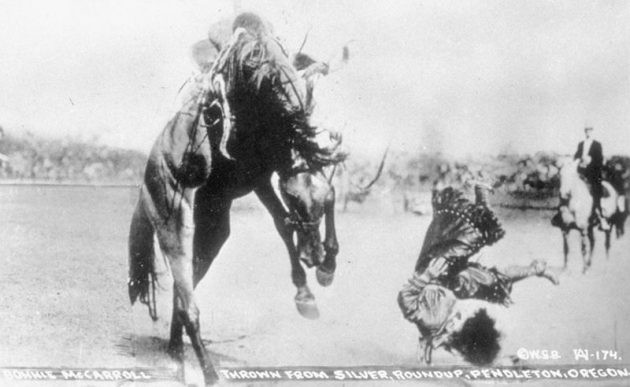
Tag Archives: ds106

Networked Narratives: Fair Use

The internet is down, again. Another annoying phone call, another appointment made. This time the technician found a connection problem outside my apartment and thus, no charge for the service call. After four months of international phone calls, emails, surveys and chats. Have I been talking to bots all this time? But that’s a different digital story…

This is my first attempt to reflect on the Digital Alchemy of Networked Narratives. On America’s Presidential Inauguration Day. Is this an omen? No, that would be digital augury and I’m interested in transformation, digital and otherwise.

That’s how I found the Center for Digital Storytelling, now StoryCenter, in Berkeley California. Learning to use story circles to explore my life and to increase my ability to listen with compassion has transformed me. Last week I had the honor to assist StoryCenter founder Joe Lambert teach a group of facilitators to continue story work in education, non-profits and social services.
 

In the same week I received the invitation to participate in netnarr, finished my Copyright for Educators & Librarians Certificate through Coursera (in anticipation of taking the new Creative Commons Certification class), and got an A in my Physical Geography class. It was a four week intersession online course that covered sixteen weeks of material. I’m pretty sure it’s some kind of academic fraud, but I’ll take the four units I need to finish my Associates degree in Sociology. Spring semester starts next week and I’m looking forward to my last SOC class, taught by my department chair; The Sociology of Death and Dying.

My main project this year is to finally create the structure for an eportfolio. I’ve been trying to understand how I can use one to document all my learning and experience. A retired scientific glassblower, I have so much experience to document that isn’t text based (implicit or tacit knowledge) that I don’t know where to begin. I’ve attended one AAEEBL conference, read several books and interviewed some portfolio users. Anyone else going to the AAEEBL Conference in Portland this year? My takeaway is that by building a digital portfolio (data base), one can reflect on their learning and experiences to make new connections and reach new understandings they didn’t realize at the time they were creating their digital artifacts. I look forward to including everything I make and learn while participating in Networked Narratives.

Long ago I set up my own domain. I tried blogging. No one cared, especially me, but I was just a cranky old returning Community College student pissed off at the Financial Aid Department. Lately, I’ve made many ds106 Daily Creates and cross posted them to my website, Twitter, Google+ and facebook. CogDog has inspired (shamed?) me to try and give proper attributions, but I’m still not sure if I’m tagging things in the best way. I know I’m not including the necessary metadata for the semantic web. (anyone else taking the Metadata Workshop at DHSI in Victoria this summer?) I’ve tried and abandoned all the other social media sites (who else has thousands of del.icio.us bookmarks and no followers?) with the same result, except facebook: Now I stay in touch with a half-sister I’ve never met because she found me on facebook.

The first thing I saw on facebook today was a reminder of my first ds106 post: Cow Punk. I love serendipity!
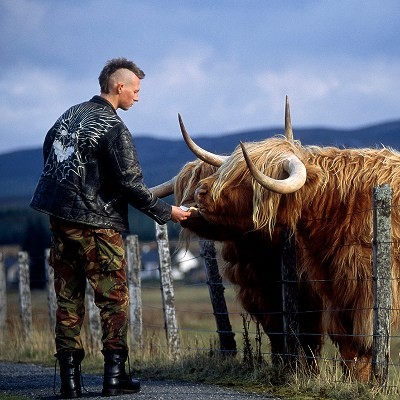
Punkwith mohawk feeding Scottish cow in Dalwhinnie, Scotland.

Dalwhinnie, Scotland Photograph by Jim Richardson
https://t.co/AmLSFcWa1M


I wasn’t sure it was my first post, so I googled how to search my twitter posts. In settings you ‘create archive’ which is emailed as a .zip file. Unzipping the archive you can view it many different ways, the easiest for me being through a browser. (Any JSON enthusiasts want to explain how that search works?) First I searched for #ds106: it wasn’t there. Harrumph (rhymes with Drumpf). How do I search my images to find which one was first? Google says just type modified: into the file explorer search box and files are automagically ordered by date. Then you can type a range after the colon if need be. There it is. I called it Cow Punk after the musical style popularized by The Beat Farmers, Lone Justice, Rank and File and X. I was born in Hollywood and lived in Whittier (home town of Richard M. Nixon) until I moved to the Bay Area. I included a link to Rank and File’s song/video “Ever see a sheep in a pork pie hat?” in my tweet. I was (hopefully) alluding to Scottish sheep (and cow) herders and their American cousins (cowboys) [should have left the typo ala CogDog *cowbots*], 60’s British Mods and today’s hipsters (pork pie hats), punks and edupunks. (google it)

It was my first post, why wasn’t it in my twitter archive? Doh! I started by playing with #western106, Alan Levine’s 2016 fork of #ds106. Back to search my twitter archive with #western106 and there it is! @ds106dc #tdc1472 #western106

A quick search of my gmail reminds me of the #tdc1472 prompt: “An old Western saying tells us not to approach a bull from the front, nor a horse from the rear. It also tells us not to approach a fool from either side. Make one image/drawing or several (like in a comic).” I just googled for an image I liked and downloaded it. Now, an image search of my tweet reminds me that I misappropriated a National Geographic picture from “30 Years in Pictures: Celebrate National Geographic Traveler’s first three decades with flashes from the past” It was from “”History in a Bottle,” a look at the Scottish Highlands—and its single malt whisky—that appeared in the July/August 2001 issue of Traveler.” Ooops. And I didn’t attribute the photograph as “Dalwhinnie, Scotland” by Jim Richardson. Since all I did was crop and reverse the image, I can’t even honestly claim it’s repurposed. In my Copyright for Educators & Librarians class I recently learned to go through the Four Factors used by the US courts:
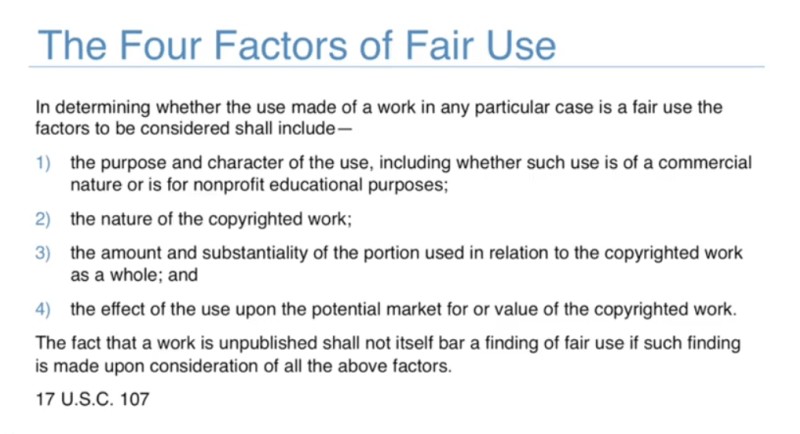
Four factors of Fair Use law in US.

Nope, nope, nope, nope; this doesn’t augur well. My only defense is that I’m a student, a really old student. All I can do now is wait for a letter from the National Geographic and perhaps the Scotch Whisky Association. Good thing the Dalwhinnie Distillery isn’t a member. Ain’t google grand?

I’ve learned that I don’t have to do anything to secure my copyrights, so here are images I do have the right to use.  I took them on Route 66 in Albuquerque, New Mexico, in 2016 while at the Southwest Popular/American Culture Association annual conference. I didn’t get a signed release, but the young person was sitting on a public sidewalk so I’m not worried. He was a block away from Maisel’s Indian Trading Post, built in 1939. Visiting Maisel’s reminded me that I was 11 when I started working during summers in my aunt and uncle Pobar’s Chevron Service Station And Sawahu Trading Post in Organ, New Mexico, southwest of White Sands Missile Range and National Monument. That’s Maisel’s politically incorrect antique sign.
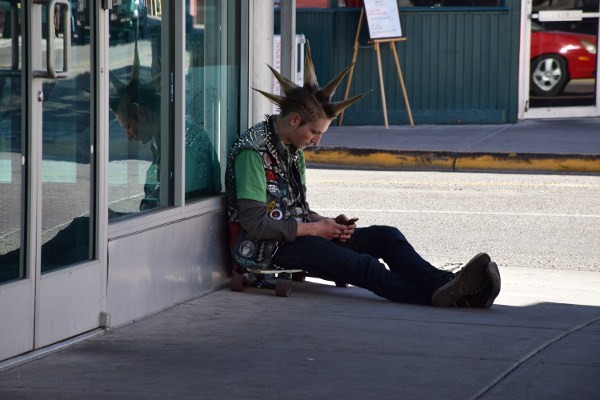
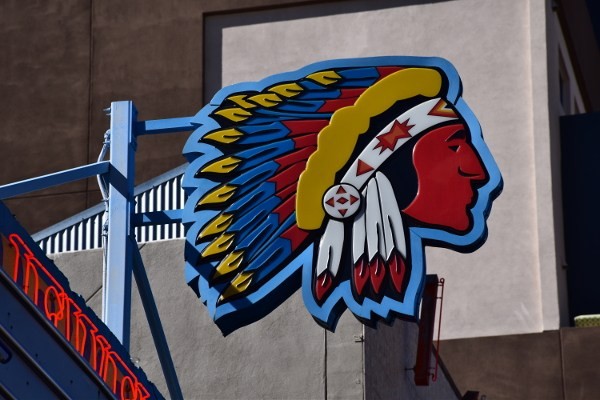
I didn’t see the obvious connection between the photos that afternoon on Central Avenue. Today while looking looking for Cow Punk it jumped out at me. And all I did was resize the originals, so now I’m reflecting on the reflections!

The night before President Trump’s Inauguration, there was thunder and lightening in Oakland, California. This is rare for the Bay Area (after taking GEOG1 I could explain why) and I took it as an inauspicious sign for living under the new regime. Last week I made a commemorative thing and I’ll use it to close my inaugural post. Look closely for the shadow. I’ve learned that what I see on my 4K monitor isn’t what everybody else sees, especially on their phones.

President Donald John Trump - with text Super Callous, Fragile Sexist, Extra Braggadocious. Triple chins in ornate gilt frame.
President Trump Inauguration January 20, 2017


Notes

“30 Years In Pictures: Celebrate National Geographic Traveler’s First Three Decades With Flashes From The Past.”. Traveler 2014. Web. 21 Jan. 2017.

“Augury”. En.wikipedia.org. N.p., 2017. Web. 21 Jan. 2017.

“Cowpunk”. En.wikipedia.org. N.p., 2017. Web. 21 Jan. 2017.

“Inauguration”. En.wikipedia.org. N.p., 2017. Web. 21 Jan. 2017.

The Small Random Things That Openness Affords

This kind of small act of near random #ds106 connection will not increase enrollments, will not “fix” education, will not improve institutional metrics… yet I just cannot let it slip by without a small “wow”.

And the ironic thing is that the tweet in which I saw it came into my view about 5 minutes before I had to jump into a video call to Cape Breton University by invitation of Grant Potter. I was asked to say some encouraging things about openness to a faculty group there.

While I am still musing on the takeaway from Catherine Cronin’s OER16 keynote caution about “amazing stories” not being enough to convince people to share openly… I did so anyway because I do believe we have a case to make about shifting teaching to a place where the audience is more than the teacher giving out grades.

But let’s rewind back to a #ds106 Daily Create from January 25, 2016, when I was still casting most of them in a western theme. In consideration of feedback I heard about westerns being such a male dominated genre, I had been looking to find female western figures, but in fiction, history. I cannot remember the exact search path, but I was rather jaw dropped in reading about an early 20th century rodeo bronco riding star named Bonnie McCaroll:

Bonnie McCarroll, born Mary Ellen “Dot” Treadwell (1897 – September 29, 1929), was a champion rodeo performer and bronc rider most remembered for her death at the Pendleton Round-up in Pendleton, Oregon. She also excelled in steer riding, bulldogging, and automobile jumping.

In 1915, her first year of rodeo competition, McCarroll attracted national attention from a photograph taken of her being thrown from the horse named “Silver” at the Pendleton Round-Up. In her career, she performed before kings, queens, such dignitaries as U.S. President Calvin Coolidge, while he was vacationing in the Black Hills of South Dakota in 1927, and before countless rodeo fans worldwide. After her death, rodeo officials instituted safety regulations and eliminated bronc riding as a women’s sport.

This fantastic photo is what caught my eye and landed me in that Wikipedia article:

Public domain image from Wikimedia Commons

And thus we had a Daily Create on January 25, 2016:

tdc1478

One of the many beautiful responses was Ron’s hand colored photo of Bonnie McCaroll (Ron has been a near perfect ds106 Daily Create Tour de Creative Force)

For some reason, 93 days after Ron tweeted his response, someone replied:

Ann is a bronze sculpture artist from Bridgeport Texas who specializes in works depicting cowgirls (see her web site at http://annayresbronzes.com/).

It’s not a total fluke, I would guess Ann does some regular searches on the figures she uses in her art, but still, here we go again, with an unexpected connection, however small, generated because Ron shared his art in the open.

It would not be possible without an open web.

Keep that in mind was other mega entities are praised for “eating the internet“.

Thanks Ann for finding out little corner of the web.


A screenshot of the sculpture “Bonnie McCarroll 1915 Pendleton Round-Up” by bronze artist Ann Ayres, from her web site http://annayresbronzes.com/

The post “The Small Random Things That Openness Affords” was originally emerged from the primordial ooze and first walked on land at CogDogBlog (http://cogdogblog.com/2016/04/openness-affords/) on April 27, 2016.

Open is The Porch Light Being On (and more)

When I hear folks in my stream sharing stuff for Open Education Week, my inner cynic wonders what they do the rest of the year. Or speculate a world where we do not have to draw attention in this way to Openness.

I get it. The whole idea is to raise awareness, and most of the people I hang put with are truly Year Round Open Education people- the week is for a broader swath of people. I am not criticizing the week. Ok?

And as open gets washed and wrapped around commercial products, we do and should do, develop our own definition, rather than abiding by someone elses. It takes time and experience.

So I think of it as that light being always on, all night long, heck all day long.

welcome new light
flickr photo shared by AlicePopkorn under a Creative Commons ( BY-ND ) license

I am not saying that everything open needs to go on for ever, but in a lot of Certain Open Courses That Usually Start with an X, once the last item on the syllabus / schedule passes on the calendar, the tent goes down and the lights are turned off. Do people really hang around their past Coursera/Udacity/EdX MOOCs? Why would they?

The Open Stuff that I am interested in, is not just that anyone can walk through the door, as there are often ONLY IFs. They can walk through the door ONLY IF they create an account and login. They can walk through the door ONLY IF they are in certain parts of the world (geographic limits on media). Openness is not just a door.

And even if the door is open, what good is it if you walk in the door, and no one is there? That’s the Field of Dreams approach of Putting it On the Web and Calling it Done.

Okay, so I am not taking this post in the direction I thought I was in the beginning. That happens.

Rather than trying to say what open is / isn’t, I’m talking about the kinds I personally think are important.

The kinds of things that carry it’s own momentum above, beyond, outside the “course” or even the people who launched it. The ones where people participate in that maybe you do not even know about. That do so sometimes without you even knowing about it.

Of course, in my case I am taking about DS106. I am a proud Cult Member.

ds106 poster by Jim Groom http://bavatuesdays.com/theyre-here-2/
I think Martha Burtis made this? And yes, Stephen, we are a cult.
I made this one
I made this one, the faces are Tim Owens, Jim Groom, and Martha Burtis

If folks are spontaneously creating posters, songs, GIFs, videos to celebrate your Open Thing, and it’s not any kind of assignment, you’ve done well.

But this allegiance/affinity thing is not at all limited to ds106. I’ve had a personal theory that you are most rooted/connected to the first cMOOC you experienced a mind-blowing, connecting-around-the-world experience. Others had it with CLMOOC. ETMOOC. MOOCMOOC. The various rhizo14,15,16 gardens.

It’s almost a tribal thing, and sometimes we playfully tease each other

Really we are much more together, in an affinity of “not being like all that other crap.”

And a question becomes, in what ways do you design your open experiences to allow for the kind of serendipity you do not anticipate? Do you leave room/space for that? Because serendipity, the unintended things that happen are, to me, the sources of Great Potential Energy of Goodness – this does not usually happen when you have a strict structural objective compliant design where people are there to collect a certificate or a badge.

It happens a lot on DS106… because, despite what you may think, there is no single DS106 entity. It’s an overlapping un-diagrammable space of multiple iterations of different courses, it’s where people can make use of just portions of it- the Open Assignment Bank, the Daily Create, DS106 Radio, or just floating in and out of a #ds106 hashtag or the Google+ Group that someone else created.

There is a lovely undertow of people playfully riffing on ideas and creations; but that is not limited to DS106. I’ve seen it in CLMOOC, rhizoXX (see recent example from Simon Ensor)– this is stuff you cannot plan for, all you can do is spread some fertilizer, sunshine, water, and a few seeds (to use the metaphor).

There is no boundary to it.

I thought of this recently in watching activity in the #ds106 hashtag in twitter. The lovely thing in this space is, that quite often, you do not always know who is there with what class, or on their own. The boundaries of a “course” or “class” are completely blurred and smeared.

In the last weeks, I notice a lot of daily create tweets with the tag #diglitclass. I thought it might be the group from CUDenver, but that’s a PD class and they sort of have a tag.

So I asked… and when you ask, often you get an answer.

Thanks, Myeasha, who I am guessing is a student. Think about that, a student speaks up to represent her class.

Chadron State College? I had never heard of it, but easy enough to find out it’s part of the public University of Nebraska system. From my years in studying geology, I know Chadron for the name of the fossil rich Geological formation seen prominently in the Badlands of South Dakota but it is named for it’s location to near Chadron, Nebraska.

Now I know more. There is a class there in Digital Literacy using part of ds106, and we have no idea why, how. They did not need to ask permission to use the Daily Create.

This is a porch light being on, the door being open, and people freelt coming and going from inside and outside.

This is open.

Have nice week.


Top / Featured Image: The metaphor I sought for this post (I don’t write until I have one and an image) was the Motel 6 ad line “We’ll leave the light on for you” (for some reason I thought it included “porch”, so my metaphor is “wrong”?). But I was hoping for an image of an outdoor porch light on at night.

A Google Images / Licensed for Reuse search for “porch light” was dismal. There are musical references, and about 3 rows down all you get are porches. Compfight too was slim. Then I thought, “I have a porch light and I bet I have taken photos of it” — the obvious of search your own photos. And BOOM! a perfect image I did not even envision, this from a box of switch plate covers at a thrift store near me, with the “Porch Leave on Label”. I did not even see this one in my mind; that’s what I love about digging for metaphor images.

The image is my own flickr photo https://flickr.com/photos/cogdog/12098712106 shared under a Creative Commons (BY) license

The post “Open is The Porch Light Being On (and more)” was originally pulled like taffy through a needle’s eye at CogDogBlog (http://cogdogblog.com/2016/03/open-is-the-porch-light-being-on-and-more/) on March 11, 2016.

Gaps, and Open Space in the West: “The Painted Desert” (1931)

The western landscape is full of emptiness, vast stretches of drab land, interrupted by deep canyons or sheer mountains, and infrequent water. My reasons for recently watching The Painted Desert was largely because it was set in an area close to where I live. I had it queued on Amazon Prime; a lesser quality version is available on YouTube.

It’s hardly a great movie, and in many ways left me puzzled (or more “Meh”), a lot to things that seemed missing or inconsistent. But that said, if you cannot find something of interest to write about, well…

I’ll leave the summary to IMDb

Western pardners Jeff and Cash find a baby boy in an otherwise deserted emigrants’ camp, and clash over which is to be “father.” They are still bitterly feuding years later when they own adjacent ranches. Bill, the foundling whom Cash has raised to young manhood, wants to end the feud and extends an olive branch toward Jeff, who now has a lovely daughter. But during a mining venture, the bitterness escalates. Is Bill to be set against his own adoptive father?

Sound (and not)

I noted it was an old movie (1931) and frankly in the first few minutes, I was wondering if it was a silent movie. Nothing is said as Jeff and Cash come across an abandoned wagon. I almost expect Chaplin gesticulations and cue cards.

Actually the only sound seems to be the spoken lines and what was recorded on the set. There is no music. There are parts where between dialogue is a ghostly static, no wind blowing, or ambient sounds.

One might chalk this up to being an old movie, but somewhere I read someone mentioning earlier movies that did much better with audio.

Two Notes and Thats It?

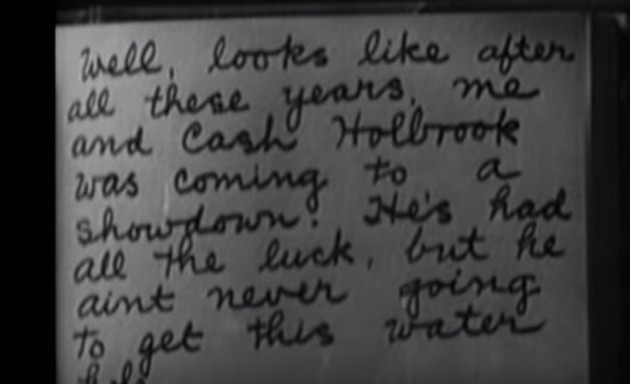
The movie opens (1:05) and I think there is one more scene (9:05) where a notebook with handwriting is used to fill in the plot.

The notebook is used t indicate the passage of time at 9:05

It feels like it was an idea that just got dropped. Or maybe after the gap in time as brought to the present, it was not necessary? It feels like a rickety bridge built over a plot gap.

Gaps in Character Development

Since this is the part of #western106 that we think about characters, I found most of the ones in this movie stiff, thin, or just not built enough for me to care or be interested in.

The movie is built on this conflict between Jeff and Cash, apparently they traveled together to the West, apparently with a joint plan to work together (never hinted at). The whole scene where they find the baby feels fill of gaps too.

They come up to a wagon, hear a baby crying, they take him, and are riding off in like 4 minutes. It’s left to wonder what happened at that site, they did not even investigate. The timing feels wrong. This is a hinge for the characters in the movie, their fighting over Bill in their lives (the grown man from the baby).

They have some comedic moments with the baby, and then there seems to be no comedy in the rest of the movie.

Then they have this big blow up near the water hole, that just seems to come out of nowhere. Up to this point there was nothing to indicate these were not best buddies, and now they are viscously bickering (over whether to stay at the water hole?, and Cash rides off with the baby as a shield.

Then we get a note, and a return to the water hole. Because the lighting is exactly the same, there’s not much sense of time passage except for there are a lot fo buildings around the watering hole, and Jeff is there with a young lady. Somehow we have to figure out it is her daughter. The mother? maybe I was not paying full attention, but how these two people came to live there? We just jumped 20 years.

In her first scene, Mary Ellen Cameron (played by Helen Twelvetrees seems like a rootin’ tootin’ wester gal, she pulls out her shotgun ready to defend her Dad’s land, but a few minutes later she is more or less pushed aside from the action by Brett, and the rest of the movie, she’s more of a eyelash bashing bimbo. Brett makes a big move on her, for some reason she takes up with Bill; there is no lead up to that as a romance. It just sort of happens out of the blue).

The Gable Effect and Boy oh Boyd

Clark Gable as Rance Brett

This movie seems to be most well known for being the first talking movie role for Clark Gable, and is said to be the role that rocketed his career. His is the character that seems to have the most oomph and feel to it, and the most western grizzled cowboy type. Jeff and Cash seem to speak more flatly.

I lost track of where I read it, Gable had no horse riding experience before this movie.

The Brett character does work for being a man of mystery, he’s “from Montana” on his way to New Mexico, but for what? He’s got this affection for Jeff’s daughter Mary Ellen. He makes a strong flirting move early, but then he is never that bold later. This is important because it creates the tension with Bill (the grown found baby)

I was not even sure who the actor was til I looked it up, but Gable does have a strong screen presence.

The bigger role in the movie was William Boyd playing Bill Holbrook (wondering if Holbrook as chosen for the name of the town closest to the Painted Desert?). His character is potentially the most interesting, because he turns agains Cash you raise him and made efforts to try and broker piece with Cash’s old nemesis, Jeff. Why Bill wants this is not clear.

Boyd had a hugely successful career in Westerns playing Hopalong Cassidy starting in the mid 1930s.

The Landscape

The Arizona landscape gets only a few glances at scene changes

The movie is named, set in, and filmed in the Painted Desert of north central Arizona and adjacent areas. It’s interesting to see the pastel colored land rendered in black and white, which might add a bit of starkness to it.

The precious watering hole

The mystical watering hole (made up I think) is a key element, as well as the presence of mine-able minerals. There are a few scenes out in the landscape, but it does not feel as much of a presence as the films of John Ford.

They seem to be in a really remote location; Jeff’s refusal to let Cash water his cattle a the watering hole requires a 27 mile re-route, but for being remote, they sure seem to be very close to a populated town (which I do not think is named).

There is the complete mine set build and destroyed. Apparently some crew were injured during the blasts done for that scene. Oops.

The Unexpected

For a western this movie is missing the tropes of Really Bad Guys, bank robberies, gunfights, fistfights, jumping from trains, and dealings with Indians.

In the scene where Jeff and daughter get ready, they do the classic putting their ear to the ground. This is where it should turn to a marauding band of Indians, but surprise! It’s cattle.

Then we have this rising tension of Cash bringing his cattle in, but as a suprirse there is a whooping band of horsemen who drive the cattle away. The sounds they are making sound like Indian war cries, but ti turns out tis just Bill and (??) we have no idea who else helped him.

No Indians appear in this movie. No Mexicans either. It’s a White and White movie.

Really the movie is just this long lived (and little explained) animosity between the men in the beginning who found a baby. It’s almost more of a family drama, just set in the Painted Desert.

There’s Probably More

I lost some interest and attention over the last 1/3 of the movie, and maybe even noticed the credits rolling before I knew it was over.

The gaps and things that feel missing from this movie seem to have more to do with the behind the scenes actions of the movie studios and production companies. From one of the reviewers on IMDb, titled “It’s Not All There”

The Painted Desert was one of the last features to be produced by Pathé in 1930 before being taken over by RKO, and one of the first to be released by the emerging RKO-Pathé Distributing Corporation. After its initial release it was put back on the shelf, supposedly never to be seen again. During this time four key action sequences were removed to be used as stock footage in later RKO films, among them the 1938 re-make also titled The Painted Desert. In 1955 the RKO library was sold to C&C Television Corporation for TV syndication, primarily on CBS affiliated stations, and both versions of The Painted Desert were in the package. 35MM source material for these 16mm television prints was missing all of the deleted footage, so that what remained, and all that viewers have been able to see for the last fifty years, was a lot of talk, and practically no action. The sequences which are missing are most of the cattle stampede at the beginning of the film, a wagon hi-jacking and subsequent stampede into the canyon mid-way into the film, an attempted, but unsuccessful wagon hi-jacking soon afterwards, and the big mine explosion and resultant landslide that destroys the mining camp further on. (Two very impressive shots from this last sequence can be found in Republic’s Red River Valley (1936).) Frustratingly, the results of these events are shown, and much talked about, but the events themselves are nowhere to be seen. The version shown on Turner Classic Movies, though of superior visual quality, having been derived from the surviving original 35MM material, is still missing these key sequences, though no mention is made of it on the air.

It makes sense now that it’s not even clear what the “movie” is as it can get picked over and re-arranged by movie studios. It even gives some pause to think all that happens to get that movie on the screen, and it has as much to do with the business as the writing, directing, etc.

Not a great western, but still found a few things worth looking into.

I am just all the time appreciating IMDb more and more. It looks like any other web site, but when you peek under the corners, there is a whole raft of things it is doing with data. Like the Connections section where I note that The Road to Perdition makes a reference to this movie.

I remember IMDb being around from my early days on the web in 1993. I was thinking of it reading Adam Croom’s post on something about blockchains and data, but he makes an interesting metaphor from IMDb:

Let’s start first with credits. Specifically movie credits. Arguably, the website my wife, Katie, goes to most often is the International Movie Database (IMDB) website. When we watch a movie, 20 minutes into the film, without fail, she will whip out her phone and pull up the IMDB page for the movie.

Most recently, we were at the movie watching Star Wars: The Force Awakens (I promise, no spoilers). A scene comes on with the General Hux character. She thinks she’s seen him somewhere so she’s searching on IMDB. A-ha! Domhnail Gleeson. He was in a Black Mirror episode, she tells me. My facial-name recognition is about as good as a goldfish, so I have no idea what she’s talking about, but she goes on to explain the exact episode that he was in.

And suddenly we have pulled this information together as network; something in which we can relate to and empathize with based off of our previous relationship with other texts. Arguably, the number one value to the user in the social network is this: a way to organize and interact with their network which is made up of these disparate connections that have taken place over time.

So those in the film industry, including actors, gather credits and over time these credits start to build up a collective body of work. I can interact with these credits and try to put together my own interpretation of who this actor is and how they have developed over time based on different variables. Box office smasher or flop? Lead role or supporting? Who was the producer? Was it an independent film? Is this actor more dramatic or comedic? These are all a bit of judgements on my part, as the interpreter, because, ultimately a credit is a credit is a credit. The credit is fairly neutral.

It got me nostalgic because I remember an interesting bit of history sitting on the IMDb site, that it actually pre-dated the web starting within a newsgroup. I found the note on IMDb, but the current page is truncated, it seems. This is where I open my multi-tool and open the Internet Archive Wayback Machine to find the version of the page I recall.

It’s like being a web archeologist. I am gently dusting off the fine dust on this page with a soft brush, and there it is- the first time this great site went on the web, it was on a server at Cardiff University in Wales:

The first web version of the database went live on the servers at Cardiff University in Wales. There is a fun bit of e-mail dating back to those days between web interface author, Rob Hartill, and Col Needham, both impressed when the web interface got 100 accesses in a single day. In recent years, the IMDb website has been serving over 2.5 billion accesses from over 57 million visitors every month.

Imagine that, another huge internet innovation birthed in higher education. Back when it really was an internet frontier, the Wild Wild Web.

Yep, there’s gold again, bags, pans of it…

wild web

though the site that pretty picture came from seems more web snake oil sales than driving herds of packets across the plains.

Oh well.


Top / Featured Image: Screen capture from The Painted Desert (1931) found on YouTube – this is the early scene where Rance Brett (right, Clark Gable) meets Jeff Cameron (left, J. Farrell MacDonald)

The post “Gaps, and Open Space in the West: “The Painted Desert” (1931)” was originally cracked open and scrambled from a rotten egg at CogDogBlog (http://cogdogblog.com/2016/01/painted-desert/) on January 25, 2016.