Tag Archives: openlearning

Hello #OpenLearning17

I’m excited to join the party at Open Learning: A Connectivist MOOC for Faculty Collaboratives. While I’ve been blogging for the last couple of years at Digital Pedagogy @ Austin College, I’ve inexplicably put off writing and speaking in a space that is truly my own, in a voice that is truly my own. The hypocrisy of it, to be honest, is that I encourage my faculty colleagues and our students to claim their own online domains, to think and write and work in public, to blog and to create in an open connected network. Even though I wasn’t really doing it myself!

For whatever reason, the chance to be a part of this course has broken through my inertia and resistance. Especially after hearing Gardner Campbell’s recent keynote at the OU Academic Tech Expo, and catching his interviews with Laura Gogia, I felt that now was “the acceptable time” to make the leap. I’m grateful that you guys have opened the course to those of us beyond your fair state of Virginia.

Looking forward to learning with all of you…and welcoming any advice and suggestions for shaping up this here blog and website!


Trying not to kill my mind

Since fear is the mind killer, I am trying to have some courage.  My mind needs all the help it can get these days.  My fear in joining the Open Learning 17 faculty collaborative isn’t really about writing poorly or having nothing to say that anyone else wants to read (although I have those fears too); but more a fear that I won’t be able to keep up! Fear of being too busy.  But Laura Vanderkam recently reminded us that it isn’t about the quantity of time we have, but about how we set our priorities.  I am setting out this semester to facilitate an Open Pedagogy Learning Community at Keene State College where I work- but I have a lot to learn!   It seems like a good idea for me to take advantage of as many learning opportunities as I can, so here I am.

Opening lines

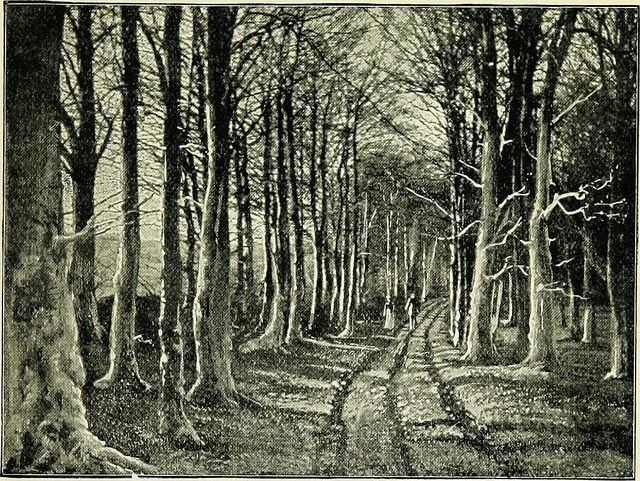
Image from page 30 of “British sanatoria for the open-air treatment of tuberculosis : with numerous illustrations ; [reprinted with additions and alterations from the “West London Medical Journal.”]” (1899)

It’s been a while since I joined a MOOC. Mostly that’s because I recognize that I don’t have the time. #OpenLearning17 is hard to pass up though, because of the format, the great people involved, and the topic, which means a lot to me. Hopefully I will find some openings in my schedule so I can put something in and get something out of it.

I’m thinking about my journey to open education. I’ve always been a heavy library user, and the library represents a form of open education although I never thought of it that way. Fifteen years ago or so I enrolled in a distance ed masters program in digital printing and publishing. It taught me to get out of the printing industry, but I learned some other lessons as well. I noticed that almost all of the tools, readings and materials we used were freely available online.  What we were paying for in the program was mainly the selection and organization of the materials, and some occasional feedback and interaction. Thinking there might be more of a payoff in learning about the selection and organization of information, I dropped that program and entered one in library science.

Then, as I was transitioning from a K-12 librarian to academia, I found out about MOOCs. I thought this was a brilliant innovation.  Siemens and Downes opened their course to learner input, and at the same time opened it up to the public, sharing the learning experience with the world and seeing what the world could add to it. This became addictive, and eventually I got sucked into ds106 and never escaped. (ds106 is 4life, you know.) So I’ve been thinking about the value of open resources and the potential of open pedagogy and practices, trying to talk the talk and hoping to walk the walk, to get better at it and do it more.  OpenLearning17 can be another step on the journey.

I need excuses to try new things, or: Saying Hello to #OpenLearning17

I’m getting ready to go to bed, honest.

But before I go to bed, I need to thank Autumm for reminding me of what I heard at OpenEd – that #OpenLearning17 is a thing, and is happening, and I’d fully intended on being a part of it.

Even as I’m still getting my arms around this demanding new job in this demanding new place, I am going to take a few hours of my time this spring to (attempt to) keep up with this and make a few public comments along the lines of this here syllabus. I have plenty of good reasons – nah, let’s be real, excuses – for doing so:

1. I’m still an Open Education neophyte. I threw in a couple of last-minute assists towards one open educational resource in particular that I love a lot, but OER are one thing; that’s not fully shifting your attitudes towards the classroom or your methods of teaching to give the learner more control and to give you less. I want to see more of what my peers at other institutions are doing.

2. I speak for two groups of faculty that don’t tend to get a whole lot of attention in these dialogues.

  • I’m science faculty, and historically physical science faculty (although I seem to be focusing a lot more on biology these days, darn that cross-disciplinary doctorate) and I’ve had roles in pre-professional education and pre-professional advising in particular. Premeds get a very precise list of courses they have to take to prepare for a very precise standardized exam that plays a very outsized role in their admissions process. Other pre-professionals (pre-dentistry, pre-optometry, pre-pharmacy) have different precise demands. The things asked of those teaching and advising those students don’t tend to get associated with “student agency.” How do we take well-defined – even overly-defined – curricula and bring open attitudes towards our work there?
  • I’m employed at a private (or, to use the industry euphemism, an “independent”) institution with less selective admissions in the Central Appalachians. When you think of private colleges, you think of places that have large endowments and a wealth of resources – environments that I have never worked in.  And when you hear of institutions tending towards open access, you think community colleges or regional state universities, not privates. The vast majority of my students are either local or are student-athletes drawn from a wider region (but still generally East Tennessee or border counties of nearby states). There are a lot of faculty like me, but I don’t hear too many of the voices like mine among the open education community. How do we take our rurally-educated, tradition-conditioned students and reveal the possibilities available to them?

3. I’ve had an occasion or two to start conversations locally about what Open Education is and how to go about implementing it – despite the fact that, at present, I’m not really anything that resembles a role-model. (This semester will be, I fully hope, my last pass at teaching organic chemistry for some time. Am I having my students purchase access to a vendor’s proprietary software so I don’t reinvent the wheel for a class that I may never teach again? You betcha. There’s open practices, and then there’s essential laziness, and I am fully embracing the latter right now.) I need more deliberate ideas for how I go about becoming somebody who has practices that can be pointed to, especially if (as above) I’m constructing those practices specifically within that premed-education context.

4. I still have a ton of thoughts throwing around my head about my fall, and everybody’s fall in particular, and a really stupid election, and a really amazing conference, and these people who have come into my life both locally and internationally and have been inspiration and dedication and love. I’m not going to get them out without a framework. This is a nifty and relevant framework. Let’s go, then.

5. OMG YOU MEAN I MIGHT GET COACHING FROM @GOOGLEGUACAMOLE WELL THAT’S ALL THE EXCUSE I NEED RIGHT THERE I AM IN AND I MEAN I AM ALL IN YOU GUYS

So, #OpenLearning17, then. I’m going to speak up, and probably be kind of dumb doing so, and probably leave myself open to be shouted down a bit. That’s fine. I have a lot to learn.

Be patient with me. I will be listening.

But first, sleep.

Laura Gogia on the strategies – and welcome surprises – of open, connected learning

In part two of our conversation, Dr. Laura Gogia talks about strategies for getting to meaningfully connected learning–and for dealing with the feeling of information overload. (You might call it FOIO, not to be confused with FOMO.) Laura also discusses how effective strategies for openly networked learning can also lead to moments of surprising and rewarding serendipity. There are paradoxes at work here, and Laura explores them with her characteristic insight and zest.

For more of Laura’s thoughts and plans regarding her role as “connected learning coach” for Open Learning ’17, don’t miss her blog post over at “Messy Thinking.” It’s a tour de force.

#openlearning

Watched a video interview with the ‘connectedness coach’ or something like that for the course.

Truth be told, if I hadn’t had 15 hits on my little equity post, I’d have forgotten about #openlearning.   The semester has started so my job is actually serving students.  (Yesterday was a day I wished I had a way to keep track of what I did all day.   I was regaling it to my friend and kept having to say “Wait! Wait! There’s more!”)  There’s also the stuff of death and taxes that has eaten much of my focus.

Still, the “first week” of that cMOOC (‘connectivist’  so “learn from each other” rather than ‘here’s some lectures from MIT guys, aren’t you lucky?’)   doesn’t start ’til tomorrow — I suppose there are things in their LMS that will “open” then because right now it just claims (falsely) that each week listed on the syllabus will link to its details.

So far (right, xious… it hasn’t even **started** yet ~ )  it still feels like a whole lot of academic talk about the academic world and ‘openness.’

We are having some of those issues out on the front lines.   Friday’s anecdote #7 was a kiddo not being able to find courses to enroll in (starting at midterm since it’s too late for Spring)… I told him about our new online independent skill-building options and he said that well, he needed a course.   He knew that he just didn’t get things done independently.

(OTOH, anecdote #3 was the Brazilian who listened to a chunk of Modumath and said, “It’s perfect!  He talks slowly and explains things!” — and we’re trying to make that more open)

Lots of us on the edge of open — we’re the ones who *do.*   So … it’s easy for us to project that onto the rest of the world… a world of people who benefit from a lot more structure.   I actually remembered to ask people coming in for that independent stuff (it can be done on the internet anywhere but — guess what!! — they want to *go to school.*)  about making a folder and logging time and progress.   (I have qualms.   I cannot remember things like folders.   So far, though, *they have.*   All of ’em…. I really should get that other guy a folder…)

Why does that belong in this #openlearning blog post?   Because “open” should be better than “okay! open for swimming!” on the open seas.

We don’t have a “course” because … then we’d need students to be “in the system.”  They’d need the right kind of email address. Even if it’s open to everybody, they have to do a mess of paperwork and … some of the folks in some of hte groups who’d use it are undocumented.  I’d like to see us set up “houses” like Hogwarts and … you can pick your character.   (Didn’t Second Life do something like that?)

Then *if you so choose* you can find ways to connect with your identity and get credentials.

If “open” is open to people with the right tech equipment, the right tech skills, and even then there are hoops to navigate…  per the section in Fifty Shades of Open  about “open means use,”  that’s not really open.

How to provide the structure so many people need for good learning … without that structure turning into insurmountable hurdles?   Let’s explore…


Laura Gogia, Connected Learner and Connected Learning Coach

Dr. Laura Gogia practices leadership in “connected learning,” a paradigm that shaped the work of Virginia Commonwealth University’s Academic Learning Transformation Laboratory (ALT Lab), and one that continues to inform vital research and practice around the world. This “way of life,” as Laura describes it, also helps to describe the many powerful links between AAC&U’s Faculty Collaboratives project and Open Learning ’17.

Laura sat down with me recently to describe her background and how her work first as a physician, and then a Ph.D. student in educational research, led her to the practice of openly networked learning. In part one of our conversation, Laura tells the story of her search for community, and how as Open Learning ’17’s “connected learning coach” she will help our community of learners find their own paths to more effective networked learning.

Please click on the image below to see and hear our conversation.

In part two of the interview, coming soon, Laura discusses strategies for the most effective kinds of connected learning. She also points out important connections–or “crosswalks,” as Susan Albertine calls them, between connected learning and the “mind-liberating education” Dr. Albertine and the AAC&U advocate as an essential part of all higher learning.

You can read more of Laura’s impressive and soulful work on her website, Lauragogia.com, where you will also find a link to her blog, “Messy Thinking.”

Okay, here I go…

I’ve decided to sign up for the AAC&U Faculty Collaborative’s Open Learning Connectivist MOOC, which starts this Monday. Let’s see if I can convince myself that this is a type of procrastinating…

See ya, with more blog posts on open learning and such.

Edit: The RSS feed for Blogger that the friendly people at http://openlearninghub.net/the-stream/i-have-a-blog/specific/ suggest doesn’t work