Tag Archives: openlearning

Trailmix anybody?

Trail Mixes in Vending Machine flickr photo by Pat Guiney shared under a Creative Commons (BY) license

OK, I’m pretty late with this. My day job – workshops to give, roundtables to facilitate, assignments to grade etc. etc. – is running my agenda these days. I am kinda following the readings and listen to all of your blogposts on my one-hour commute, read by … I think the computer voice’s

Ted Nelson: Artist, Philosopher, Filmmaker, New Media Pioneer

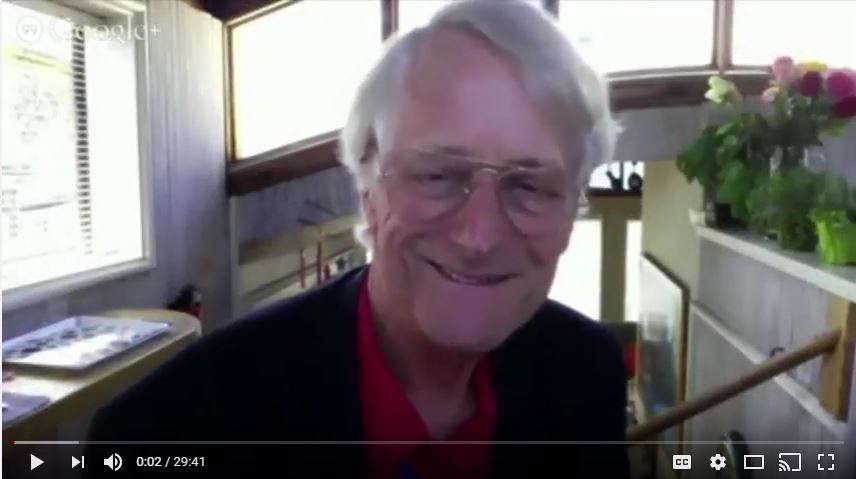
For Week Four, Open Learning ’17 features Dr. Ted Nelson, author of Computer Lib/Dream Machines. Click on the image below to watch excerpts from the interview I did with Ted in 2014.

Ted Nelson interview-click on image to play


Ted spoke with me as part of the Thought Vectors in Concept Space connectivist MOOC VCU ran in that summer long ago (feels that way, anyhow). That interview ran nearly two hours and is still up on YouTube. For Open Learning ’17, I’ve created this abridged version that runs a more manageable 30 minutes.

Ted’s call for learners to aspire to an “oceanic mind” that draws on multicontextual knowledge aligns well with the goals of liberal learning generally, as well as with the Essential Learning Outcomes of the AAC&U’s LEAP initiative and the Faculty Collaboratives project that Open Learning ’17 is proud to participate in. For best results, I encourage everyone to read the following bits from Computer Lib/Dream Machines as a rich context for understanding Ted’s ideas in the interview.

Counting pages in the downloadable pdf excerpt available at the New Media Reader site, including the introduction:

1-10, 17-19, 26 (explains “fantics”), 30 (“Thinkertoys”)

Throughout his life, Ted Nelson has been provocative, even irascible, but he also burns with the hard, gem-like flame Walter Pater aspired to. Enjoy the tempo presto of his words and ideas as they tumble forth. Remember that Heraclitus is his philosophical guide. Ted’s care for the arts of expression, juxtaposed with Doug Engelbart’s care for the arts of collaboration, continues to inspire readers, writers, and educators worldwide.


Teaching in A Digital Age: A conversation of sorts

On Wed of this week, I am running the first of my three series workshop designed to introduced colleagues to the idea of teaching in a digital age.  I am looking to make this a co-constructed experience (although, I have a back-up plan in reserve.)  I have about 10 people signed up– this is part of … Continue reading Teaching in A Digital Age: A conversation of sorts

Accelerating Augmentation

For what one might call “Engelbart Week” at Open Learning ’17, I abridged Engelbart’s epic, and epochal, “Augmenting Human Intellect: A Conceptual Framework.” My thought was to make the reading more manageable, and to bring together resonant passages in a way that revealed some of the more subtle and nuanced textures of the 1962 framework. As often happens, my efforts to help present the material helped me attend to it more thoroughly as well. That, and a Twitter chat in which for the first time, courtesy of the mighty Mo Pelzel, I saw the lovely “whing-ding” part. (Thanks, Mo!)

I always have a lot to say about “Augmenting Human Intellect: A Conceptual Framework.” I’ve blogged about it many times. I’ve mulled it over since 2004, when I first learned of it, and first encountered the name of Doug Engelbart. Rather than rehearse every bit of that, however, I want to share just a few thoughts. I hope they’re relevant to the larger goals of Open Learning ’17 and the Faculty Collaboratives initiative from which our cMOOC springs.

First: It’s interesting that Engelbart is not asking us to consider augmenting human intellect. Instead, he’s asking us to think about the way we as a species have always sought to augment our intellects–with language, with math, with engineering, with symbols generally–and consider his conceptual framework as a research opportunity for studying how we might accelerate the augmentation of our intellects. In this way he’s very aligned with Vannevar Bush. Rather than focusing on the means of augmentation–associative trails. shareable archives, and multiple modalities, etc.–Engelbart focuses on the nature of augmentation itself, what he calls Humans using Language, Artifacts, and Methodologies in which they are Trained (H-LAM/T). He also recognizes that language, artifacts, methodologies, and training will change the humans, who in turn will find ways to change language, artifacts, methodologies, and the process of training itself.

I’m not a big fan of the word “training,” but I take Engelbart’s point. There is an interesting process at work in this suite of human-tool interactions. Engelbart refers to that process as co-evolution. The research project he proposes is to study whether, and in what ways, that co-evolution might be accelerated. Without that research, he argues, we risk being at the mercy of our own ingenuity, forever inventing problems faster than we can solve them. Augmenting human intellect is what our intellects strive to do. The question is whether we will do that intellectual augmentation well, to good purposes, and create solutions faster than we create problems.

Second: purposeful, beneficial co-evolution will require much improved LAM/T affordances for communication and collaboration. Vannevar Bush’s magic desk, the Memex, becomes a visual display, backed up by computers available to individual knowledge workers, that permits and encourages complex symbol exchange as well as flexible storage, retrieval, and sharing capabilities.

Third, and this is something that became newly vivid for me this time, a system that permits and encourages complex symbol exchange as well as flexible storage, retrieval, and sharing capabilities will almost inevitably lead to newly complex symbols and symbol manipulation processes. Mo has blogged very insightfully about this facet of Engelbart’s imagination. What I’d add is two more points. One, that these co-evolutionary processes need to be considered within Engelbart’s conceptual framework in an ongoing manner–as John Seely Brown puts it, the interactions of increasingly complex systems become hyperexponential. (“No top to the ‘S-curve’.”) The other is that even as modes of comprehension increase for some, modes of incomprehension increase for others. The person who sits with “Joe” as Joe demonstrates his new symbol-manipulating capacities reacts in ways that many of us may recognize, either in ourselves or, when we have some inkling of Engelbart’s vision, in those who watch us do the work in open learning that we believe will accelerate the augmentation of human intellect in formal schooling:

[Joe] suggests that you sit and watch him for a while as he pursues some typical work, after which he will do some explaining. You are not particularly flattered by this, since you know that he is just going to be exercising new language and methodology developments on his new artifacts–and after all, the artifacts don’t look a bit different from what you expected–so why should he keep you sitting there as if you were a complete stranger to this stuff? It will just be a matter of “having the computer do some of his symbol-manipulating processes for him so that he can use more powerful concepts and concept-manipulation techniques,” as you have so often been told….3b3b

Lacking some essential humility, Joe’s colleague decides Joe is “just” going to do a little something more with regard to work and contexts Joe’s colleague is already quite familiar with. That word “just” comes up twice. It signals the way in which learning can be exceptionally difficult for many highly trained knowledge workers–not as a result of learning, necessarily, but as a result of the culture within which that learning has occurred. Namely, school.

Then you realized that you couldn’t make any sense at all out of the specific things he was doing, nor of the major part of what you saw on the displays. You could recognize many words, but there were a good number that were obviously special abbreviations of some sort. During the times when a given image or portion of an image remained unchanged long enough for you to study it a bit, you rarely saw anything that looked like a sentence as you were used to seeing one. You were beginning to gather that there were other symbols mixed with the words that might be part of a sentence, and that the different parts of what made a full-thought statement (your feeling about what a sentence is) were not just laid out end to end as you expected. But Joe suddenly cleared the displays and turned to you with a grin that signalled the end of the passive observation period, and also that somehow told you that he knew very well that you now knew that you had needed such a period to shake out some of your limited images and to really realize that a “capability hierarchy” was a rich and vital thing.3b3f

Given the exuberance and even the playfulness with which Engelbart shares his vision, I am confident Joe’s grin was friendly, even empathetic. But it probably didn’t feel that way to Joe’s colleague, whose sense of self-worth was bound up in a strong sense of self-sufficiency that doubtless made it even harder to follow Joe than it might otherwise have been.

“I guess you noticed that I was using unfamiliar notions, symbols, and processes to go about doing things that were even more unfamiliar to you?” You made a non-committal nod–you saw no reason to admit to him that you hadn’t even been able to tell which of the things he had been doing were to cooperate with which other things–and he continued. “To give you a feel for what goes on, I’m going to start discussing and demonstrating some of the very basic operations and notions I’ve been using. You’ve read the stuff about process and process-capability hierarchies, I’m sure. I know from past experience in explaining radical augmentation systems to people that the new and powerful higher-level capabilities that they are interested in–because basically those are what we are all anxious to improve–can’t really be explained to them without first giving them some understanding of the new and powerful capabilities upon which they are built.

This is a crucial moment in Joe’s explanation, underscoring Engelbart’s fundamental insistence on establishing a robust conceptual framework available for considering every single part of the “capability hierarchies.” As Joe will go on to argue, it’s no good tinkering with improvements at a higher level if one cannot understand and conceptualize every other level as well. (Which of course can make it difficult to distinguish “higher” and “lower” levels–as it should, confusing as that may seem.)

This holds true right on down the line to the type of low-level capability that is new and different to them all right, but that they just wouldn’t ordinarily see as being ‘powerful.’ And yet our systems wouldn’t be anywhere near as powerful without them, and a person’s comprehension of the system would be rather shallow if he didn’t have some understanding of these basic capabilities and of the hierarchical structure built up from them to provide the highest-level capabilities.”

I take it that Joe’s point, and Engelbart’s, is that we should be humble enough to recognize that a reconceptualization of much that we take for granted as a “low-level capability” will probably be necessary before we can have the depth of comprehension we need to pursue co-evolution and collective IQ (of all types!) in beneficial ways.

It takes humility, and hospitality, to spend time with new ideas, to try them on our pulses, to go deep and go long with concepts that ask us to re-examine many things we take for granted. There’s work to be done. No one has time for this kind of engagement. And what’s the incentive?

For Engelbart, the incentive was the chance to work toward the betterment of humankind by thinking about human ingenuity in a new framework, and with a new mind-like technology, the digital computer, that could accelerate both a) the research that discovered new knowledge and b) improvements in the knowledge-working environment that could c) devise ways to implement that knowledge and keep the process going in a beneficial direction.

It’s always seemed to me that this incentive is the very mission of education, particularly of higher education. Yet as many Open Learning ’17 participants pointed out in our Twitter chat last Friday, intellectual humility and hospitality can be hard to come by.

Engelbart said he never got over being naive. I take him at his word. But I also see that even in 1962, he knew all too well the cultural, intellectual, and professional barriers he would be likely to face. Certainly post-1962, Engelbart experienced several setbacks that would have stopped a lesser person. Yet in 2006, over forty years after he wrote “Augmenting Human Intellect: A Conceptual Framework,” he was humble and hospitable enough to telephone an English professor at a small public liberal arts college in Virginia, just to return his call, and to talk, if only for a little while, about the long-distance thinking Doug Engelbart never abandoned.
OL17: Open for Connections

IMG_0095 Buckminster Fuller recognized that “the answers to the problems of our world are all around us in the beautiful design of the universe…nature reveals to us the state of the art in design and technology, if we will look.”  This insight came almost 30 years after Vannevar Bush described, in great detail, his vision of a future “mechanized” world.  A world where our private libraries of books, records, and communications are stored on high-capacity microfilm, ready to recall, access, and connect.


The Collective

What really struck me when viewing videos of Douglas Englebart and reading parts of his essay ‘Augmenting Human Intellect: A Conceptual Framework’ so kindly excerpted for us by Gardener Campbell, was when he talked about the idea of a Collective IQ.

Beehive by Jeremy Price is licensed under CC by 2.0

As an invertebrate zoologist, when I think of a collective, a bee hive comes to mind. Individual bees are separate animals, but they function in a eusocial arrangement whereby the colony persists and grows as individuals do their different jobs of nursing, foraging and reproducing.  E.O. Wilson referred to eusocial insects like bees (and ants and other Hymenopterans) as a “superorganism”.    I don’t know if bee colonies offer us much in the way of a model for humans working together, but their abilities to communicate with each other puts humans to shame.   I especially loved it when Englebart said “Collectively, we can learn how to work collectively better”.  Because he both acknowledges that we don’t work so well collectively now, and that paradoxically, it is going to take a collective of us to figure out how to do it better! And so I think that much of the ‘augmentation’ of our ‘intellect’ is essentially about how we ‘put our heads together’, and how we use our technologies to basically learn how to work together more effectively.  But somewhere in those 1962 videos and writings of Engelbart’s, there is also the implication that we need to go beyond connecting our minds together to putting our hearts together as well. These days, I think we need to be very explicit about this. Perhaps Engelbart’s Collective IQ needs to incorporate other IQ’s, like social IQ and emotional IQ.   So what does a contemporary collective of intellectual, caring, human beings look like?  How do we integrate the power of working and learning in the Open to go about creating this? To me these seem like the important questions.   Engelbart says:  “The complexity of man’s [sic] problems are growing still faster and the urgency with which solutions must be found becomes steadily greater in response to the increased rate of activity and the increasingly global nature of that activity”.   And that was in 1962!  The urgency and complexity have only been intensified, and while our technologies are more sophisticated- we have not made any progress towards creating the kind of human compassionate collective that I think we will need to address things like  global climate change (and so much more).  Indeed things seem to have just gotten a lot worse.   I think a place to start is with an authentic practice of intersectionality (not just a recognition of diversity or inclusion).  What do you think?

Augmented Intelligence: The True and Only AI

This week for #OpenLearning17 we’re reading excerpts from Doug Engelbart’s “Augmenting Human Intellect: A Conceptual Framework.” And here I am now, in reflecting upon this text, putting into practice the very “conceptual framework” that it so perspicaciously advanced more than half a century ago. We take it for granted today, this ability to display and manipulate and rearrange text and other symbols that represent our thought, in a networked environment that invites comment and annotation, that we forget how revolutionary these proposals were at the time. A time when computing was equated with calculation, and when speaking of AI could only mean a reference to “artificial intelligence,” not “augmented intelligence.”

So, to the text. For me, Englebart highlighted two crucial features of human intellect. First, our intellects operate largely upon external representations of meaning, that is, symbols: “texts, sketches, diagrams, lists, etc.” When ideas, concepts, and information can be displayed visually, we no longer have to hold those representations solely in our minds, which thus frees up our cognitive capacities for deeper-level thinking about the meanings inscribed therein. We have had such external representations and displays of interior thoughts since at least the time of the ancient cave paintings and, of course, the development of pictograms and writing. So there has already been “considerable” augmentation of human intellect for some time.

What Engelbart realized is that computational devices, such as the graphical interface and the mouse, could make possible the display of these symbolic representations of thought in a way that greatly facilitated our capacity to “manipulate” and “rearrange” them, thus stimulating our thinking and leading to possible new discoveries and insights. When texts, diagrams, charts, images, etc. are thus displayed, then “characteristically ‘human’ activities” can come to the fore, such as “playing with forms and relationships to ask what develops,” and “rearranging” texts and diagrams to discover new patterns and more intricate syntheses of what were previously perhaps disparate elements. Electronic representations of symbolic elements, as compared to print, afford a far more expeditious modification and rearrangement of elements. And it is that playful modification and rearrangement that can lead to new understandings and breakthroughs.

These ideas reinforcing the importance of the visual arrangement of data for the possibility of insight recalled for me some lessons that I learned many years ago from one of my philosophical mentors, Bernard Lonergan. In his work on cognitional theory, Lonergan, recovering elements from Aristotle and Aquinas, developed the notion of “insight into phantasm,” meaning that genuine intellectual discovery is a matter of apprehending an intelligible pattern or form in a presentation of sensible data (that is, data perceived by our senses or generated by our imagination). “Phantasm” here can be broadly understood as “image.” Lonergan often remarked on the importance of the diagram for inference and insight, with reference, for example, to the role of diagrams in mathematical discovery. [For a fuller (though difficult!) account, see Bernard Lonergan, Verbum: Word and Idea in Aquinas, chapter 1, section 4.]

More generally then, the presentation and arrangement of symbolic data is crucial, and any given arrangement may be more or less conducive to discovery. That is why Engelbart’s observation about “playing” with and “rearranging” the materials we are dealing with strikes such a resonant chord. Even if we are only dealing with text, the ease of recombining and manipulating our words and phrases enables our writing to more quickly reach a suitable form of expression. And when we are dealing with multiple modalities of information, composing is even further facilitated by the digital tools that augment and amplify our native intellect. Gardner Campbell coined the lovely phrase “combinatorial disposition” to describe the penchant that one brings to materials in order to rearrange them in increasingly intricate patterns.

The second major takeaway is that, as we are social animals, our intellects work most effectively, not in isolation but in connection with others. When thoughts and ideas are externally represented, they thereby enter to some degree a public space, which creates the opportunity for the shared and collaborative rearrangement and manipulation of symbolic elements and the emergence of collective insight and intelligence. Engelbart refers to “team cooperation” in this essay and later uses the term “collective IQ.  So each person on a team can have simultaneous access to the same materials and “symbol structure,” and by working in “parallel independence” with one another, the team advances exponentially faster than could any single individual. The common space allows each person to contribute their own particular terminologies, intuitions, and hunches, while the interaction of these distinct perspectives spurs the refinement and precision of a more adequate set of explanatory concepts. This is made possible by the technical advancements of networked computers and hyperlinks, but again, the technological developments are only important insofar as they position the human intellect to more readily take advantage of its innately social and dialogical nature.

So now that title … the true and only AI. The notion of “artificial intelligence,” so much more prominent in recent awareness and discourse, was first proposed (or at least the term was coined) by computer scientist John McCarthy in 1955, less than a decade before Engelbart’s groundbreaking essay. Interestingly, McCarthy and his team were also active at Stanford during the same time period as Engelbart was, and I wonder if there was any interaction between them.

I have no expertise in this field, but I think it most unfortunate that “artificial intelligence” has enjoyed such prominence as compared to “augmented intelligence.” Now it depends upon how you define “intelligence,” of course, but on philosophical (and, ultimately, theological) grounds, I don’t think there is such as thing as “artificial intelligence.” Machines and systems might be said to be “intelligent” in that they are highly developed and programmed, even to the point of altering that program in response to external conditions. I agree with the philosopher John Searle, whose “Chinese Room Argument” refutes the idea that a machine could have a mind in exactly the same sense that humans do. While I can certainly appreciate the achievements and benefits of a machine such as IBM’s Watson, it does not, in my opinion, possess the “intelligence” of the sort that was necessary to create it in the first place.

With Engelbart, I contend that “augmented intelligence” is the true (and only) AI (an allusory nod there to cultural critic Christopher Lasch and his book, The True and Only Heaven). A focus on augmented intelligence can push us to identify what is truly distinctive about human intelligence even as we benefit from the increasingly complex tools which that intelligence has fashioned. Many examples of the amplification of human intelligence by digital tools can be found in Clive Thompson‘s 2014 book, Smarter Than You Think. How Technology is Changing our Minds for the Better. As a chess player myself, I was particularly taken with chapter one, “The Rise of the Centaurs,” which describes the rise of computerized chess programs and its effect upon the game. The pivotal moment came in 1997, when then world champion Garry Kasparov was defeated in a match by IBM’s Deep Blue supercomputer. Thompson goes on to explain that in the last two decades, a “new form of chess intelligence” has emerged, in which the strongest players are not grandmasters themselves nor machines themselves, but human/machine teams. As Kasparov noted, “Human strategic guidance combined with the tactical acuity of a computer is overwhelming.” [Chess engines today have gone far beyond even what Deep Blue accomplished, and you can freely (as in beer) access some of them, such as Stockfish (open source), right in your browser.]

Thompson concludes, generalizing from the chess experience: “We’re all playing advanced chess these days. We just haven’t learned to appreciate it.” So I guess that means we are all centaurs as well?

In The Abstract

concrete

Before I started this post, I looked around to see if anyone else had posted on this week’s content yet. I wanted to see about linking to other content as we have been prompted to do. Well, as far as I can tell, no one has written on this week yet, so someone has to start. Maybe I can come back to this post later and revise based on the other thoughts that crop up.

Something that I touched on in one of my earlier posts is that I am not an abstract thinker. I deal better with the practical, on-the-ground, concrete aspects of work. Being that way is a strength in some cases. However, I also recognize the limitations. Once I began my professional life and worked with other librarians on committees, I started to realize that my bent is to do things the way they’ve always been done. Not to the degree that I would resist a change because I’m used to doing a task a certain way. More that I don’t “think outside the box” naturally or take the bird’s eye view of a problem. Can’t see the forest for the trees, as the saying goes. As with any challenge, awareness is the first step to overcoming it. So, since I noticed that strength/weakness of mine, I’ve periodically reminded myself to consider the bigger picture or what the end goal really is.

All that to say – I admire Doug Engelbart’s vision and his ability to think outside the box in what appears to be a natural way to think for him. I’m reminded of a test I took at work recently called the Strengths Finder test. The 34 strengths are split into 4 categories, one of which is Strategic Thinking. Needless to say, only one of my top 5 strengths fell into this category. I get the sense that more of Doug Engelbart’s strengths would fall into that category.

Though I don’t think I see Engelbart refer to Bush anywhere, it seems to me that his creation is an attempt to take Bush’s ideas and make them real. And now, we feel closer and closer to that reality all the time. I’m waiting for when I can manipulate information on floating screens with hand gestures, like you often see in science fiction shows/movies.

Bringing Engelbart’s talks down to something concrete for me… I appreciate his point in one of his speeches about how the technology that makes a task easier, and therefore enhances human capability, can sometimes be difficult to learn. Or it seems difficult to learn if you’re thoroughly entrenched in a very different way of achieving a task. Where my mind goes with this is students and their study/learning habits. My impression of K-12 school is that it is still very physical book driven. That impression could very well be wrong, so someone correct me if they know better. I think the Almighty Textbook still reigns all throughout school. I don’t know how, given what happens in K-12, higher education is supposed to make a dramatic shift in student learning/studying habits. Given Engelbart’s point about how shifts happen slowly because of the difficulty in switching methods, I don’t know that I’ll see big change in higher education until we have a whole new generation or two coming through that have different expectations for what learning looks like. Young people that have grown up in a very different educational environment. I stress educational because outside of education, many dramatic shifts have already occurred. I myself am probably considered a “digital native” who is more used to ubiquitous technology, finding it easy to use. I can’t remember not owning a computer or having access to the Internet. Embarrassingly for someone in their 20s, I’ve only had a smartphone for a few years. I finally got on the bandwagon with iPhone 5. However, my educational experience, in terms of the classroom materials and methods, was largely lecture and largely print textbooks.

So, to wrap all this up, change needs to happen in the K-12 arena (easier said than done) if we’re going to have students prepared for a radically different way of learning and studying. Or we’d need to build into higher education some way of easing students into new methods. Right now we’re probably just looking at particular classes taught by exploratory professors who are willing to test out new methods. It occurs to me that perhaps community colleges could be on the forefront in this, given that we are more teaching focused institutions. Something to mull over…