Getting Started: Open Learning ’17

Open Learning ‘17 launches January 23 … and you’re invited!

There’s a great deal of talk in colleges and universities about “open” these days. Open Educational Resources. Open Access. Open Pedagogy. Open Culture. As part of Virginia’s “Faculty Collaboratives” effort, the AAC&U and the State Council for Higher Education in Virginia are partnering to sponsor a free, online, and open learning experience called “Open Learning ’17.” Somewhere between a course of study and an informal conversation, the experience emphasizes collegial, interactive, networked learning and sharing. Who is this for?

·         Are you open to new ways of motivating student learning?

·         Are you curious about open education, but haven’t really learned much about it before?

·         Do you have experience with some aspects of open education and want to learn about others?

·         Are you an expert already?

If you answered yes to any of these questions, there’s a place for you at Open Learning ’17.

In Open Learning ’17, we’ll explore all the “opens,” as well as the historical, intellectual, and cultural contexts that give them meaning. Each week will feature both synchronous activities (such as webinars, Twitter chats, etc.) and asynchronous activities (readings, reflective blogging, resource sharing, and other ongoing conversations). Participants in Virginia, in other states committed to the “Faculty Collaboratives” project, and beyond, will work together as co-learners.  You don’t have to be an expert in open education; indeed, the majority of participants will not be. The goal is to create an “innovation hub” that reflects and helps to sustain a dynamic conversation about how openness in education can support the learning we seek in active, student-centered pedagogies.

You can join us at a variety of ways.  To get the most out of it, you should register a blog at the main course site http://openlearninghub.net so your ongoing reflections about the course can be easily shared with other participants. Step-by-step directions are at the “Join Up” link on the main menu: http://openlearninghub.net/the-stream/. If you don’t have a blog, please consider starting one; participants’ reflections (including yours) will be invaluable resources for all of us, during the course and after. If we’re thinking about open learning, it makes sense to practice open learning and experience some of these practices first-hand, including the great opportunities for creative expression that come from writing on the web.

You’re also welcome to follow along and contribute in other ways:

·         By following our Twitter hashtag, #openlearning17, and contributing your own thoughts via Twitter.

·         Or by simply following the activity on the hub: http://openlearninghub.net.

We want to emphasize shared creation of content, not just consumption—but the course’s open design makes it possible for people to choose how and when they want to interact with course activities.  In addition, each week is (more or less) independent from the others, so if you miss the beginning it’s not too late to jump in anytime.  If you’re only interested in one topic, dive in there! You’ll get the most out of the experience, though, by participating in the whole course.

Open learning helps us understand, and practice, a richly rewarding way to contribute to the public good. It’s also a form of experiential learning, a high-impact practice. As with any community, there are important norms. We encourage passion and expect civility. And we also emphasize that the focus is on reflective responses and engagement, not right or wrong answers.

Please consider sharing this invitation with anyone at your institution who might be interested. If you have questions, feel free to contact the Hub Director, Gardner Campbell, at wgcampbell AT vcu.edu (substitute @ for AT). We look forward to seeing you soon on the hub, and around the Web!

Standing at the open door

I confess, I am a slow adopter when it comes to new technologies. I never had an iPod or iPad, I only occasionally post to Twitter and Facebook (and I quickly deleted my Instagram and Snapchat accounts), and I get Netflix via DVDs rather than streaming. It isn’t that I take pride in being behind the times. (Well, okay, sometimes I do.) I just like simplicity. And I don’t like spending money, time, or energy on things unless/until I can see the value they hold for me.

I have started this blog as part of an online course I will be taking on “open education.” I wasn’t especially eager to sign up for it, partly because I knew it would involve setting up a blog and that really isn’t my thing. In the end though, I decided this would be a good challenge for me. I enjoy learning new things, and I believe in pushing myself beyond what is comfortable. So I am opening myself to the “open” movement, trusting that something interesting and valuable awaits.


A conversation with Susan Albertine about Faculty Collaboratives

Virginia’s Faculty Collaboratives “Innovation Hub,” the site of an upcoming connectivist MOOC called “Open Learning,” is now open! (Makes sense, yes?) Please visit our Faculty Collaboratives/Open Learning hub to join up and explore the journey that awaits.

You may wonder, “what’s Faculty Collaboratives?” I put that very question to the AAC&U’s Dr. Susan Albertine, designer and leader of this initiative. In part one of our conversation, Dr. Albertine explains the history, mission, and aspirations of the project.

Click on the image above to access the interview with Dr. Albertine

In part two of our conversation, coming soon, Dr. Albertine expands on the idea of “mind-liberating” education at the heart of Liberal Education and America’s Promise (LEAP).

Virginia is proud to be one of those thirteen LEAP states Dr. Albertine describes. We’re also a Phase 2 Faculty Collaboratives participant. And because Virginia!, we’re doing something unique with this cMOOC learning opportunity.

Join us!


Making Your Own Color Palettes

Update (1/9/17): Since posting this and posting the individual palettes on Twitter, I’ve had an outpouring of interest in this idea.  Many people have pointed me towards automated means to get this sort of thing done.  My favorites include www.palettefx.com (h/t Jenet Morrow from Twitter) and Tom Woodward‘s wordpress plugin (see his comment, below).

And these things are great – especially if you’re not really into it or if you are in a hurry. But for me, it’s kind of missing the point. I did these by hand so that I could learn more about why certain photos spoke to me – it was a kind of analysis.  It was a way to alter the way I see color around me.  It was to help me better understand what was going on.  The act of looking at the color in a photo underneath the magnifying lens of the “dropper” function in powerpoint made me realize that colors I was seeing as purple were really more of a gray…that just happened to be sitting next to blue.  And the yellow that looked so pretty next shiny silver aluminum was actually quite dull on its own.  It was the act of choosing these colors and rechoosing and thinking about them…that was the point.

Then, the act of choosing and placing them in an order on the palette.  This was strictly editorial, and driven by my recent experiences of making color palettes for infographics.  It’s not enough to have pretty colors in a row.  There has to be contrast – with tension and without – and a combination of light and dark colors to allow for balance.  Additionally, infographics generally shouldn’t have more than 3 or 4 colors…I read some works by web designers who like to stick with 6 for their websites…the point is that these sites that offer you 14 or more colors from a photograph…well, you still have some narrowing down to do.  That’s why all my palettes had 9 or fewer colors.

The point is…doing it manually offers its own rewards. Just something to think about.


I love color.  I grew up loving color so much that I tended to use a lot of it.  I was the girl sitting behind you in algebra class rocking the pink satin jeans, purple fruit bowl sweater, and yellow ballerina flats.  My first house had a dozen paint colors on the first floor alone (and it was not a big house). My first blog was populated with posts written in five or more colored fonts. There was no discipline or restraint; only wildly passionate and often reckless color combinations. Everywhere.

In my six-month stint as a  business intelligence liaison at the State Council for Higher Education of Virginia (SCHEV), I spent my time meeting, writing, designing studies, and learning to code. My favorite task (besides speed-writing a chapter on veteran students with Tod Massa – that was a special sort of fun) was designing infographics for SCHEV Research.  I was forced to use the agency-mandated color palette and we all know what happens when someone tells me what I have to do. However, one day I shifted yellows on a bar graph a couple of shades towards orange just to see what would happen and a email chain sort of hell almost broke loose. SO. The color palette was not just a suggestion.

I might not have always liked having a mandated color palette, but it taught me to appreciate them. A good color palette has a lot of thought already put into it, so it can save a lot of time. It includes Hex or RGB designations (or both; this is my favorite converter if you need one) so that you can ensure consistency across drafts or platforms or series. A color palette keeps things visually appealing but not distracting. Change the palette and you will drastically change the mood of the piece. Color is important.

Putting together a color palette from scratch is really hard.  I think it’s hard for everyone, but it’s definitely hard for people like me who do not have formal training in the visual arts. I had access to digital color wheels…sites where I could input requests for monochromatic or triadic or complementary color combinations…sites which would recommend palettes based on one or two inputted swatches. It was still hard.

I’ve been inspired by the Twitter account, Cinema Palettes (Hat Tip to  Echo Rivera for the introduction) to consider a more organic, alternative approach to designing color palettes. Why work so hard to create a color palette from scratch and out of the context of the real world when we are surrounded by them, ready to be used?

Photographs.  We love them. They trigger feelings, moods. We know intuitively when the colors are just right.  So, why not work backwards from the picture to the palette?  I created the following palettes from my own photographs…photographs that appealed to my sense of color even though I didn’t even know why.  Using PowerPoint, I imported the photo, created boxes, and then used the “More Fill Option” dropper to capture the colors directly from the photo.  The program automatically gives you the Hex and RGB codes (I got lazy and only reported out HEX).

The first one took me a while, but the learning curve was short.  And now I have all of these.  Feel free to use them if you like them, or make your own.

slide2

slide3

slide4

slide5

slide6

slide7

slide8

slide9

Connecting Learning to Leadership

My doctoral research  focused on the epistemology, practice, and evaluation of connected learning.  Connected learning emphasizes the power of making connections across contexts, disciplines, people, and time. By encouraging students to connect academic work to personal hobbies, passion projects, after school jobs, and community living, educators imply that those activities have educational value when framed and considered through a pedagogical lens. Although digital environments are not required for connected learning, they tend to enhance the magic, opening up an entire world of multimodal creativity, collaborative opportunities, and performance and sharing. Digital or analogue,  connected learning helps students develop holistic learning lives:  leveraging personal interests, contexts, and goals to create a personalized  approach to learning that is relevant, impassioned, and meaningful to them.

For me, connected learning became a way of life. In the past two years, I have explored collaborative approaches to reading, coaching, course design, and conferencing. Building on my personal interest in photography and layout, I explored the use of images and design in information dissemination – an interest that eventually led me to design infographics for the State Council for Higher Education of Virginia.  I developed the *best* personal learning network in the world, which has facilitated countless professional collaborations, mentoring and mentee relationships, faster routes to finding answers, and loving support of so many kindred spirits.  Yes, connected learning has definitely increased the amount of love in my life.

Eventually, though, the dissertation was defended. Graduation happened. The summer was passed reflecting on the entire experience and exploring educational and institutional research.  It was challenging and high-yield but also temporary.  It is time to move on.

Therefore, I am excited to announce that I will be joining the Grace E. Harris Leadership Institute (GEHLI) at Virginia Commonwealth University (VCU) as their new Associate Director. For almost twenty years, GEHLI has promoted the development of current and emerging leaders within the university and community.  Programming is tailored to the needs of  emerging university leaders,  department chairs, women leaders, and minority political leadership. It strives to inspire exemplary or transformational leadership through experiential and social learning, coaching, and long-term mentorship.  (Do these strategies sound familiar to any connected learning scholars?)

I have been given a fantastic opportunity, and I look forward to learning with and from the GEHLI team. As for my contribution, I bring with me the connected learning habit of mind: a practice of collaborating across disciplines, creating across contexts, and engaging in public scholarship.  Let the adventure continue.

88hn85bjbq4-annie-spratt
Photo Credit: Annie Spratt on unsplash.com 

Featured Image: Brooke Cagle on unsplash.com


2017: Quarks, Love, and Insight

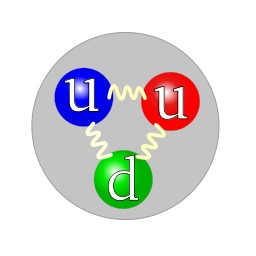
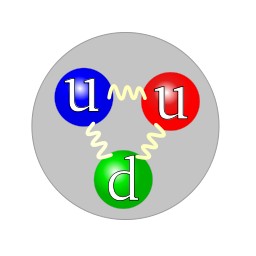
Quark structure proton

Two ups, a down, and some gluons.  A hadron; later, perhaps, an atom.

I used to do a little warm-up exercise in faculty development workshops. I called it “Quarks of Learning.” The question was simple: what are the elementary particles and fundamental constituents of learning? The responses were always interesting, and revealed a surprising amount of agreement among faculty from different disciplines. The adventure, then, was to discuss how one might build learning experiences out of those fundamental constituents.

I liked the warm-up for a lot of reasons. There were not any obviously wrong answers. The agreement was surprising. We weren’t getting waylaid by typical categories of “skills” and “content,” a false and pernicious and very damaging dichotomy. And the exercise seemed to be self-dramatizing, in a way, as the pleasure of listing these fundamental constituents, and the engagement that pleasure empowered, seemed itself to be a fundamental constituent. We found ourselves in productive community, aligned yet varied, thoughtful and creative, having a good time building something together out of ideas that didn’t usually emerge in “faculty development”–and certainly not in “training.”

Over time, and in varying roles within institutions of higher education, I’ve thought a lot about these quarks of learning. I’ve tried to support curricula within the English major that would keep those quarks embedded in the design of the major. I’ve tried to do similar work with faculty development in pedagogy, in teaching and learning technologies involving networked personal computing, and in the large and comprehensive structures involving colleges, faculty, and academic programs (including a degree program) across an entire university. All along, I’ve wanted those quarks to be more powerfully present, in all the discussions and planning, than talk about “operationalizing” and “branding” and so forth, as I have many times seen how the fundamental constituents vanish–or are erased–in favor of talk about process that serves the institution much more than the learner.

For a long while, I advocated for “interest” as the fundamental constituent of learning, the quark of all quarks. I still believe that interest, and the psychology of interest, are fundamentally empowering elements of all learning. As time has gone on, however, I can see that interest doesn’t quite resonate with my audiences the way it does with me. As the psychology of interest and curiosity becomes more sophisticated and pervasive, that may change. As I become better at explaining myself, ditto. To this point, however, it has been difficult to make the case that the kind of interest and curiosity I care about is fundamentally different from the “look, a squirrel!” varieties of endless superficial distractions.

The two quarks I’m working on now, therefore, are love and insight.

I’ve had something to say about love elsewhere, and I’ll have more to say about that in future posts. Tonight, at the start of a new calendar year, I will write a few things about insight.

I presented my first talk on an insight-oriented education in November, when I was honored to be the opening keynote for OpenEd 2016. I wanted the talk to be about insight, to be itself insightful, and to help to stimulate insight in others (in this case, the audience for the talk). You can see the opening video montage I created here. And you can see a Periscope recording of the talk made by the redoubtable Robin DeRosa here. I’ll have more to say about that OpenEd keynote in subsequent posts. At this point, I’ll simply say that I was working from Jonah Lehrer’s account (in “The Eureka Hunt”) of the neuropsychology of insight, as well as from ideas regarding sustainable psychotherapeutic improvements stemming not from medication but from what we used to call the “talking cure,” and which now seems to be about the power of language and story in particular to re-wire the brain by means of patients’ insights into their own circumstances, histories, and personalities.

Those areas alone merit and require a great deal of work. Little did I know that another enormous journey of discovery in this area was about to begin as well.

One of the more remarkable things that emerged from my talk was a tweet I received from an indispensable member of my personal learning network, Morris (Mo) Pelzel. Mo’s first tweet to me about Bernard Lonergan, the one that alerted me to Lonergan’s Insight: A Study of Human Understanding, is just out of Twitter-reach tonight. I’ll need to download a new version of my Twitter archive soon so I don’t lose that tweet! It was a vital moment. But at least I have the follow-up for you below.

Mo opened to me an exhilarating, difficult, yet utterly direct and moving text that took everything I had said about insight to the next level, and helped me understand that I was right: insight was indeed one of the quarks I sought. The word, the idea, the core reality of insight bridged the affective and cognitive realms more effectively than interest had. It connected with deep self-awareness. It was strongly aligned with ideas of creativity and imagination, but resisted being limited to only the arts, or only the humanities.

Most of all, it was a quark that met one of the prime requirements for quarkdom: it would be difficult for anyone in higher education to say, out loud, that insight was dispensable and played no necessary role in education. Or so I hope. And: once insight is in there, I reason, it becomes very difficult to retreat to reductive views of anything regarding learning, assessment of learning, expertise, pedagogy, etc. Like love, but with a more powerfully cognitive presence in most conversations about learning (alas, but I’ll take what I can get), insight would be the quark that was not only a fundamental constituent of learning and thus of school, but also a quark whose presence would liberate discussions about learning and schooling from the deadening technocracies that surround them.

So here and now, at the close of the first day of 2017, I offer a bit of Lonergan for you. His writing is extraordinarily ambitious, dense with meaning and implication. At the same time, his subject is so important, and the need for the thoughtful engagement he advocates and demonstrates is so urgent, that the book reads to me like a special edition of a newspaper written just before a crisis, not simply in response to it. I can’t pretend to grasp it all, yet. Parts of it may be beyond my reach. But the parts I do get thrill me. They help me think. They help me understand. And as I go along, Lonergan teaches me how to understand him better.

Here, then, now:

First, then, it is insight that makes the difference between the tantalizing problem and the evident solution…. Secondly, inasmuch as it is the act of organizing intelligence, insight is an apprehension of relations…. Thirdly, in a sense somewhat different from Kant’s, every insight is both a priori and synthetic. It is a priori, for it goes beyond what is merely given to sense or to empirical consciousness. It is synthetic, for it adds to the merely given an explanatory unification or organization…. Fourthly, a unification and organization of other departments of knowledge is a philosophy. But every insight unifies and organizes. Insight into insight [the project of the book, Lonergan tells us], then, will … yield a philosophy…. (4-5)

[I’m skipping items five and six because a) they’re too difficult for this already lengthy post, and b) seven and eight are crucially important.]

Seventhly, besides insights there are oversights. Besides the dynamic context of detached and disinterested [i.e.: not self-interested] inquiry in which insights emerge with a notable frequency, there are the contrary dynamic contexts of the flight from understanding in which oversights occur regularly and one might almost say systematically. [Yes, indeed–one of the reasons I have been reading books about the 2008 financial meltdown as well as the tragedies of the space shuttles Challenger and Columbia–not to mention watching Titanic over and over.] Hence, if insight into insight is not to be an oversight of oversights [what can I say? the man has a sense of humor], it must include an insight into the principal devices of the flight from understanding. Eighthly, the flight from understanding will be seen to be anything but a peculiar aberration that afflicts only the unfortunate or the perverse. In its philosophic form, which is not to be confused with its psychiatric, moral, social, and cultural manifestations [rather large exceptions here, but let’s keep going], it appears to result simply from an incomplete development in the intelligent and reasonable use of one’s own intelligence and reasonableness…. [I’d say that such incomplete development is partly a failure of education, and that much contemporary schooling, especially at scale, not only neglects but indeed tends to block or thwart such development.] (5-6)

[Again, skipping two elements, for reasons as above.]

The present work, then, may be said to operate on three levels: it is a study of human understanding; it unfolds the philosophic implications of understanding; it is a campaign against the flight from understanding. The three levels are solidary. Without the first there would be no basis for the second and no precise meaning for the third. Without the second the first could not get beyond elementary statements, and there could be no punch to the third. Without the third the second would be regarded as incredible, and the first would be neglected. (6-7)

[And now Lonergan writes with even greater urgency.]

Probably I shall be told that I have tried to operate on too broad a front. But I was led to do so for two reasons. In constructing a ship or a philosophy one has to go the whole way: an effort that is in principle incomplete is equivalent to a failure. [A beautiful analogy and for me a home truth–as well as one of the principal failings of higher education’s approaches to “educational technology.”] Moreover, against the flight from understanding half measures are of no avail. Only a comprehensive strategy can be successful. To disregard any stronghold of the flight from understanding is to leave intact a base from which a counteroffensive promptly will be launched. (7)

I have used a more gruesome analogy for my own version of Lonergan’s last point when I say one cannot have a “pet cancer.” Very often it seems to me that bureaucracies and especially technocracies are pocked with strongholds of the flight from understanding, so much so that it becomes quite an adventure merely to identify the valiant and embattled strongholds of insight among them. And even when those strongholds of insight are acknowledged, there is usually a sense that they are rare and special, and thus not essential or fundamental. Therefore everything else can be defined as business as usual, “operational” in a very narrow definition of “operations.” When those “operational” elements become in fact more strongholds of the flight from understanding, they become malignant–and it is in the nature of malignancy that it strives to overtake and feed on, thus ultimately destroy, the good. And the shuttle explodes, or burns up on re-entry, metaphorically and historically speaking.

Lonergan’s final argument for my post tonight circles back to why his endeavor matters. He insists it’s practical to work through a complex and difficult philosophy of insight. It’s operationally relevant! Vitally so. “But to be practical is to do the intelligent thing, and to be unpractical is to keep blundering about. It follows that insight into both insight and oversight is the very key to practicality” (8).

I’ll come back to some of these points as I continue to work though Lonergan’s book. But now, here, then: we must build and offer our learners an insight-oriented education. Do you hear talk about an insight-oriented education when you hear “student success” discussed? If not, pull the emergency stop. Help to avoid a civilization-sized train wreck.

What I am discovering about my “quarks of learning” is not simply what must be included in all learning design, but the very ground I must stand on myself, those aspects of real school that are non-negotiable. In this way, I begin to have insight into insight, myself.

Much to explore. Thanks, Mo.

Happy New Year.

Lonergan, Bernard. Insight: A Study of Human Understanding. 5th edition. Ed. Frederick E. Crowe and Robert M. Doran. Volume 3 of the Collected works of Bernard Lonergan. University of Toronto Press, 1992.


First Post

This is my first post for Open Learning.  I’ve created a blog and am now linking my posts by a feed to the Open Learning collectivist MOOC.  This cMOOC is an  experiment organized by the Virginia Open Learning initiative as part of a project with the Association of American Colleges & Universities (AAC&U; www.aacu.org).  The easy way to understand:  This cMOOC will try an experiment in community building for academics who are devoted to general and liberal education and who want to collaborate in using open education resources.  It’s a crossover project, a boundary-crossing project.  I am hoping that the collective of people who join the MOOC will make discoveries together.  If we do, we can advance liberal education for all students by working within a larger community of educators than we may have been reaching.  It’s all about liberal education, inclusive pedagogies, and open learning together.  That sounds easier than it is going to be!

The network is the deliverable