Tag Archives: OpenLearninghub

Reflections on Open Learning ’19

Open Learning ’19 has ended and I’d like to ask everyone to consider writing a blog post as a way to reflect on their experience in the cMOOC over the past few weeks. (Rebecca Clark has already done this, and wonderfully so–check out her post!)

For me, this was my first time serving as Hub Director and that was a pretty daunting task. I’m a pretty good meeting manager and project organizer, but like it’s predecessors, Open Learning ’19 has had many pieces and parts to juggle and is run completely by volunteers. It’s been a challenge to find time to give the cMOOC and the Hub the attention they deserve. But we pulled it off! People came, they learned something, and their networks expanded! At least one person’s education and career may have taken a different path because we were here!

What was new for me this time was taking a lead role in designing the experience. We intentionally pulled in not only established leaders in the field, but the emerging leaders as well. We highlighted new projects and new roles in the realm of open learning. We pared down the experience to what we thought might allow some to make it to the finish line (and some did!). As is common with MOOC experiences, we had folks dropping in and out, but there were some who were there on the first day and are still engaging with the experience in this final week. Any level of participation is valuable and I thank all of you who participated for contributing to the learning experience.

We had fun looking back on the previous iterations of the cMOOC and invited some past participants to rejoin us for interviews, annotations and the reunion Zoom. That was my crazy idea and it turned out to be more fun than even I imagined. Reconnecting in a connected learning experience is a wonderful feeling and I loved hearing about how people took their learning experience from the cMOOC into their work. It lives on through you! I am humbled to know that the Open Learning cMOOC in all its iterations and the Hub have continued to inspire you in the in between times. My hope is that the Hub will continue to do that and I am committed to finding ways to keep it fresh and alive. What struck me about the reflections on past iterations of the cMOOC was the lasting impact that this particular learning experience has had.

One thing you can do to help keep the Hub alive is to continue to use the hashtag #OpenLearningHub when you blog or tweet something that’s relevant to the community we’ve built around all the iterations of the cMOOC. Also consider using #openlearning as well to gain a further reach, but the #OpenLearningHub hashtag will ensure that your voice comes into the Open Learning Hub site for our community to see. This will syndicate your post to the Hub and so it will serve as a way to refresh the content there for all of us. Follow the hashtag to keep up with posts from our community.

I truly look forward to connecting with everyone in the years to come and I’m proud to have played a role in facilitating the Open Learning cMOOC experiences. May the Hub live on through all of us!

And a very special to Gardner Campbell who had the initial idea for the cMOOC and the Hub, encouraged me to move from novice to node to hub director, and hung in there with me through all of this latest iteration. There’s no one I’d rather hang with in my liminal space of learning. Yoda to my Skywalker, you are!
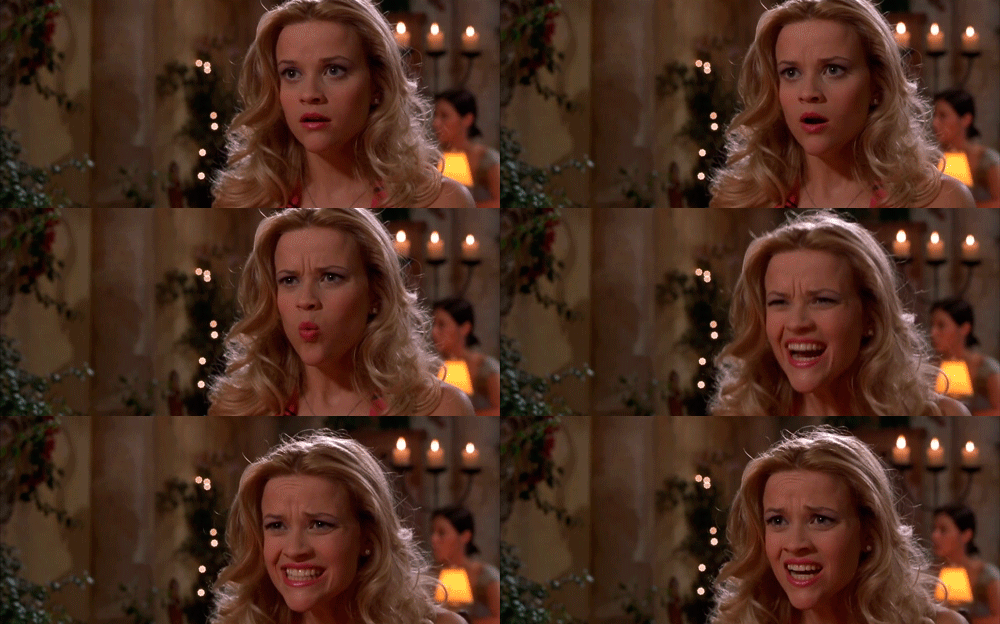
#OpenLearning19 has begun and I’m already shook…

YA’LL,  the Internet is ONLY 30 YEARS OLD!

I know right!… I’m having a hard time right now too.

But let’s get back on track… we were annotating Adulting for the Web as our first assignment.  I’m supposed to tell you how I chose the places where I left notes, did I leave more then one kind, and if so what kinds.

So for OpenLearning19 we use hypothes.is to annotate.  I used this last year and it was wonderful.  I comment to other peoples notes primarily and I used links where I thought appropriate.  I did try to use an image in hypothes.is, but it didn’t’ work so I linked instead.  Annotating this way leads to greater understanding and a place to ask questions for clarification.  It’s like blogging and chatting asynchronously on something someone else wrote.


Now… what did I learn from the blog post?..  The internet is younger than me and has had a much bigger impact on the world than I ever will.  And I’m not so sure that’s a good thing.

Don’t get me wrong it does a lot … but it is a tool… and like every other tool, it is only as useful as the user/operator.  And not enough people take the time to understand what it is and how it works to use it well.  I’m an advocate for education, but as an adult educator, many people don’t want to know how it works… They just want it to work.

The more dependent we become on our electronics to “do it” for us without the understanding or knowledge of how and why it works, the closer we come to Ray Bradbury’s dystopian Fahrenheit 451, where all information is given by the government and any knowledge outside of the given is punished and burned.

For a librarian/educator/truth seeker, that is a future I don’t want to live in.

And now I’m sad…

#OpenLearning2019…once more unto the breach

…of yet another connectivist #MOOC that is

… and my first post for  Open Learning 2019 because I have to post to have a feed to complete sign-up. This procedure guarantees that I will have written at least one blog post for Open Learning 2019, which puts me ahead of Open Learning 2017, although at least I came away from it with a Hypothesis account and another MOOC feed in my reader.

I’ve participated in MOOCs since 2010, including the occasional x-version.  The past few years, participation has not matched intentions, and I’ve been on an extended blogging hiatus as well. When I missed most of Open Learning 2017, I told myself next year but missed that too.

So here I am following #openlearning19 tweets, reading blog posts and collecting links. And if it helps kick starts a return to blogging? Lagniappe.

The internet and information literacy

Sigh… So work got away from me so I didn’t get to participate as much as I would have liked so this is my attempt to catch up.

Week 2 we examined the Internet and how it relates to education and open access.  I did the reading early and then didn’t have time to fully participate to get my questions answered.  When I read and annotated the Tim Berners-Lee article I didn’t get the chance to respond to some of the questions I was asked about my comments, which deserve to be answered.  As I read the article I was struck by the income bias.  The article while very informative and enlightening, has a bias toward those who can afford access. Gardner Campbell noted my concerns and is I believe on the right track with inclusive access for all.  Gardner also provided a link to Pew research showing the increase in usage of the internet.  But as I looked through this data I was struck by how we are still biasing access with income and education.  While general use has increased, lower income and education have just now reached the use point of higher income and education individuals were at 18 years ago.  And home use of the internet via home broadband for low income is at 53% and low education at 34% verses high income and high education’s 93% and 91%.  This is not taking into consideration location (data is provided).  Also of note in that same research is that lower income and education individuals are more dependent on their smartphones for all their internet access.  The internet has an inherent bias to those who can afford access, and I think it’s important to recognize that.

Week 3 we examined information literacy and open access.  As a librarian who teaches a credit bearing research course, Facing the Frames just confined what I do.  Although there are differences since my class is 16 weeks and we go into more then just information literacy (we also cover some aspects of writing), the concepts of teaching the student to analyze every aspect of what they are doing is important for librarians to understand and use in every aspect of what they do.  Critical thinking and evaluation is the most important thing we teach.  Which lead into Beyond Buttonology… I have to say I was surprised at this article, because I had thought that librarians had moved beyond teaching the mechanics already.  Critical thinking and metacognition has always been emphasized where I have worked.

That’s my $0.02.


Kal-toh, chess, and tic-tac-toe

This week we peeked into the world of open and flew into a worm hole.  There is sooo much that can be read into one word, and so many uses of the concept that it gets difficult for me to see the multidimensionality of it.  I have a tendency to stay on the surface because that’s what I understand.

On the surface, open education is teaching through a free means.  Open educational resources are the items used in the teaching that are also free.  I’m good here, this is easy to understand.  No cost to teachers or students for textbooks, articles, or any materials the instructor wants to use.

Chess
“Kal-toh is to chess as chess is to tic-tac-toe.” (Tuvok: VOY: “Alter Ego”)

But let’s talk about free.  Free starts to get complicated because free should just be that, but it isn’t.  Just like free from a library isn’t free if you can’t get to the library or you live outside the service area, free on the internet isn’t free if you can’t get onto the internet.  You need a computer and access to get to the free. So what exactly is free? and how do we provide it to ALL to create real openness?  Also, is free, free when we make students pay to be taught?  And here is when I stop playing kal-toh and go back to tic-tac-toe.

So how does this relate to my own idea of open education?  I’m not sure I have an idea about open education… yet.  I do know that  in my practice I want to save the student from having to purchase material to learn something when practical application and discussion can accomplish the same thing.  But the materials we use are the library databases that are not free since they are licensed via the library budget.  So even though they don’t have a textbook, their tuition pays for the subscriptions, so in all technicality that is not free or open.

Can I create assignments that are completely open?  The easy answer is yes, by using open access articles to do information literacy objectives, I could use all free materials. But again… this is not truly free for the student who doesn’t have a computer or the internet at home, because they would not be able to access the material anyway.  To further complicate this, they have already paid for my class.  I’m not sharing my expertise free of charge, which again technically would not be completely open or free.  I keep getting stuck in the free aspect of open.  Because really, nothing in our society is free.

I keep thinking about Star Trek.  The open society where you explore your passions for self-improvement, self-enrichment, and the betterment of all humanity. There is no money.  Everyone (supposedly) has the same opportunities for learning and working.  In this world open education is open and free.  In our world, there are too many facets to “open” and “free” to truly be either.

So until we can live in the Star Trek world, we do the best we can and cut cost to the student where it is feasible.  To me that means, finding ways to provide open educational resources to the faculty to use, finding ways to integrate what the library already owns into an easier medium for the faculty and student to use, and to explore whatever options present themselves to make the life of the student easier.  As a librarian, I am a facilitator of access.

Looking Forward

This week for Open Learning ’18,  I’m to expound on these two questions…

  • What do you hope to get from Open Learning ’18?
  • What do you hope to contribute to Open Learning ’18?

Well shoot, if I knew that I probably wouldn’t be here.  Okay… breathe…  Just be honest…

What do I want to “get” from OL18?  Well… everything.  Am I asking too much? Of course I am, but it’s what I want.

I have found myself in a unique situation on my current campus.  I’m leading the Open Education Task Force for the administration and trying to generate discussion to see where we want to go as a campus.  While I know the basics of OER and how it functions, I have no real experience with it beyond my own teaching where I have “borrowed” ideas, activities, and in class materials for my own use.  I have had the great pleasure to work with some fabulous people who were always willing to collaborate and talk though how they did things so peers could benefit and adapt their idea for their own use.  When I started this is what you did as a good colleague, but I don’t think any of us saw it as OER, although essentially it was, it’s just moved online.  I know nothing about how librarians fit in, how web components fit in, how to generate excitement for OER, or how to garner support.  I’m essentially hoping to get some great ideas I can take forward on my campus in an area where I feel inept.

Contribution?  LOTS of questions.  I essentially feel brand new to this and I have quite a bit to learn.  I want to be effective on my campus, but I need more information, guidance, and expertise to feel comfortable in this arena.  So I’m going to be leaning on the MOOC to help me learn.  What I will give you, is a new voice to question how you got to where you are, what is good or bad about OER, and general inquisitiveness about anything you bring up.  I’m looking forward to the discussion.

Atlanta Zoo: Lizard in log
Uh huh, and how do you feel about that?

Pacing myself

Ok… I did my very first tweeting today.

In the morning I played along with #DigitalGaurdiansEg Twitter Scavenger Hunt and that wasn’t so bad.  People posted pictures and other people guessed what the pictures were.  I didn’t get to the party until late, so for me the asynchronousity of it was an easy way for me to learn the ins and outs of replying and loving something.  I also got to learn the “tabs” for keeping up with content.

Then came the afternoon live tweeting with the #OpenLearning18 group… Oh my… I’m so out of my depth.   I felt unsure of what to do in the beginning and as we progressed I felt that I couldn’t keep up.  Understand… there were only like 8 of us, but it felt like 80 to this novice.  I muddled through and think I did well enough in the end.  I didn’t try an original post, but I did lots of replying and (to my mind) supportive commentary.

After the chat was over, I went back to the pre-syllabus, and remembered seeing Sue Erickson’s post about surviving and thriving.  I re-read it and bullet 4 struck like lighting.  I don’t have to be on every post, comment, or blog.  I get to choose, I’m not supposed to do everyting… Wow.

I know for some of you this will sound crazy, but for me this concept is profound.  It was recently commented by my co-worker that I don’t say no to anything I’m asked to do.   As a librarian and contentious employee, why would I say no to a request?  If it’s in my power to help, I help.  If it’s not, I find someone who can.  I have always been this way and it works for me.

So for me this translates to… As a student why would I not do all the work?  I have always been an overachiever who read the syllabus and some of the material before the first day of class.  I  tried to get assignments, readings, and homework done early.  I was  that student in class that had the orderly binder of all the materials annotated a week before it was discussed.

In this setting, I have to teach myself not to do it all.  I need to remain flexible but focused so I don’t overwhelm myself.   I have to choose my path which may be the through the woods and not on the road everyone else is on.  And I have to learn that that’s okay.