In The Abstract

concrete

Before I started this post, I looked around to see if anyone else had posted on this week’s content yet. I wanted to see about linking to other content as we have been prompted to do. Well, as far as I can tell, no one has written on this week yet, so someone has to start. Maybe I can come back to this post later and revise based on the other thoughts that crop up.

Something that I touched on in one of my earlier posts is that I am not an abstract thinker. I deal better with the practical, on-the-ground, concrete aspects of work. Being that way is a strength in some cases. However, I also recognize the limitations. Once I began my professional life and worked with other librarians on committees, I started to realize that my bent is to do things the way they’ve always been done. Not to the degree that I would resist a change because I’m used to doing a task a certain way. More that I don’t “think outside the box” naturally or take the bird’s eye view of a problem. Can’t see the forest for the trees, as the saying goes. As with any challenge, awareness is the first step to overcoming it. So, since I noticed that strength/weakness of mine, I’ve periodically reminded myself to consider the bigger picture or what the end goal really is.

All that to say – I admire Doug Engelbart’s vision and his ability to think outside the box in what appears to be a natural way to think for him. I’m reminded of a test I took at work recently called the Strengths Finder test. The 34 strengths are split into 4 categories, one of which is Strategic Thinking. Needless to say, only one of my top 5 strengths fell into this category. I get the sense that more of Doug Engelbart’s strengths would fall into that category.

Though I don’t think I see Engelbart refer to Bush anywhere, it seems to me that his creation is an attempt to take Bush’s ideas and make them real. And now, we feel closer and closer to that reality all the time. I’m waiting for when I can manipulate information on floating screens with hand gestures, like you often see in science fiction shows/movies.

Bringing Engelbart’s talks down to something concrete for me… I appreciate his point in one of his speeches about how the technology that makes a task easier, and therefore enhances human capability, can sometimes be difficult to learn. Or it seems difficult to learn if you’re thoroughly entrenched in a very different way of achieving a task. Where my mind goes with this is students and their study/learning habits. My impression of K-12 school is that it is still very physical book driven. That impression could very well be wrong, so someone correct me if they know better. I think the Almighty Textbook still reigns all throughout school. I don’t know how, given what happens in K-12, higher education is supposed to make a dramatic shift in student learning/studying habits. Given Engelbart’s point about how shifts happen slowly because of the difficulty in switching methods, I don’t know that I’ll see big change in higher education until we have a whole new generation or two coming through that have different expectations for what learning looks like. Young people that have grown up in a very different educational environment. I stress educational because outside of education, many dramatic shifts have already occurred. I myself am probably considered a “digital native” who is more used to ubiquitous technology, finding it easy to use. I can’t remember not owning a computer or having access to the Internet. Embarrassingly for someone in their 20s, I’ve only had a smartphone for a few years. I finally got on the bandwagon with iPhone 5. However, my educational experience, in terms of the classroom materials and methods, was largely lecture and largely print textbooks.

So, to wrap all this up, change needs to happen in the K-12 arena (easier said than done) if we’re going to have students prepared for a radically different way of learning and studying. Or we’d need to build into higher education some way of easing students into new methods. Right now we’re probably just looking at particular classes taught by exploratory professors who are willing to test out new methods. It occurs to me that perhaps community colleges could be on the forefront in this, given that we are more teaching focused institutions. Something to mull over…


Soylent Media Attribution

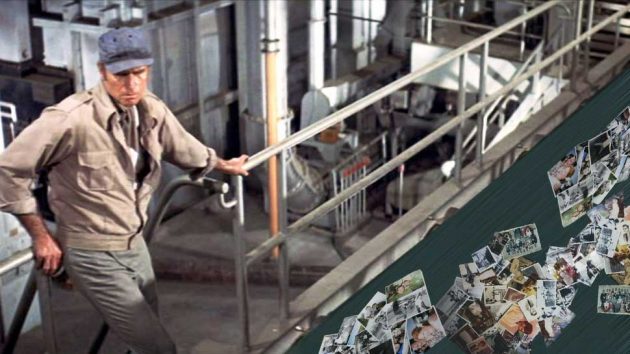
I knew this blog post title was a terrible metaphor. But once the metaphor took a hold in my brain, it would not let go. And then I am in Photoshop, mashing up a collage of assorted images from web sites that do not provide the source of the same image (see the end of the post for the story behind the image.

But much of the web, social media, is a huge conveyer belt where we move, take, toss media that have no sourcing, no mention of where they came from, no context.

I have no illusions this will change. But I will not be part of the consumption and production of Soylent Media.

And while I can feel lonely as an attributor (not as desolate as Charlton Heston’s portrayal), once in a while, an indication comes through out of the blue. I’m not alone.

In June of last year I wrote about a terrible “infographic” the so called “Bicycle of Education” that had been tweeted:

As an aside, it’s interesting when I embed that as the tweet where I found it, rather than just the image itself- the tweet has attached a time stamp and the name of the person who shared it. Kind of metadata-ish, though not of the media.

Because mostly in social media platforms, we just shove around images or reblog them in tumblr with no vestige of a beginning.

In my post I did a bit of detective work to find the likely source of the education bike. Because otherwise, it just keeps going with all the other piles of images, down the belt.

But here is the real story. I had found mention of the Bicycle of Education in a reddit thread, where also, someone else had suggested a much better use of a bicycle as a metaphor, the Krebs Bicycle:

As reddit goes, it was just shared. Down the belt. And by that time un my post, I got tired and wrote “I’ll be damned if I’m going to go look for the source of that (well not tonight)”.

Eight months later, a blog comment out of the blue (or green) from Jamie:

CogDog FYI, I wanted to pass on the Krebs cycle image & looked for attribution.

From the style it probably originated (http://bit.ly/2kRZ7vl) from this University of Sheffield page http://www.deconstructingthetour.group.shef.ac.uk/krebs-bicycle/, though it’s sinced been hacked by the busy Peshmerga sympathiser ‘ SA3D HaCk3D ‘ and it looks like the image has been replaced.

PS. The Krebs Cycle image was created by @_atwist from Sheffield University who doesn’t ask for attribution (and he’s also updated the WordPress version, killing the hack).

Boom. Updated the post.

Apparently in 2014, Sheffield University used the proximity to the Tour de France for some educational purposes, with a site about Deconstructing the Tour.

“To encourage more people to start cycling on a regular basis and to highlight the health benefits of the sport, the University of Sheffield has created a giant bicycle, using eco-friendly paint in a field close to the route of the Tour.”

Read more about the diagram that the big field painting represents:

The bicycle will also illustrate the Krebs cycle – the process by which mitochondria, the tiny “power stations” of the cells, turn food and oxygen into the energy needed for exercise. Local school children will play the part of molecules in a re-enactment of way the Krebs Cycle works on the field.

This is the payoff of digging for sources, the magical, unexpected rabbit holes you find yourself in while finding sources. The Sheffield site, doing education around a bicycle event, reminds me totally of the Great VCU Bike Racebook Project at VCU that I was a small part of.

Attribution is less interesting and compelling when it’s about following rules and letters of licenses.

It’s when someone like James jumps in and helps close the gap.

See it’s not about automated blockchain tracking of reuse– it’s Soylent media.

It’s made of people!


Featured image: A collage of images for which none have open licenses, this is to make a point. But it is for the purposes of education/commentary, a dash of parody, a heavier dose of irony, and of course on this blog, blatant non commercialized purposes.

The scene from the 1973 movie Soylent Green is a single frame among many, maybe one of many clips from the many of movie on YouTube. I found it on a Nerdist post about the movie.

I did a little trick to replace the conveyer belt, too lazy to reproduce the original– filled the corner area with a dark green, added gaussian noise in Photoshop, and a motion blur in the direction of the belt.

The strewn photos are from a pair of random images, one from a site for a home decorating show the other from a blog post about saving old family photographs — all of them masked, rotated, duplicated.

On none of these sites are the sources of the images used the published web pages credited or attributed.

Get it?

The post “Soylent Media Attribution” was originally dropped like a smoking hot potato at CogDogBlog (http://cogdogblog.com/2017/02/soylent-media-attribution/) on February 9, 2017.

How to survive (and thrive?) in a cMOOC

I’m in my first MOOC and I’m learning.  I’m learning how to be a learner in this new-to-me environment.  This is a constructivist MOOC, so while each of us is constructing our own learning path, we are also all shaping the learning experience together.

What I’m learning about how to be a learner in this space is this:

  • We need a strategy for managing our time.  This is exactly what our first-year students need to learn and I find myself struggling all over again to find time for learning.  This morning I replaced my 1/2 hour morning-coffee-social-media time with #OpenLearning17 time (I kept the coffee).   I think that’s going to work.  What little bit of time could you let go for the duration of the MOOC to spend on learning?
  • We need to engage.  Commenting on other people’s blog posts and writing my own is not in my current comfort zone, but here I am doing it and I’ve already been rewarded with some great interactions.  We need to step out of our comfort zones and engage.  And won’t it be fun if we meet in person someday and feel like we are already connected!
  • We need discipline.  Just like a new exercise routine, it takes discipline to create a new habit.  It takes discipline to get results.  If we are going to learn in this space, we need to be disciplined enough to come back to it regularly and actively participate.
  • We need to be discriminating.  Not every post will grab our attention, not every week’s topic will pique our interest.  That’s okay.  We don’t need to follow every hyperlink or comment on every post.  We just need to stay engaged in the overall learning and follow what interests each of us.
  • We need each other.  This form only works if we connect, discuss, and debate.  We need to ask questions.  We need to be provocative.  We need to be caring.

What am I missing?  What are your strategies for thriving in this learning environment? What have you learned so far?

Updated 2/10/17:  I just found Laura Gogia’s great Conversation with Gardner Campbell where she articulates the need to develop a strategy for our connected learning.  Great stuff!

How to survive (and thrive?) in a cMOOC

I’m in my first MOOC and I’m learning.  I’m learning how to be a learner in this new-to-me environment.  This is a constructivist MOOC, so while each of us is constructing our own learning path, we are also all shaping the learning experience together.

What I’m learning about how to be a learner in this space is this:

  • We need a strategy for managing our time.  This is exactly what our first-year students need to learn and I find myself struggling all over again to find time for learning.  This morning I replaced my 1/2 hour morning-coffee-social-media time with #OpenLearning17 time (I kept the coffee).   I think that’s going to work.  What little bit of time could you let go for the duration of the MOOC to spend on learning?
  • We need to engage.  Commenting on other people’s blog posts and writing my own is not in my current comfort zone, but here I am doing it and I’ve already been rewarded with some great interactions.  We need to step out of our comfort zones and engage.  And won’t it be fun if we meet in person someday and feel like we are already connected!
  • We need discipline.  Just like a new exercise routine, it takes discipline to create a new habit.  It takes discipline to get results.  If we are going to learn in this space, we need to be disciplined enough to come back to it regularly and actively participate.
  • We need to be discriminating.  Not every post will grab our attention, not every week’s topic will pique our interest.  That’s okay.  We don’t need to follow every hyperlink or comment on every post.  We just need to stay engaged in the overall learning and follow what interests each of us.
  • We need each other.  This form only works if we connect, discuss, and debate.  We need to ask questions.  We need to be provocative.  We need to be caring.

What am I missing?  What are your strategies for thriving in this learning environment? What have you learned so far?

A Few Thoughts on Nelson

Point 1

The text mentions the annoyance of fake interactions, like a toll booth with a “Thank You” sign in lights (Nelson). However, I rather like the automatic “thank you” programmed into various machines—or the automated voice that tells you to have a nice day on a phone call. There are some people who could learn a little something about politeness from those machines!

robot-1214536_1280

Point 2

I understand Nelson’s notion of removing course sequences and his “modest proposal” for greater course flexibility. For example, when people began taking MOOCs, particularly xMOOCs, the low completion rates raised the ire of many. However, there were others who highlighted that taking xMOOCs (or MOOCs in general, for that matter) could be viewed as an exploratory act—so participants could just “stop by” courses to investigate and learn more about what interested them.

Week Three: Augmenting Human Intellect (in the open)

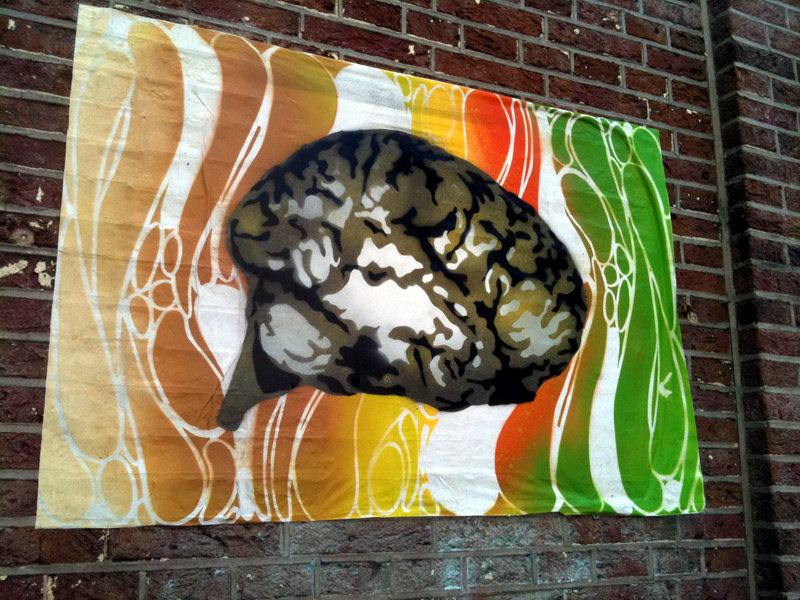
Brain, mural, brick wall: photo by Anders Sandberg.
Photo by Anders Sandberg.

Open Learning ’17 continues this week with another key reading: Douglas Engelbart’s Augmenting Human Intellect: A Conceptual Framework. This 1962 essay led directly to much of the computing environment we take for granted today: mouse, keyboard, display; word processing; concept mapping; computer-enhanced videoconferencing. Even wikis can trace part of their intellectual lineage to Engelbart’s conceptual framework and the innovations that followed.

As impressive as these computing innovations are–and they are mighty impressive–Engelbart always regarded his “framework” as his most important contribution to the computer age. That’s the reason we’re reading this strange and strangely compelling essay this week. Lots of things happen in our global, light-speed telecommunications network, but the conceptual frameworks are often weak or missing. These gaps lead to unintended consequences, to be sure, but they also lead to under-realized potential–the more serious failure, I think.

The essay is long, so I’ve prepared a set of excerpts that I believe represent the ideas that are most directly relevant to our course.

Our guiding question this week will be how Engelbart’s framework might help us think more clearly, complexly, and effectively about open learning. As director for the week, my hope is that Engelbart’s framework advances our conversation, particularly in terms of how mind-liberating education might be understood and crafted in our digital age.

EDIT: the post above is by Open Learning ’17’s hub director, Gardner Campbell.

EDIT: As was the case with “As We May Think,” Engelbart’s use of “he” and “him” and “man” and “men” is jarring and regrettable, and reflects the prevailing sexist attitudes of the era in which he wrote.


A day late…

I didn’t get around to making a post happen for #openlearning17 week 2 before it ended, but I did participate in our cMOOC in few (low-profile, lurker-y) ways.

A lot of people seemed to have previously read or heard of Vannavar Bush’s “As We May Think,” but this was my first exposure to it somehow (I swear I really did go to library school!). As my professional focus has shifted more toward scholarly communication over the last year, I was glad to have been introduced to such a foundational piece. Even more, I’m glad to be reading it for the first time as a part of a group of people who can really help me understand the context and application to scholarly communication now. Since I’m a day late, I’ll add just a few reflections, for brevity, in .gif format.

On reading Bush’s article and this blog post which really helped me think about what associative trails mean now (#meta-metacognition):

image

On reading this twitter exchange on note-taking (or rather, note-making!) as a research methodology:

image

And, on reading all the other tweets in Friday’s twitter chat and blog posts on the openlearning hub network that really illuminated this topic for me:

image

Thoughts on ‘As We May Think’

This week – last week, really (I am running a bit behind) – as part of #openlearning17 we were asked to read As We May Think, an article written in The Atlantic by Vannevar Bush in 1945. I was struck by how abrasive the use of “man” to refer to people in general and scientists more […]

The post Thoughts on ‘As We May Think’ appeared first on Camille Freeman.

The network is the deliverable