The open question

dark-1836961_1280

When I realized one of the authors of this first article is Jeffrey Pomerantz, I laughed out loud. Dr. Pomerantz was my thesis advisor when I was in the library science program at the University of North Carolina. Thankfully, I have no bad memories of that process, so I have not been traumatized by reading an article co-written by him.

While I recognize that discussions about “what is open?” and “why open?”, etc., etc., are necessary, I am always a little bored. I am not the best abstract thinker. I find it much easier to be concrete and active. Articles like this one feel like academic exercise that will never end. Other academics are free to engage in that discussion. I’ll be over here for when something needs to be done, thanks!

One way in which the concept of “open” and what it means exactly matters for me is as a librarian working with e-resources. Resources provided by the library are not “open” in the sense that they are free to everyone. But they are effectively free to the students and faculty who don’t feel the purchase. They have been available for a very long time, and faculty are typically free to use them to build a non-traditional curriculum.

Overall, I’ve thought that education is an appropriate space for valuing openness. Gaining knowledge, creating knowledge, sharing knowledge. The values of library science especially match up well with these ideas. One of our ideals is that information would be accessible and free to absolutely anyone. Socioeconomic status should never be what determines whether a person can access the information they need to be a good citizen, parent, caretaker, friend, partner, etc.

Imagining and Visualizing Little Miss Open and Mr. Open #openlearning17 #oer17

Reading Time: 4 minutes

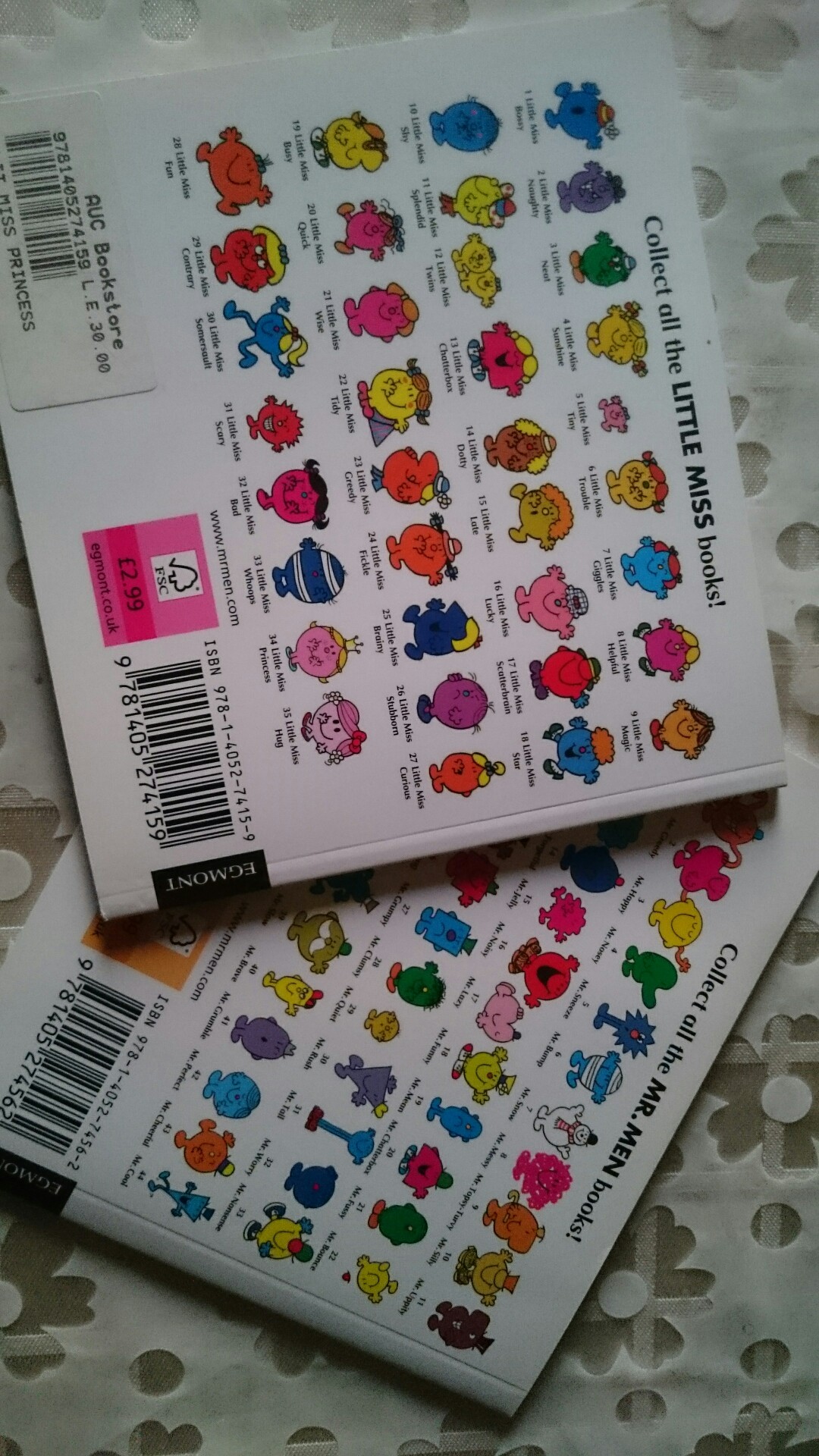
I have been doing a lot of reading and thinking ahead of #oer17 but what I am reading MOST are books to my little kid each night and throughout the day. Because I am neurotic about raising a kid who loves to read more than I am neurotic about anything else in parenting, and because the technical teaching of reading in school is OK but it doesn’t give kids the confidence to read and does not nurture a love of reading. So she is currently addicted to the Mr. Men and Little Miss series.

(back of Little Miss/Mr. Men books flickr photo by me (just took a photo from my phone

Now I buy these books for 3 main reasons

  1. They’re cheap 🙂 and abundant (so we haven’t yet run out of new ones)
  2. They’re small and light and portable so I can put several in her backpack wherever we go
  3. They remind me of my own childhood coz I used to read them to myself when I was a bit older than her (this means she can’t read them on her own yet, but she can read parts and she enjoys the reading together process so much the words “Read it Yourself” on some of her other books seem to traumatize her! This was a funny but worrying revelation. Making me wonder if she enjoys reading simply because it ties me to her rather than enjoying the reading intrinsically)

I have a lot of objections to the books, though. I don’t understand why the male characters are fully Mr but the female characters are Little Miss. Why little? I read about the original author (Roger Hargreaves) inventing the series to answer his (at the time young) son’s question “what does a Tickle look like?” and I love that the son in question, Adam, continued to add more books to the series after his father passed away.

I often think a book has so much potential but ends up falling waaaay short of what it could have done (like Mr. Nobody – imagine how meaningful such a book could be! But it was rather silly in the end). And sometimes the storyline is downright annoying. And often the humor is really difficult for my child to understand… Though I get most of it, lilk the time Mr. Wrong said, “What? I was right? That’s so strange because I am usually…” [turn page over ] “…left!”.

I do love how these books help my child learn the meanings of difficult words that are the descriptions of the characters (I don’t think even I knew exactly what Fickle meant before). I also think it’s interesting how they choose to illustrate each character to represent the adjective (or occasionally noun) that is their name. I sometimes joke with my kid and call her one of the characters when she does something. Occasionally I will make one up, like “oh, you’re Little Miss Thoughtful” (and of course I am then asked to explain what thoughtful means).

Anyway. All this long intro is just to explain that immersion in these books has got me thinking of all kinds of other books and characters that could exist…but copyright and all that… I don’t think Adam Hargreaves is on Twitter so I hope he doesn’t mind what I am about to do…

I started imagining what a Little Miss Open or a Mr. Open might look like. I started to visualize what their character would look like, and to draw one on my phone (I remembered partway through the frustration of that…that I am actually much better at drawing by hand than I am drawing graphics on a machine, so I will make time to do that, and maybe invent a few extra characters for my child in the process! Why not, right?)

So here is my caricature of Little Miss Open and it’s still in progress.

How does Little Miss Open Look? 

Some ideas:

  1. Wide-eyed because she is open to looking at everything and curious?
  2. Open-mouthed because she talks about everything openly
  3. With perked up ears because she listens well?
  4. Transparent?
  5. Open-hearted? (we can see an open heary in her transparent self – at which point i realized that these characters have huge faces with tiny legs/arms but no body so nowhere to put the heart… So maybe wearing heart on her sleeve? Err arm?)
  6. Open-minded – would we draw an opening in the head, or just never really close the head and have the mind popping out, or have a gear icon on her head symbolizing open process?
  7. Participatory – should her head be filled with thoughts/ideas of other people?
  8. Open arms? Open to collaboration with others?

Beyond the character’s looks, her behavior could take any number of directions…

  1. Open door to her house and whether this is always a good thing
  2. Sharing things, and whether sometimes she ends up oversharing to the point she might hurt someone
  3. Overly transparent to the point that she makes herself too vulnerable sometimes?

And then something interesting occurred to me. There is a book about Mr. Good who originally lives in Badland (poor fellow) where he is unappreciated (duh) but eventually stumbles upon Goodland… And I was wondering if maybe Little Miss Open is born Open but lives in Closed-Land then eventually moves to Open-Land.

Then I realized I am pretty much describing myself here, right?

I am Little Miss Open in my office and in my personal life. I am married to Mr. Private and have some colleagues who are  Miss Secretive and Miss Careful and Mr. E-Safety and such 🙂 but I also have my Open-Land, my online PLN of all the many Opens… Who are each open in their own way but generally more geared towards open than closed. So the Miss Vulnerable and the Miss Welcoming and the Mr. Collaborative and Mr. Narrator-of-Process and Mr. Share and Miss Amplify

I dropped the “little” before the miss coz it’s so sexist but it’s one of those cute things that’s sexist

Anyhoooo just needed to get this silly little brainstorm off my chest… If you’re interested in working with me on visualizing this, I may use it in part of my keynote 😉 I hope that’s not too silly.The rest of the keynote is kind of serious, I promise. But one of the beauties of being a parent is that in this horrible world, you get to be silly by duty for part of your day. And that’s a blessing.
Imagining and Visualizing Little Miss Open and Mr. Open #openlearning17 #oer17

Reading Time: 4 minutes

I have been doing a lot of reading and thinking ahead of #oer17 but what I am reading MOST are books to my little kid each night and throughout the day. Because I am neurotic about raising a kid who loves to read more than I am neurotic about anything else in parenting, and because the technical teaching of reading in school is OK but it doesn’t give kids the confidence to read and does not nurture a love of reading. So she is currently addicted to the Mr. Men and Little Miss series.

(back of Little Miss/Mr. Men books flickr photo by me (just took a photo from my phone

Now I buy these books for 3 main reasons

  1. They’re cheap 🙂 and abundant (so we haven’t yet run out of new ones)
  2. They’re small and light and portable so I can put several in her backpack wherever we go
  3. They remind me of my own childhood coz I used to read them to myself when I was a bit older than her (this means she can’t read them on her own yet, but she can read parts and she enjoys the reading together process so much the words “Read it Yourself” on some of her other books seem to traumatize her! This was a funny but worrying revelation. Making me wonder if she enjoys reading simply because it ties me to her rather than enjoying the reading intrinsically)

I have a lot of objections to the books, though. I don’t understand why the male characters are fully Mr but the female characters are Little Miss. Why little? I read about the original author (Roger Hargreaves) inventing the series to answer his (at the time young) son’s question “what does a Tickle look like?” and I love that the son in question, Adam, continued to add more books to the series after his father passed away.

I often think a book has so much potential but ends up falling waaaay short of what it could have done (like Mr. Nobody – imagine how meaningful such a book could be! But it was rather silly in the end). And sometimes the storyline is downright annoying. And often the humor is really difficult for my child to understand… Though I get most of it, lilk the time Mr. Wrong said, “What? I was right? That’s so strange because I am usually…” [turn page over ] “…left!”.

I do love how these books help my child learn the meanings of difficult words that are the descriptions of the characters (I don’t think even I knew exactly what Fickle meant before). I also think it’s interesting how they choose to illustrate each character to represent the adjective (or occasionally noun) that is their name. I sometimes joke with my kid and call her one of the characters when she does something. Occasionally I will make one up, like “oh, you’re Little Miss Thoughtful” (and of course I am then asked to explain what thoughtful means).

Anyway. All this long intro is just to explain that immersion in these books has got me thinking of all kinds of other books and characters that could exist…but copyright and all that… I don’t think Adam Hargreaves is on Twitter so I hope he doesn’t mind what I am about to do…

I started imagining what a Little Miss Open or a Mr. Open might look like. I started to visualize what their character would look like, and to draw one on my phone (I remembered partway through the frustration of that…that I am actually much better at drawing by hand than I am drawing graphics on a machine, so I will make time to do that, and maybe invent a few extra characters for my child in the process! Why not, right?)

So here is my caricature of Little Miss Open and it’s still in progress.

How does Little Miss Open Look? 

Some ideas:

  1. Wide-eyed because she is open to looking at everything and curious?
  2. Open-mouthed because she talks about everything openly
  3. With perked up ears because she listens well?
  4. Transparent?
  5. Open-hearted? (we can see an open heary in her transparent self – at which point i realized that these characters have huge faces with tiny legs/arms but no body so nowhere to put the heart… So maybe wearing heart on her sleeve? Err arm?)
  6. Open-minded – would we draw an opening in the head, or just never really close the head and have the mind popping out, or have a gear icon on her head symbolizing open process?
  7. Participatory – should her head be filled with thoughts/ideas of other people?
  8. Open arms? Open to collaboration with others?

Beyond the character’s looks, her behavior could take any number of directions…

  1. Open door to her house and whether this is always a good thing
  2. Sharing things, and whether sometimes she ends up oversharing to the point she might hurt someone
  3. Overly transparent to the point that she makes herself too vulnerable sometimes?

And then something interesting occurred to me. There is a book about Mr. Good who originally lives in Badland (poor fellow) where he is unappreciated (duh) but eventually stumbles upon Goodland… And I was wondering if maybe Little Miss Open is born Open but lives in Closed-Land then eventually moves to Open-Land.

Then I realized I am pretty much describing myself here, right?

I am Little Miss Open in my office and in my personal life. I am married to Mr. Private and have some colleagues who are  Miss Secretive and Miss Careful and Mr. E-Safety and such 🙂 but I also have my Open-Land, my online PLN of all the many Opens… Who are each open in their own way but generally more geared towards open than closed. So the Miss Vulnerable and the Miss Welcoming and the Mr. Collaborative and Mr. Narrator-of-Process and Mr. Share and Miss Amplify

I dropped the “little” before the miss coz it’s so sexist but it’s one of those cute things that’s sexist

Anyhoooo just needed to get this silly little brainstorm off my chest… If you’re interested in working with me on visualizing this, I may use it in part of my keynote 😉 I hope that’s not too silly.The rest of the keynote is kind of serious, I promise. But one of the beauties of being a parent is that in this horrible world, you get to be silly by duty for part of your day. And that’s a blessing.

Why Write an Open Text

Because I’m continually excited my work on APEX Calculus, I’ve talked with a number of people in an attempt to get them to write an open text, too. Here’s a list of reasons.

  1. You’ll enjoy it. Writing is a creative process, and most people enjoy creating. Do you like creating handouts for your students that explain better (in your opinion) a difficult section of the test? Do you like creating challenging problems that expose the nuances of theory, or demonstrate the application of an idea? If so, you’ll enjoy writing a text. I wrote a math book and even loved the creativity involved with page layout, font selection, and the design of graphics.
  2. You’ll really master the subject. Of course you have mastery over the content of the courses you teach. But writing a book on the subject will take you deeper.
  3. It looks great for tenure/promotion. You have to do something to earn t&p; might as well do something you’ll enjoy (see #1 above). HUGE CAVEAT: get written permission first. Different places regard open materials … differently. Some places won’t give you credit unless a publisher thinks they can make money off of your text and signs a book deal with you. 
  4. The book stays yours. Items 1, 2 & 3 above apply whether your book is open or not. This is the first “why make your book open” item. There are lots of horror stories of people writing under contract where the final book doesn’t really reflect what they, the author, wanted. They’ll make you add material that you don’t think fits because they think it’ll sell better. You’ll get sucked into the “new edition” cycle that you, as a teacher, hate. 
  5. You can make money. Yes, I said that. I went into this staunchly opposed to earning any money. My “payment” was going to be tenure & promotions. Then, 800 pages and countless hours later, my colleagues & wife convinced me it was ok to be paid in dollars, too. I still give the .pdf out for free, but make royalties on the purchase of printed books. Don’t plan on getting rich. But you’ll get a kick out of royalty checks that eventually cover a family vacation. It also offers a nice tether to continually improving your work: if you make your product better, you may get more adoptions, which means more money. The downside: tax season becomes even more memorable. As an author collecting royalties, you are now an independent contractor.
  6. Students will save money. This is often touted as the main reason to write open texts. I saved it for last for a reason. Call me a jerk, but working hard to save other people money is only rewarding for a short time. If items 1 through 5 above didn’t hold true, the cost savings to students wouldn’t be enough to motivate me to write. But students will save money. New calculus books cost up to $300. Mine costs about $45, and is split into 3 $15 volumes (so students only pay a little each semester). And then some buy used, saving even more!!

You may say “Ok, sounds good. I’ve been thinking about writing a text for a while and now I’m convinced to try. What’s next? Any advice on getting started?” Yes, I have such advice. I’ll cover it in my next post.

Free as in Puppies, and Other Metaphors #OpenLearning17

Reading Time: 3 minutes

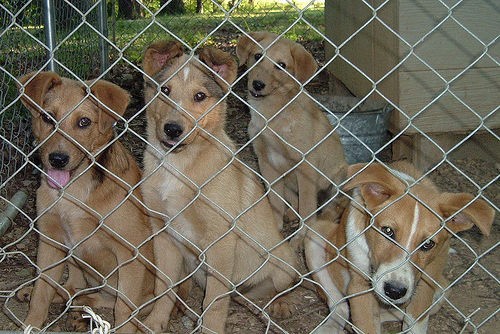
I was reading and annotation (via Hypothes.is) the first reading Fifty Shades of Open and I was struck by something I’d never heard of before… the notion of “free as in puppies” (to be distinct from free as in gratis/beer and free as in libre/speech). Now finding an image for this took longer than I expected because… you know… cute puppies!!! But in the end I settled on the one below…

DSCF0983 flickr photo by Cherie Priest shared under a Creative Commons (BY-NC-SA) license

The notion of “free as in puppies” is meant to focus on the fact that someone can give you a puppy for free, but keeping the puppy alive and happy is not at all free – it costs money and time. But also when I saw the image above, I realized that free puppies aren’t really free… not in the way a street dog is free (with whatever disadvantages that may bring) or in the sense that wolves (themselves the non-domesticated version of a dog, ancestor?) are free.

But anyway 🙂 Back to the original meaning… I like that someone had developed a simple way of expressing this notion. In the way that, e.g. Moodle as an LMS is free to use but costly to maintain (in terms of manpower for support at least).

I wonder if there is a way to express “free but” options… that are NOT equivalent at all to “open” – and what would a good metaphor for them be… “free as in ride”? I’m saying “free ride” because a ride ends and then you probably have to pay for the next one. So I’m thinking of spaces like WordPress.com where you can use the free version up to a point (and not a bad point) but at some point you might want to use something that’s not available in the free version and you’ll need to buy. And it’s also not open in the sense of its source code, but you can create plugins, so it’s an interesting in-betweener in a way… Still a commercial entity, but you can self-host it for free (well you’re paying for hosting and DNS but not paying WordPress to install it). This may seem really silly or naive to people who are really into this sort of thing, but I do think these things need to have a name for what they are…

There’s of course another one that needs a name. The “free” stuff that forces you to be under the mercy of the commercial owners – like Facebook, Twitter, Google. It’s free to the user in terms of money, but… users are being used for data and for marketing and more (I don’t actually know what more, but I sense some sinister things every now and then, like surveillance anyone?) – what do we call this? “Free as in not really” or “Free as in sell me your soul”?

And  yet this free but not open stuff is really important and to people in a certain space, really empowering. I can’t say that WordPress and Twitter don’t support my empowerment. I can’t say that Google (especially via Hangouts, because of VirtuallyConnecting.org specifically) doesn’t support my empowerment. If these weren’t free, where would we be?

Anyway, thought I’d just open this conversation… of the free that isn’t open. And what metaphor to use for them, because it ain’t beer (eww why did they have to choose beer? something I wouldn’t take even if it were free?) or speech or puppies…

I’m only halfway through the article… maybe the answer is in there somewhere, but I’m actually more interested in what YOU have to say 🙂

Free as in Puppies, and Other Metaphors #OpenLearning17

Reading Time: 3 minutes

I was reading and annotation (via Hypothes.is) the first reading Fifty Shades of Open and I was struck by something I’d never heard of before… the notion of “free as in puppies” (to be distinct from free as in gratis/beer and free as in libre/speech). Now finding an image for this took longer than I expected because… you know… cute puppies!!! But in the end I settled on the one below…


DSCF0983 flickr photo by Cherie Priest shared under a Creative Commons (BY-NC-SA) license

The notion of “free as in puppies” is meant to focus on the fact that someone can give you a puppy for free, but keeping the puppy alive and happy is not at all free – it costs money and time. But also when I saw the image above, I realized that free puppies aren’t really free… not in the way a street dog is free (with whatever disadvantages that may bring) or in the sense that wolves (themselves the non-domesticated version of a dog, ancestor?) are free.

But anyway 🙂 Back to the original meaning… I like that someone had developed a simple way of expressing this notion. In the way that, e.g. Moodle as an LMS is free to use but costly to maintain (in terms of manpower for support at least).

I wonder if there is a way to express “free but” options… that are NOT equivalent at all to “open” – and what would a good metaphor for them be… “free as in ride”? I’m saying “free ride” because a ride ends and then you probably have to pay for the next one. So I’m thinking of spaces like WordPress.com where you can use the free version up to a point (and not a bad point) but at some point you might want to use something that’s not available in the free version and you’ll need to buy. And it’s also not open in the sense of its source code, but you can create plugins, so it’s an interesting in-betweener in a way… Still a commercial entity, but you can self-host it for free (well you’re paying for hosting and DNS but not paying WordPress to install it). This may seem really silly or naive to people who are really into this sort of thing, but I do think these things need to have a name for what they are…

There’s of course another one that needs a name. The “free” stuff that forces you to be under the mercy of the commercial owners – like Facebook, Twitter, Google. It’s free to the user in terms of money, but… users are being used for data and for marketing and more (I don’t actually know what more, but I sense some sinister things every now and then, like surveillance anyone?) – what do we call this? “Free as in not really” or “Free as in sell me your soul”?

And  yet this free but not open stuff is really important and to people in a certain space, really empowering. I can’t say that WordPress and Twitter don’t support my empowerment. I can’t say that Google (especially via Hangouts, because of VirtuallyConnecting.org specifically) doesn’t support my empowerment. If these weren’t free, where would we be?

Anyway, thought I’d just open this conversation… of the free that isn’t open. And what metaphor to use for them, because it ain’t beer (eww why did they have to choose beer? something I wouldn’t take even if it were free?) or speech or puppies…

I’m only halfway through the article… maybe the answer is in there somewhere, but I’m actually more interested in what YOU have to say 🙂

The network is the deliverable