Greetings from the #OpenLearning17 Connected Learning Coach

This week marks the opening of Open Learning: A Connectivist MOOC for Faculty Collaboratives, a 15-week course that aims to “design and provide a helpful and stimulating learning experience for all participants that results in measurable improvement in the use of digital affordances and sustainable professional development connections across Virginia and other areas.”

For the uninitiated, faculty collaboratives are part of the American Association of Colleges & University (AACU) LEAP initiative.  Since 2005, LEAP (Liberal Education & America’s Promise) has promoted college learning that involves high-impact educational practices and authentic assessments; faculty collaboratives support LEAP success by creating large-scale, sustainable networks of resources meant to support faculty development on LEAP-related principles, practices, & outcomes.  The #OpenLearning17 MOOC represents a partnership between AACU and the State Council for Higher Education of Virginia (SCHEV) and is the faculty collaborative experience for Virginia that seeks to enhance digital literacy and leadership among the faculty of institutions of higher education in Virginia and beyond.

Hello, I am Laura Gogia, your Connected Learning Coach for the #OpenLearning17 Course.
giphy-4
Wait, what?

More explanation may be needed :).  Here are the obvious questions that come to mind.

Question: WHAT IS CONNECTED LEARNING & WHAT DOES IT HAVE TO DO WITH A CONNECTIVIST MOOC?

If you participate in #openlearning17, you will be working to enhance your ability to make connections in and across digital platforms, building visible networks of ideas, people, and personal/professional resources over time.  It is one example of a connected learning experience.

Connected learning is a progressive educational approach (think Dewey) contextualized for the digital world. The National Writing Project does a great job of providing case studies and examples, Mimi Ito and colleagues’ agenda for connected learning research and instructional design goes into a bit more detail, and I’ve written a white paper on how connected learning was executed at Virginia Commonwealth University.  If you read through all of these things, you’ll see that the purpose of connected learning is to create inclusive, creative, social, authentic learning environments meant to help students recognize, strategically reflect on, and forge new connections between people, contexts, ideas, and personal experiences. Although connected learning does not have to be executed in open digital environments, to do so opens the door to an entirely different level of access to and opportunity for authentic audiences, creative resources, and personal learning network development.
john-dewey-o

Connected Learning = Dewey in the digital world.


Question: AS A LEARNER, HOW DO I ENGAGE IN CONNECTED LEARNING?

As I mentioned above, connected learning is really a form of experiential learning, so we can think about it in terms of Kolb’s experiential learning cycle.  I’ve  written about it in more detail elsewhere. However, to cut to the chase, connected learners deepen their understanding by making connections:

  • with other people (social learning)
  • across their own thought trajectory, over time (reflective learning)
  • across disciplines and contexts (interdisciplinary and cross-contextual)
  • through different types of expression (multimodal; visual/audio/kinesthetic/etc)

Digital platforms allow us to makes those connections explicit via hyperlinks, embedded images, audio, and video which brings us to the final question…

Question: WHAT IS A CONNECTED LEARNING COACH?

Short answer: I am and this is not the first time I have done this; in fact, for more details, you can check out this WCET blog post. During this course – usually in the form of blog comments or tweets or infographics– I will be asking you to consider how you can use the affordances of the web to enhance your communication and learning.

For example, I might ask you to think about how a hyperlink – one form of a digital affordance – might make your thinking more explicit, increase your communicative impact, and enhance your own learning.  If you click through the hyperlinks in this blog post, you will see that I made connections between my current thinking and:

  • the course website & AACU website
  • my past work
  • other references, and
  • other forms of expression (hint: the gifs)

In doing so, I not only demonstrated a understanding of audience (e.g. I provided context and additional resources for them), but also connected this current activity with my other scholarly work.  I reconfirmed my purpose and position.  I also put a lot of thought into what gifs would express what was going on in my head…which made me think about what was actually going on in my head more than I would have otherwise.

giphy-5
Connections

Digital spaces – particularly public digital spaces – allow you to do certain things that you cannot do on paper or in a closed classroom space. Of course, the reverse can be true as well…and we can reflect on that too. It is my HOPE, my genuine hope, that you will join me in exploring the digital nature of #OpenLearning2017 with curiosity as a truly unusual learning space.

Thanks – you’ll see me around 🙂

Weekly Web Harvest for 2017-01-15

  • Rogue Scientists Race to Save Climate Data from Trump | WIRED

    At Penn, a group of coders that called themselves “baggers” set upon these tougher sets immediately, writing scripts to scrape the data and collect them in data bundles to be uploaded to DataRefuge.org, an Amazon Web Services-hosted site which will serve as an alternate repository for government climate and environmental research during the Trump administration. (A digital “bag” is like a safe, which would alert the user if anything within it is changed.)

  • It’s more than just the words

    Personal sites, our blogs, these were once our playgrounds. My own site was the first place I added rollover images, CSS for fonts, tried out a “table free” design. I wrote about the web, surrounded by my own experiments with the web. We all did, and it was only in reading those words from 1999 that I realised there was more to owning your own content than simply not publishing your words elsewhere.

Networked Narratives: Fair Use

The internet is down, again. Another annoying phone call, another appointment made. This time the technician found a connection problem outside my apartment and thus, no charge for the service call. After four months of international phone calls, emails, surveys and chats. Have I been talking to bots all this time? But that’s a different digital story…

This is my first attempt to reflect on the Digital Alchemy of Networked Narratives. On America’s Presidential Inauguration Day. Is this an omen? No, that would be digital augury and I’m interested in transformation, digital and otherwise.

That’s how I found the Center for Digital Storytelling, now StoryCenter, in Berkeley California. Learning to use story circles to explore my life and to increase my ability to listen with compassion has transformed me. Last week I had the honor to assist StoryCenter founder Joe Lambert teach a group of facilitators to continue story work in education, non-profits and social services.


In the same week I received the invitation to participate in netnarr, finished my Copyright for Educators & Librarians Certificate through Coursera (in anticipation of taking the new Creative Commons Certification class), and got an A in my Physical Geography class. It was a four week intersession online course that covered sixteen weeks of material. I’m pretty sure it’s some kind of academic fraud, but I’ll take the four units I need to finish my Associates degree in Sociology. Spring semester starts next week and I’m looking forward to my last SOC class, taught by my department chair; The Sociology of Death and Dying.

My main project this year is to finally create the structure for an eportfolio. I’ve been trying to understand how I can use one to document all my learning and experience. A retired scientific glassblower, I have so much experience to document that isn’t text based (implicit or tacit knowledge) that I don’t know where to begin. I’ve attended one AAEEBL conference, read several books and interviewed some portfolio users. Anyone else going to the AAEEBL Conference in Portland this year? My takeaway is that by building a digital portfolio (data base), one can reflect on their learning and experiences to make new connections and reach new understandings they didn’t realize at the time they were creating their digital artifacts. I look forward to including everything I make and learn while participating in Networked Narratives.

Long ago I set up my own domain. I tried blogging. No one cared, especially me, but I was just a cranky old returning Community College student pissed off at the Financial Aid Department. Lately, I’ve made many ds106 Daily Creates and cross posted them to my website, Twitter, Google+ and facebook. CogDog has inspired (shamed?) me to try and give proper attributions, but I’m still not sure if I’m tagging things in the best way. I know I’m not including the necessary metadata for the semantic web. (anyone else taking the Metadata Workshop at DHSI in Victoria this summer?) I’ve tried and abandoned all the other social media sites (who else has thousands of del.icio.us bookmarks and no followers?) with the same result, except facebook: Now I stay in touch with a half-sister I’ve never met because she found me on facebook.

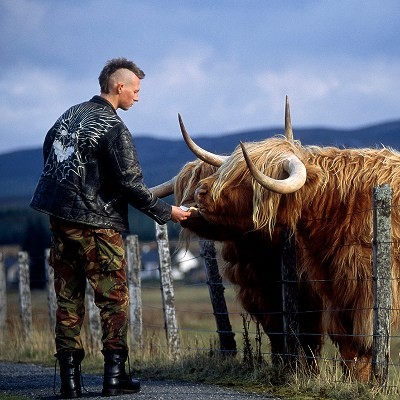
The first thing I saw on facebook today was a reminder of my first ds106 post: Cow Punk. I love serendipity!

Punkwith mohawk feeding Scottish cow in Dalwhinnie, Scotland.

Dalwhinnie, Scotland Photograph by Jim Richardson
https://t.co/AmLSFcWa1M


I wasn’t sure it was my first post, so I googled how to search my twitter posts. In settings you ‘create archive’ which is emailed as a .zip file. Unzipping the archive you can view it many different ways, the easiest for me being through a browser. (Any JSON enthusiasts want to explain how that search works?) First I searched for #ds106: it wasn’t there. Harrumph (rhymes with Drumpf). How do I search my images to find which one was first? Google says just type modified: into the file explorer search box and files are automagically ordered by date. Then you can type a range after the colon if need be. There it is. I called it Cow Punk after the musical style popularized by The Beat Farmers, Lone Justice, Rank and File and X. I was born in Hollywood and lived in Whittier (home town of Richard M. Nixon) until I moved to the Bay Area. I included a link to Rank and File’s song/video “Ever see a sheep in a pork pie hat?” in my tweet. I was (hopefully) alluding to Scottish sheep (and cow) herders and their American cousins (cowboys) [should have left the typo ala CogDog *cowbots*], 60’s British Mods and today’s hipsters (pork pie hats), punks and edupunks. (google it)

It was my first post, why wasn’t it in my twitter archive? Doh! I started by playing with #western106, Alan Levine’s 2016 fork of #ds106. Back to search my twitter archive with #western106 and there it is! @ds106dc #tdc1472 #western106

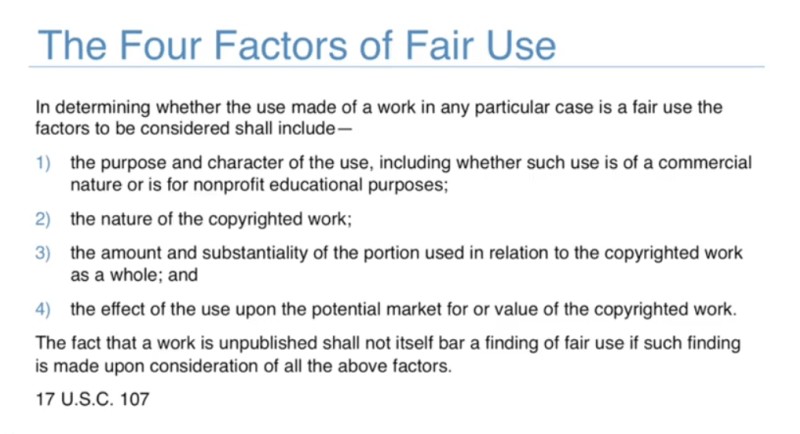
A quick search of my gmail reminds me of the #tdc1472 prompt: “An old Western saying tells us not to approach a bull from the front, nor a horse from the rear. It also tells us not to approach a fool from either side. Make one image/drawing or several (like in a comic).” I just googled for an image I liked and downloaded it. Now, an image search of my tweet reminds me that I misappropriated a National Geographic picture from “30 Years in Pictures: Celebrate National Geographic Traveler’s first three decades with flashes from the past” It was from “”History in a Bottle,” a look at the Scottish Highlands—and its single malt whisky—that appeared in the July/August 2001 issue of Traveler.” Ooops. And I didn’t attribute the photograph as “Dalwhinnie, Scotland” by Jim Richardson. Since all I did was crop and reverse the image, I can’t even honestly claim it’s repurposed. In my Copyright for Educators & Librarians class I recently learned to go through the Four Factors used by the US courts:

Four factors of Fair Use law in US.

Nope, nope, nope, nope; this doesn’t augur well. My only defense is that I’m a student, a really old student. All I can do now is wait for a letter from the National Geographic and perhaps the Scotch Whisky Association. Good thing the Dalwhinnie Distillery isn’t a member. Ain’t google grand?

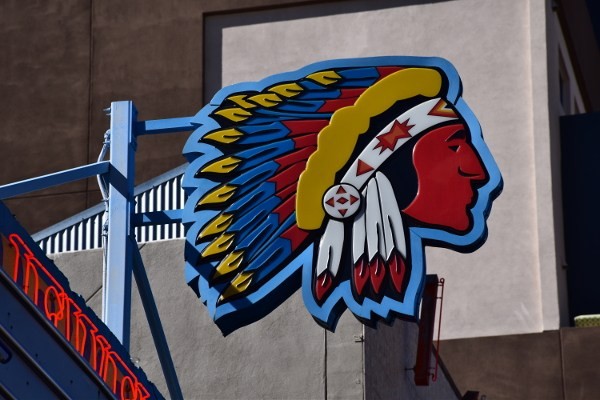
I’ve learned that I don’t have to do anything to secure my copyrights, so here are images I do have the right to use.  I took them on Route 66 in Albuquerque, New Mexico, in 2016 while at the Southwest Popular/American Culture Association annual conference. I didn’t get a signed release, but the young person was sitting on a public sidewalk so I’m not worried. He was a block away from Maisel’s Indian Trading Post, built in 1939. Visiting Maisel’s reminded me that I was 11 when I started working during summers in my aunt and uncle Pobar’s Chevron Service Station And Sawahu Trading Post in Organ, New Mexico, southwest of White Sands Missile Range and National Monument. That’s Maisel’s politically incorrect antique sign.

I didn’t see the obvious connection between the photos that afternoon on Central Avenue. Today while looking looking for Cow Punk it jumped out at me. And all I did was resize the originals, so now I’m reflecting on the reflections!

The night before President Trump’s Inauguration, there was thunder and lightening in Oakland, California. This is rare for the Bay Area (after taking GEOG1 I could explain why) and I took it as an inauspicious sign for living under the new regime. Last week I made a commemorative thing and I’ll use it to close my inaugural post. Look closely for the shadow. I’ve learned that what I see on my 4K monitor isn’t what everybody else sees, especially on their phones.

President Donald John Trump - with text Super Callous, Fragile Sexist, Extra Braggadocious. Triple chins in ornate gilt frame.
President Trump Inauguration January 20, 2017


Notes

“30 Years In Pictures: Celebrate National Geographic Traveler’s First Three Decades With Flashes From The Past.”. Traveler 2014. Web. 21 Jan. 2017.

“Augury”. En.wikipedia.org. N.p., 2017. Web. 21 Jan. 2017.

“Cowpunk”. En.wikipedia.org. N.p., 2017. Web. 21 Jan. 2017.

“Inauguration”. En.wikipedia.org. N.p., 2017. Web. 21 Jan. 2017.

#openlearning

Watched a video interview with the ‘connectedness coach’ or something like that for the course.

Truth be told, if I hadn’t had 15 hits on my little equity post, I’d have forgotten about #openlearning.   The semester has started so my job is actually serving students.  (Yesterday was a day I wished I had a way to keep track of what I did all day.   I was regaling it to my friend and kept having to say “Wait! Wait! There’s more!”)  There’s also the stuff of death and taxes that has eaten much of my focus.

Still, the “first week” of that cMOOC (‘connectivist’  so “learn from each other” rather than ‘here’s some lectures from MIT guys, aren’t you lucky?’)   doesn’t start ’til tomorrow — I suppose there are things in their LMS that will “open” then because right now it just claims (falsely) that each week listed on the syllabus will link to its details.

So far (right, xious… it hasn’t even **started** yet ~ )  it still feels like a whole lot of academic talk about the academic world and ‘openness.’

We are having some of those issues out on the front lines.   Friday’s anecdote #7 was a kiddo not being able to find courses to enroll in (starting at midterm since it’s too late for Spring)… I told him about our new online independent skill-building options and he said that well, he needed a course.   He knew that he just didn’t get things done independently.

(OTOH, anecdote #3 was the Brazilian who listened to a chunk of Modumath and said, “It’s perfect!  He talks slowly and explains things!” — and we’re trying to make that more open)

Lots of us on the edge of open — we’re the ones who *do.*   So … it’s easy for us to project that onto the rest of the world… a world of people who benefit from a lot more structure.   I actually remembered to ask people coming in for that independent stuff (it can be done on the internet anywhere but — guess what!! — they want to *go to school.*)  about making a folder and logging time and progress.   (I have qualms.   I cannot remember things like folders.   So far, though, *they have.*   All of ’em…. I really should get that other guy a folder…)

Why does that belong in this #openlearning blog post?   Because “open” should be better than “okay! open for swimming!” on the open seas.

We don’t have a “course” because … then we’d need students to be “in the system.”  They’d need the right kind of email address. Even if it’s open to everybody, they have to do a mess of paperwork and … some of the folks in some of hte groups who’d use it are undocumented.  I’d like to see us set up “houses” like Hogwarts and … you can pick your character.   (Didn’t Second Life do something like that?)

Then *if you so choose* you can find ways to connect with your identity and get credentials.

If “open” is open to people with the right tech equipment, the right tech skills, and even then there are hoops to navigate…  per the section in Fifty Shades of Open  about “open means use,”  that’s not really open.

How to provide the structure so many people need for good learning … without that structure turning into insurmountable hurdles?   Let’s explore…


Hello

open-textbooksI work as an instructional designer and faculty professional development manager.  I have been an advocate and champion for OER since the beginnings, and I look forward to learning more during this course.  My background include developing courses with backwards design alignments to purely OER content.  I also have developed hybrid OER options and interactive OER games and formats for students using coding.

Cyber Intelligent Schools

Registrations open for our interesting peer-to-peer education program for primary and secondary schools! 

The EHC’s Cyber Intelligent Schools program aims to empower children and young people to champion digital creativity within their schools and to educate their peers, parents, and teachers about staying safe online.

This youth leadership program offers pupils an exciting online community, structured training and ongoing support from EHC’s expert team, helping make e-safety learning fun and effective and helping schools work towards an outstanding whole school community approach to e-safety. 

Benefits for your school:

  • Empower youth voice and provide young people with opportunities to be role models.
  • Cyber Intelligent School pupils gain confidence and key skills such as leadership, communication, and teamwork.
  • Make e-safety learning fun and effective
  • Positive impact on pupils – including safer online behaviors and increased e-safety knowledge
  • Engage and empower parents and staff
  • Helping you work towards outstanding e-safety practice in school
  • Connect with other schools 
Registration is now open for Indian schools to enroll in the Childnet Digital Leaders Programme. To receive a registration pack, which includes more information about the program, please enter your details in the form at the end of this post.


Join Now

The network is the deliverable