All posts by @MCorbettWilson

Hoagy, Bix, Wolfgang Beethoven Bunkhouse and me

I was coming to the end of my first year as a scientific glassblower. Thurston LeVay, the owner of Glass Instruments, came into the shop and talked with the leadman, John Smith. I saw John shake his head and Thurston went to the second glassblower’s bench and talked with Jimmy Sato. They both looked at me and Thurston walked back and told me there was a guy in his office that wanted a trumpet made from glass. It was for a play about Bix Beiderbecke, a coronet player actually, and he asked if I could make one.
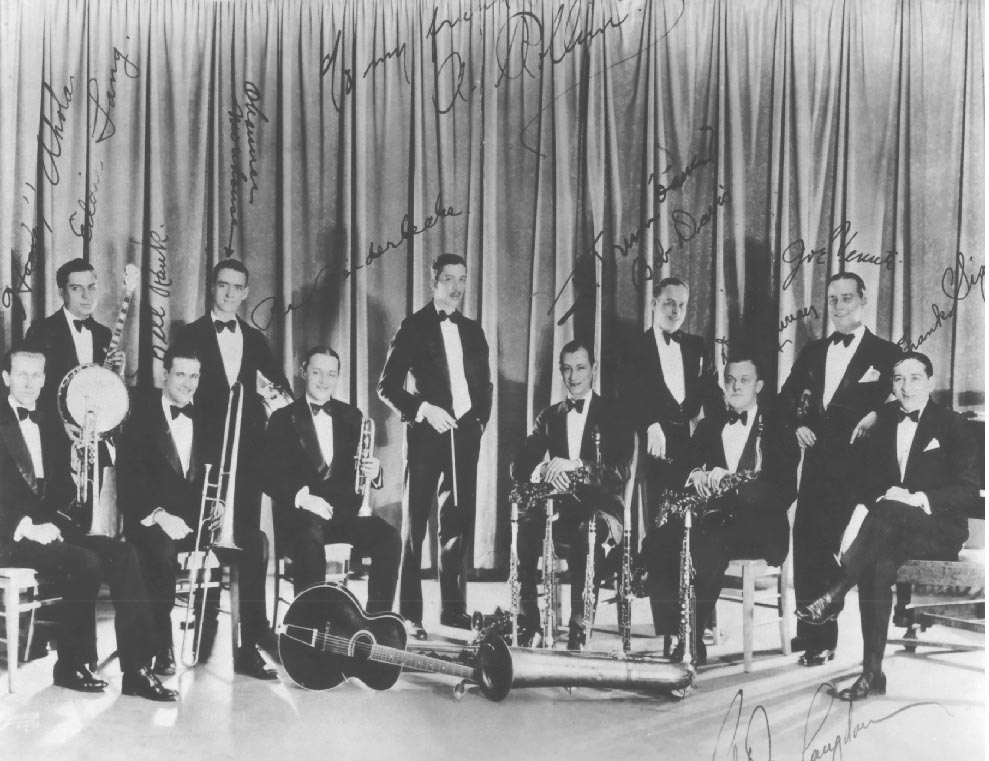
New Yorkers 1927


I had met Thurston five years before, when we were both taking off-hand glassblowing lessons from M. Rhys Williams at his Cactus Glassworks in Claremont, California. Rhys had come to my mom’s workplace looking for fire brick to build a new glassblowing studio in Pitzer College, one of the Claremont Colleges. My mom was the office manager of Pyro Engineering, a small firm that designed and repaired furnaces to make steel (back when we made steel in America), and sold fire resistant brick and mortar and casting materials. I was taking glassblowing classes at Rio Hondo Junior College, so she got a card from Rhys and gave it to me the next time I stopped by to visit.

Traditionally, glassblowing is done in teams. You might have seen it at a fair or on PBS. One person gathers glass from the furnace on a steel blowpipe, while another is adding color or decorating another glass bubble. The gaffer (an affectionate term for grandfather in Italian) typically sits at the bench and finishes the pieces before handing them to the ‘boy’ that takes them off the blowpipe, puts them away in the 900 degree annealing oven, cleans the remaining bits of glass off the pipes and punty rods and returns them to the rack beside the furnace to pre-heat. It is a continuous process; All members of the gaffer’s team are continuously doing their jobs as the finished pieces accumulate in the annealer. They are cooled slowly overnight to relieve the stresses induced by shaping the glass with steel tools and reheating to continue working on a piece.

In 1962, Harvey Littleton gathered a group of ceramic artists at the Toledo Museum of Art in Ohio. He had an idea that they would build a little furnace and blow glass. For fun and as a learning adventure. At that time the only people, worldwide, that had access to molten glass were the workers in glass factories. Whether they were making plate glass for architectural glazing, running machines to make bottles and light bulbs, or making the glassware used in academic and commercial laboratories, only professionals had access to hot glass. Harvey Littleton had a retired glassblower, Harvey Leafgreen stop by and show the workshop participants how to gather the glass, start the bubble and give it some shape. Several of the ceramicists went back to their colleges and studios, built small glass furnaces and started to learn more about glassblowing. That was the start of the American Studio Glass Movement.
American Studio Glass


In glass studios, unlike factories, there is usually just the glass artist (and perhaps an assistant or two) doing all the jobs required to produce a piece. Over the years many unique processes have been created and there has been an explosion of glass art around the world; from the smallest art museums to Las Vegas casinos, people have been enjoying and collecting glass art. Rhys Williams is one of those glass artists. Know for his painterly use of color on the vases and bowls he blows by himself, he has also been teaching at local colleges for over forty years. To help support his private studio in his early days he gave glassblowing lessons and to lower the cost to the student and teach teamwork, two students were scheduled at the same time. That’s how I met Thurston LeVay.

Recognizing that most glass artists were upper middle class was the first time I realized that being working class limited one’s life choices. I didn’t have a trust fund to help me go to art school or start a glass studio (the most expensive art form because of the energy required), so I looked for work in glass shops. I repeatedly asked Thurston for a job, but he told me that they didn’t hire anyone without experience. Catch 22! While managing the local head shop (I think they are called smoke shops today), I met Dick, the owner of the LAPD. Not the Los Angeles Police Department but the LA Pipe Distributor. Through him I met Gene, the owner of the Doobie Incense Company, who distributed incense and made glass pipes and funnels for aficionados of hash oil. This was before drug paraphernalia became illegal in California. I convinced Gene to hire me as a glassblower and soon I was blowing 200 hash oil pipes an hour! I quickly sent up a torch in my kitchen (don’t tell the fire marshall), and at 5 cents apiece I was making ten dollars an hour. It was the ‘70s and I could easily make my monthly rent in a day! When I applied for a job in a factory a couple years later, I could honestly say that I had years of experience with Pyrex glass. Not that it mattered, my next job was making quartzware for the semi-conductor industry. Purity being crucial, this glassware is made from Pure Fused Quartz (PFQ) which requires a hydrogen/oxygen flame to reach the 4,000 degrees necessary to work it. This is the same flame that launches the space shuttle and makes quartz work the most dangerous form of glassblowing. And that’s how I gathered enough experience to get a job at Glass Instruments.
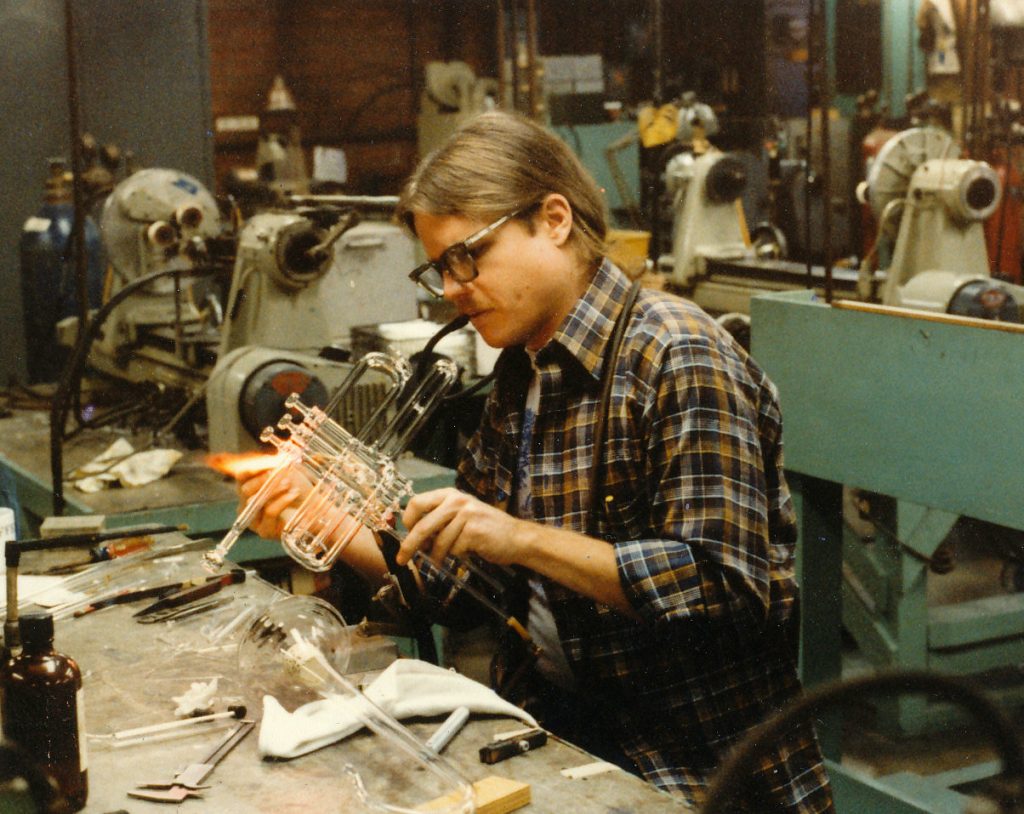
Mark Corbett Wilson assembling Pyrex coronet


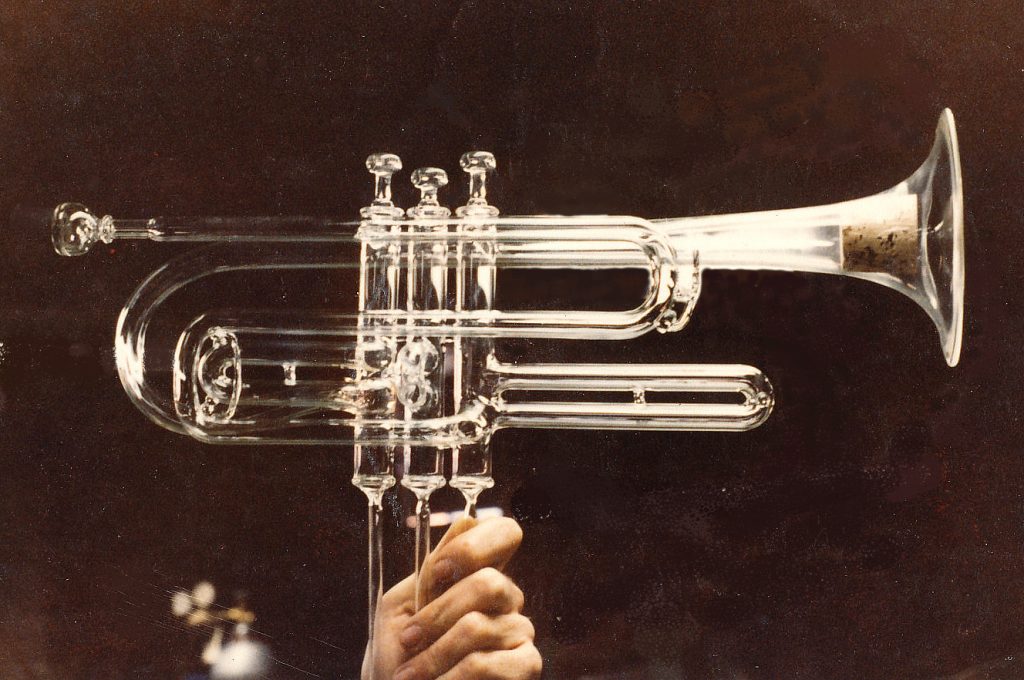
I told Thurston I could make the glass coronet and he asked me how long I thought it would take. From my vantage point of being retired, I can see that he was playing with me, but I told him I could make it in a day. Estimating custom work is the hardest part of any small business and I’ve learned to multiply my best guess by two to cover the inevitable unforeseen challenges. Thurston knew that better than anyone, but he let me try to make it. The set designer for the Mark Taper Forum brought a real coronet in as a pattern, I have no idea what Thurston charged him for the glass one. I took some measurements and went to work. The first day went well but I wasn’t finished. Hank, the shop manager, was an engineer and stiff old Yankee that didn’t like longhairs. He started needling me the next morning, reminding me that I had estimated I would only take one day. John, the lead glassblower just smiled but I knew everything was OK when Thurston’s son (the sales manager) came into the shop and started taking pictures. By noon the coronet was finished and put in the annealing oven.
That’s the day I learned I could hold my own in any scientific glass shop.
A few days later the designer picked up his prop and left me two tickets to the show.

I found these on the internet:

The original London program

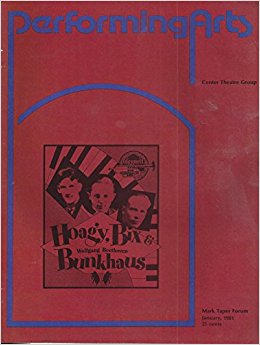
The Los Angeles program

“The following is an almost verbatim transcription of an account kindly provided to me by Richard M. Sudhalter.
The Taper production in Los Angeles came some months later. The stage band was myself on cornet, Dave Frishberg singing and playing piano, Bob Reitmeier on clarinet and alto, Howard Alden (age 22) on banjo and guitar, Putter Smith (younger brother of Carson Smith) on bass, and Dick Berk on drums. The cast included the singer-cabaret artist Amanda McBroom. Mark Robman worked out an interesting idea for staging the musical sequences: every time the Bix character, played by Harry Groener, had to play some cornet, he would stand, horn at mouth, in the spotlight, facing the audience; I would stand, in darkness, back-to-back with him, but costumed identically. Then we would simply revolve, as if on a pedestal, bringing me into the spotlight and him into shadow. I’d play the solo – I remember doing “Singin’ the Blues” and “I’m Comin’ Virginia,” among others – then we’d revolve back, and I’d melt into the darkness off stage while Groener carried on with his lines. The musical side of the show got mostly rave reviews, but Mitchell’s play took a critical pasting. Unfairly, I thought: he’d tried, very imaginatively, to bring off a difficult concept, blending the Weltschmerz of the Bunkhaus humor (even casting some of the episodes as puppet-show plays within the play) with the Beiderbecke tragedy, all against the Carmichael coming-of-age motif. There were things that didn’t work, sure – but I thought then, and still do, that it was a very ambitious undertaking and deserved better treatment than it got.” http://bixography.com/inforrelated.htm#HoagyBix,Bunkhaus.

A few days after my 25th birthday, my girlfriend and I saw Hoagy, Bix and Wolfgang Beethoven Bunkhouse in the Mark Taper Forum at the Los Angeles Music Center. I’d been to dozens of live theater shows, including musicals, but I’d never seen anything like a lead musician standing behind the actor playing a musician and rotating into the spotlight for solos. We waited to see my glass coronet, and when one of the characters said Bix’s tone was as clear as crystal, the musician rotated into the shadows as ‘Bix Beiderbecke’ came into the spotlight playing a ‘crystal’ coronet. That was the moment that I realized that not only could I make anything out of glass, but I could participate in the ‘arts’ without going to an expensive private art college.

“Crystal” coronet for LA production of “Hoagy, Bix and Wolfgang Beethoven Bunkhouse”


I have always wondered where the crystal coronet went after the house went dark. Apparently, there was never another production mounted.
My College Degree as a Digital Humanities Project

Digital Humanities by Craig Bellamy CC BY-NC-SA 2.0


I’
m developing a new model for adult learners so they can avoid the experience I had while trying to improve my skills at a Community College. Combining Self-Directed Learning, Computational Thinking, Digital Pedagogy, Open Education and Open Social Scholarship theories with Open Education Resources (OER), Free and Open Source Software (FOSS) and ePortfolios, I intend to create a free platform for any adult learner to document and reflect on their diverse learning experiences. I think simplifying all these dense and often conflicting learning theories into an approach (Praxis) any adult student can use to design their own self-directed education pathway will be useful. (Heutagogy)

I’ve been working on these ideas for three years, starting with attending a presentation by faculty from Evergreen College in Washington on integrating individual courses’ homework assignments across institutional silos. That led me to eportfolios as a way to collect all types of evidence (digital objects) of learning. Learning about tagging and metadata for discoverability on the internets, I observed the need for a controlled metadata vocabulary to allow searches for emerging patterns. These new ways of looking at one’s learning has the potential to suggest new constructions of learning experiences and new areas of research.

I belong to the Association for Authentic, Experiential and Evidence-Based Learning (AAEEBL) and have attended their conferences, including a session at this year’s 8th Annual Forum on Digital Learning and ePortfolios at the 2017 AAC&U conference in San Francisco. The ePortfolio Forum is jointly sponsored by AAC&U’s project, VALUE: Valid Assessment of Learning in Undergraduate Education; the Association for Authentic, Experiential and Evidence-Based Learning (AAEEBL), the association of ePortfolio professionals; and the International Journal of ePortfolio (IjeP). At this year’s AAEEBL Conference I joined the Technology Special Interest Group and convinced them to take on my idea for an ePortfolio Ontology as their first project. I’ve also joined the Association for Learning Technology, the UK group to “advance education through increasing, exploring and disseminating knowledge in the field of Learning Technology for the benefit of the general public.”

The Hurley Information and Technology Convergence Center at the University of Mary Washington in Fredericksburg, Virginia. Photo by MCW


I
recently realized that my idea of ‘finishing a Bachelor’s degree while using Free and Open Source Software to create a learning eportfolio on my own domain and blogging about it in public’ is a Digital Humanities project. In 2016 I attended the Digital Pedagogy Lab Institute at the University of Mary Washington, VA, home of ds106 and the Domian of One’s Own initiative. I learned about UMW while attending the Digital Humanities Summer Institute at the University of Victoria, BC, where I took Critical Pedagogy and Digital Praxis in the Humanities from Jesse Stommel and Chris Friend. This year I took two courses during DHSI to support my project; ‘Open Access and Open Social Scholarship’ and ‘TEI and Metadata.’ That led me to explore metadata ‘triples’ which led to the concepts of graph databases and ‘faceted’ searches.

Lincoln as a boy reading at night. Library of Congress CollectionNow I want to learn how to integrate a FOSS graph database (Neo4j?) with FOSS curation tools (WP, Omeka, GitHub?) to utilize the power of humanities computing and the semantic web to document and reflect on my learning experiences. And then document my reflections and be able to do faceted searches of everything I’ve created together with everything I’ve curated into my database. I need to learn to appropriately tag all these digital objects with metadata so that they integrate seamlessly with the semantic web. Hopefully this can be automated to a large degree.

My plan is to structure my Metro State University’s College of Individualized Studies Bachelor’s degree as a Digital Humanities project using an eportfolio to document, reflect on and publish my learning. Which tagline do you like: Learning in Public or Learning Out Loud? Or suggest another.


Learning Strategies and Goals

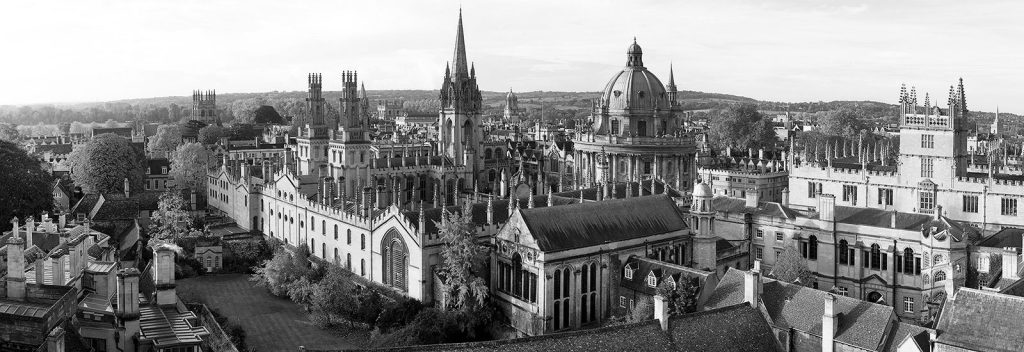
A black and white photograph of Oxford University from a nearby rooftop.

Oxford University


“A university training…aims at raising the intellectual tone of society, at cultivating the public mine, at purifying the national taste, at supplying true principles to popular enthusiasm and fixed aims to popular aspiration…at facilitating the exercise of political power, and refining the intercourse of private life.”

I don’t think this quote from Cardinal John Henry Newman’s 1852 book “The Idea of a University” aligns very well with our contemporary concept of a ‘Liberal Education.’ I’m not sure what a quote from a Catholic priest, from a time before Charles Darwin, Karl Marx or Albert Einstein influenced the academy, has to do with modern education at all. I think we are past the notion of “Universal” ideas and values.

In the mid-Victorian era, very few people were educated and many graduates never had to hold a job. The British Empire, like the American Empire, didn’t require educated men, just well trained, obedient men. With corporations controlling every aspect of our lives, American Universities are now turning out highly trained technocrats (of all gender identities) to run this Neoliberal Empire.

To me, a more appropriate quote would be from a 1959 graduation speech by Leo Strauss, the University of Chicago political philosopher and primary theorist of Neoliberalism;

“Education to perfect gentlemanship, to human excellence, liberal education consists in reminding oneself of human excellence, of human greatness. …we know that there cannot be the simply true substantive view but only a simply true formal view; that formal view consists in the insight that every comprehensive view is relative to a specific perspective, or that all comprehensive views are mutually exclusive and none can be simply true. The facile delusions which conceal from us our true situation all amount to this, that we are, or can be, wiser than the wisest men of the past. We are thus induced to play the part not of attentive and docile listeners but of impresarios or lion-tamers. Yet we must face our awesome situation, created by the necessity that we try to be more than attentive and docile listeners, namely, judges, and yet we are not competent to be judges. As it seems to me, the cause of this situation is that we have lost all simply authoritative traditions in which we could trust, the nomos which gave us authoritative guidance, because our immediate teachers and teachers’ teachers believed in the possibility of a simply rational society. Each of us here is compelled to find his bearings by his own powers however defective they may be.” http://www.ditext.com/strauss/liberal.html

Not to worry, Neoliberal Universities and corporate employers will surely supply you with any traditions they think you need.

I’m retired, don’t need job training and have been watching the creeping fascism of Neoliberalism since Reagan was elected President. I’m also working class and an American-Scot so I look to other educational traditions. After inventing compulsory education with “The Education Act 1496”, whereby the Parliament of Scotland required that landowners send their eldest sons to school, “[t]he Mechanics’ Institute movement began in 1800 when Dr George Birkbeck of the Andersonian Institute in Scotland gave a series of lectures to local mechanics. The nineteenth century term “mechanic” meant artisan or working man. The lectures were free and proved popular. They led to the formation of the Edinburgh School of Arts (1821) and the London Mechanics’ Institute (1823). The movement spread quickly throughout the British Empire.” http://mivic.org.au/history-of-mechanics-institutes.html

I belong to the San Francisco Mechanics Library, which was established in 1854, just four years after California became a state. I attend lectures, classes, book groups and writing groups, in addition to the library and computer lab. One of the reasons I chose Metro State is that I’m not interested in a traditional (or Neoliberal) education. In addition to getting credit for prior learning, my learning strategy is to use an eportfolio, as a Digital Humanities and Open Education project on the internets, to document my lifetime of learning together with all my coursework. This will allow me to reflect on how these learning experiences are connected to the wider world of ideas and for other learners to participate and comment. This is a radical idea for most Universities.

Here’s an example of one workers’ plan, learned at a Mechanic’s Institute, for documenting his learning (while Cardinal Newman was busy setting up a Catholic University in Dublin for the Pope):

“In an essay, remarkable at once for the originality of its views and the practical good sense it contains, John Foster recommends the propriety of every man writing memoirs of himself, not as an exercise of ingenuity — not as a means of drawing the world’s regard — but to fix in a man’s own mind, a sense of the progress he has made in moral and intellectual ideas to mark the change in his sensations which a prolonged experience of life produces and to excite a feeling of gratitude for those many providential interpositions which the most careful observer can scarcely fail to recognize as exercised in his behalf.” Diary for 1858 by Andrew Mcllwraith (Craftsman and former Mechanic’s Institute student) from More of a Man: Diaries of a Scottish Craftsman in Mid-Nineteenth-Century.

In order to get “a sense of progress” I’ll document the educational conferences, online courses and webinars I’ve attended, as well as the research I’ve been doing on Open Education, Networked Knowledge Organization Systems, graph databases, semantic metadata and the philosophy of semiotics.

I also intend to take more writing courses like “Memoirs and Creative Nonfiction” and communication and social research courses to deepen my work with community groups in social justice and the educators I’m working with to develop my local community colleges’ student leadership. I don’t see any Metro courses that teach one how to build a personal information technology infrastructure but perhaps I’ll find some.

I highly recommend the media, computing and learning textbook The Future of Thinking, Learning Institutions in a Digital Age written by students, educators and others interested in Higher Education in collaboration with the Humanities, Arts, Science, and Technology Advanced Collaboratory (HASTC). http://futureofthebook.org/HASTAC/learningreport/about/ or get a polished version for free on Google Play https://play.google.com/store/books/details/Cathy_N_Davidson_The_Future_of_Thinking?id=7B5znR_ki4MC

They (collectively) wrote;

“Over the past two decades, the way we learn has changed dramatically. We have new sources of information and new ways to exchange and to interact with information. But our schools and the way we teach have remained largely the same for years, even centuries. What happens to traditional educational institutions when learning also takes place on a vast range of Internet sites, from Pokemon Web pages to Wikipedia? This report investigates how traditional learning institutions can become as innovative, flexible, robust, and collaborative as the best social networking sites. The authors propose an alternative definition of “institution” as a “mobilizing network”–emphasizing its flexibility, the permeability of its boundaries, its interactive productivity, and its potential as a catalyst for change–and explore the implications for higher education. …In order to create a new field of digital learning, we must bring together research, knowledge, methodologies, and expertise from radically distributed existing fields— from the media and design arts to history, sociology, communications, psychology, philosophy, education, policy studies, political science, the computational sciences, engineering, and all points in between. A field cannot exist without institutional grounding.”

As far as inspiration for my learning, I look to a more contemporary, and pertinent source. Though an academic, twenty years ago Richard Rorty predicted:

“At [some] point, something will crack. The nonsuburban electorate will decide that the system has failed and start looking around for a strongman to vote for — someone willing to assure them that, once he is elected, the smug bureaucrats, tricky lawyers, overpaid bond salesmen, and postmodernist professors will no longer be calling the shots.
And this:
One thing that is very likely to happen is that the gains made in the past forty years by black and brown Americans, and by homosexuals, will be wiped out. Jocular contempt for women will come back into fashion. The words “ni**er” and “ki*e” will once again be heard in the workplace. All the sadism which the academic Left has tried to make unacceptable to its students will come flooding back. All the resentment which badly educated Americans feel about having their manners dictated to them by college graduates will find an outlet.
And, finally, this, the eerie anticipation of our current presidential predicament:
He will be a disaster for the country and the world. People will wonder why there was so little resistance to his inevitable rise. Where, they will ask, was the American Left? Why was it only rightists like Buchanan who spoke to the workers about the consequences of globalization? Why could not the Left channel the mounting rage of the newly dispossessed?” (from Achieving Our Country: Leftist Thought in Twentieth-Century America by Richard Rorty)
In “Philosophy as Poetry, a slim volume that contains the 2004 Page-Barbour Lectures, …he suggests that “the imagination is the principle vehicle of human progress.” It makes for a memorable slogan, especially for those of us who would like to see federal support of the arts and the humanities — along with such basic goods as health care and environmental protection — continue. But I think a sound pedagogy can be made out of it as well, one that highlights the importance of, among other things, social hope. After all, it is up to us to imagine a different future for our democracy.” from Rorty and Social Hope – Los Angeles Review of Books https://lareviewofbooks.org/article/rorty-social-hope/

Richard Rorty had a pragmatic approach to education as well. He recognized the conservative values of tradition and ‘truth’ and suggested these would be best leaned in primary education; what he termed education as socialization. He suggested that higher education was the appropriate place to learn the liberal values of freedom and progress through rational criticism, or education as individualization. Unfortunately, Rorty had no sympathy for radical ideas like Mechanic’s Institutes or Universities Without Walls, so we don’t know what he would think about Metro State.

I hope to learn more about alternative educational models and research their efficacy. As Rick Hendra and Ed Harris note in their paper The University Without Walls Experiment;

“The only UWW unit actively engaged over the years in research and publication efforts appears to be the UWW at the University of Minnesota, (now called First College). [Metro State]…may have developed instruments worthy of examination or replication by other researchers so that good comparative data might be made available.
…We don’t know how the educational outcomes of the UWW approach, centered on mentoring relationships, compare either to traditional undergraduate education or to adult-oriented continuing education programs. We don’t know — and must find out — the principles of good practice established by these programs. What we do know is that the existence of fifty roughly equivalent programs, operating in a wide variety of academic institutions, provides opportunities for comparative studies that are exceedingly rich.
It is an historic irony that such an ambitious experiment was able to generate so little published research. It would be regrettable were that irony allowed to persist: the founding generation of educators may not be available much longer and they are likely the best references we have as to how all these experiments, separate and together, played out. As much as we need to document their individual recollections, we need even more urgently to recapture their vision and their wisdom as higher education enters a new period of turbulence fed by technology and competitive pressures.” http://people.umass.edu/~hendra/Unpublished%20Results.html

My first digital media project 2013


My goal is to develop a (free and open source) digital approach to a liberal arts education, both heutagogy (theory of self-directed learning) and praxis, that will support anyone with access to a computer as they learn how to learn. From savants in the global south to illiterate inmates of America’s prisons, having a way to document, reflect on and share one’s learning should help people collaborate to improve their lives.

As for ‘social hope’, I prefer Antonio Gramsci’s famous quote from his Prison Notebooks, written while a prisoner of Benito Mussolini’s Fascist regime; “I’m a pessimist because of intelligence, but an optimist because of will.”

In the Valley of Hearts’ Delight

Bronze bust of DeWissant by Auguste Rodin


I caught a ride to Stanford yesterday to discuss eportfolios with Dr. Helen Chen. We didn’t get a chance to talk at the recent Association for Authentic, Experiential and Evidence-Based Learning (AAEEBL) conference in Portland. My friend had an appointment at Stanford Hospital and being early for my meeting, I walked over to the Cantor Center for Visual Arts at Stanford University. I wandered around the Rodin sculpture garden and then sat on the cafe patio to wait for the museum to open.

Cantor Center for Visual Arts at Stanford University


I signed into the free wifi and checked my phone to see if the orientation hold had been lifted on my account at Metropolitan State University in St. Paul, Minnesota. One morning at the AAEEBL conference Paul Wasko had introduced me to Marcia Anderson, the director of Academic Advising in the College of Individualized Studies at Metro State. She encouraged me to apply that day in order to be enrolled for the fall semester. Metro State was founded in 1971 as a ‘University without Walls’ “serving adult students by recognizing demonstrated learning gained outside the classroom” while working toward their higher educational goals. I applied and during the one day I was home from Portland before leaving for a weekend training in LA, I went online and had my transcripts sent. From all of the eleven colleges I have attended!

Ocean Park No. 94 by Richard Diebenkorn


The email had arrived, inviting me to register for “Educational Philosophy & Planning” the foundation class all Individualized Studies students take to create their personal learning plan. I had been working with Jane Kreuger, my admissions advisor, and Marcia had contacted Dr. Tedder, the Chair of Individualized, Interdisciplinary and Life Long Learning in the College of Individualized Studies, and convinced him to enroll me in his already full class. I went to the website, selected the class (the override worked!), finished enrolling, went to the payment site and paid my fees. I still had five minutes before the museum opened so I called Jane and told her I was sitting on the Cantor Arts Center patio at Stanford and had successfully enrolled using my phone! It was Friday afternoon in Minnesota and classes begin the following Monday.

Glassblowers hand torch


I toured the main exhibit, Creativity on the Line: Design for the Corporate World, 1950–1975, and had lunch on the patio; a Cobb salad and iced tea. (only $20!) I was reminded by the planes overhead, that on Friday afternoons the private jets leave San Jose International Airport every ten or fifteen minutes. I then saw the Modern & Contemporary exhibit and some of the main collection, Object Lessons: Art & Its Histories, before meeting with Helen in her office in Wallenburg Hall.

Hoover Tower and Wallenberg Hall at Stanford University


We discussed my ‘controlled vocabulary (ontology) for eportfolios and the semantic web’ project (the reason I joined AAEEBL and went to the conference in Boston two years ago) and I shared that the AAEEBL Technology Special Interest Group had decided to take on this project. I also shared my newest project: creating a Free and Open Source Software (FOSS) stack for any learner to have the tools to create a lifewide eportfolio, on their own domain, to collect their lifetimes of learning. It all come together after I learned about semantic triples in Beyond TEI: Metadata for Digital Humanities at the University of Victoria, BC, during this years’ Digital Humanities Summer Institute. But that’s another story. Helen asked if this had anything to do with “Linked Data”, so I took out my phone and showed her the picture I had taken earlier that morning.

Recent additions to book pile on my desk


As far as I can tell (I’ll never have a degree in Library and Information Science nor Computer and Information Systems), having an ontology and using semantic triples are the basis for the latest graph databases, being able to discover fellow researchers on the internet and structuring one’s eportfolio to take advantage of ‘faceted’ (semantic) searches. It’s my theory that creating a properly structured database for an eportfolio of one’s lifetime of learning projects and products can lead to perspectives only made possible by computing. These unique clusters of data should help generate the deep reflections that are central to eportfolios function of supporting lifewide learning.

High-intensity short arc mercury vapor lamps used in the production of computer chips


Aint digital technology amazing? I’m glad I spent most of my glassblowing career supporting California’s computer industry. I regret that the term ‘Silicon Valley’ is now being used in place of ‘predatory venture capital.’ What we workers created in Silicon Valley has linked together the entire world (with some areas and peoples yet to be connected). Workers are not responsible for how their products are used, nor who buys the companies we work for. Capitalist predation is a centuries old problem. I look forward to using these new technologies and sharing FOSS platforms with everyone, especially under served adult learners. It was a good day in the (former) Valley of Hearts’ Delight.

Seaweed by Georgia O’Keefe

Digital Pedagogy redux

After hundreds of hours of research (online and otherwise), travelling to the University of Victoria, British Columbia, for the Digital Humanities Summer Institute (twice!), taking the “Digital Pedagogy and Praxis” class, and talking with several of the presenters mentioned in this story at #DHSI last month: today I discovered the Digital Pedagogy Network. I must not be asking the right questions!

Around the World 2017: Digital Media in a Post-Truth Era

I recently spent an entire day at this wonderfully international digital conference. I can highly recommend the Kule Institute for Advanced Study at the University of Alberta, Canada, annual “Around the World” conference.
I found this years’ theme irresistible: Digital Media in a Post-Truth Era.

“The unfolding of recent political events in the US has sparked much debate around ‘fake news,’ disinformation and trustworthiness on the web. This year’s conference used these developments as a starting point for a broader discussion of how digital media has challenged our notion of truth.”

Hearing so many points of view on the crisis of confidence in our political systems was in some ways comforting, in others, terrifying.
Past years’ conferences are archived and I assume this years’ video will be here when available: http://aroundtheworld.ualberta.ca/archive/

Here is the Kule Institute’s Storyfication that includes many of my tweets. I even got a mention in the video!