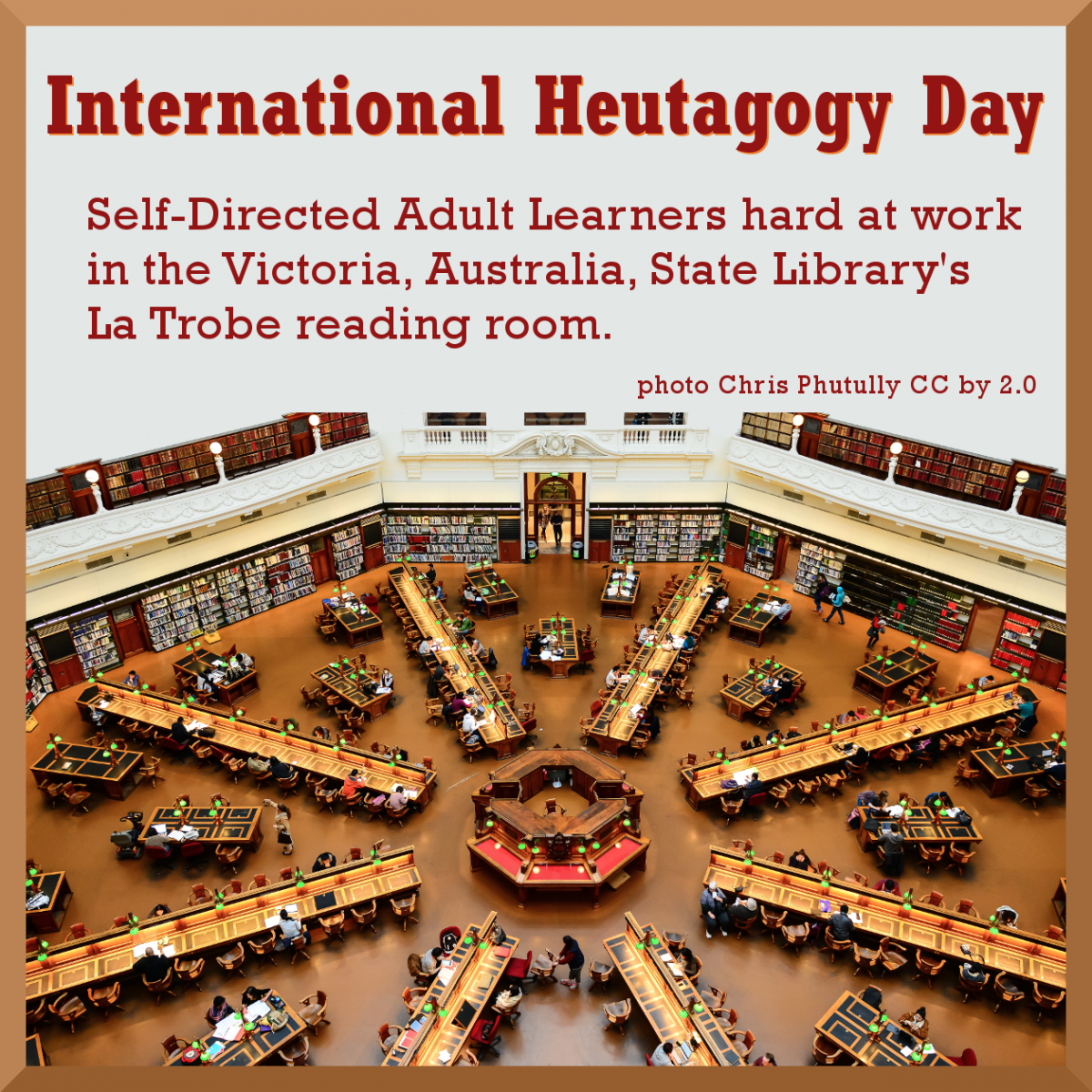
Tag Archives: #DigPedLab

An economy of care

When I went to sleep last night I meant to write about ethics this morning. I woke up early and turned on the Canadian Broadcasting Company’s “All in a Weekend” on CBC Radio with Sonali Karnick to hear her interviewing Judy Rebick about how women economists in Canada and around the world are transforming economics to focus more on social impact and an economy of care, as opposed to growth for its own sake.

Judy Rebick: Women Economists Changing Economics | All in a Weekend with Sonali Karnick | Live Radio

Ms. Rebick suggested viewing Mariana Mazzucato’s 2019 TED talk “What is economic value, and who creates it?” Ms Mazzucato points out that we’ve lost our way on the questions about what are the differences between value creation and value extraction, productive and unproductive activities.

She suggests we recognize the state as a positive economic force & questions the financialization of the economy. COVID has highlighted who the essential workers really are: healthcare, child & elder care workers (paid and unpaid), and food producers, transporters, and distributors.

Ms. Rebick then talks about Marjorie Griffin Cohen and other feminists and their theorizing a Care Economy. In their Rabble.ca article, “It’s 2021 and it’s time to care about care”, Mses. Cohen and Armstrong state “the conditions of work are the conditions of care” and recognize “the care infrastructure is the biggest employer in the [Canadian] economy, with the industrial sectors of health, social assistance and education accounting for at least 21 per cent of the total paid labour force” and that it “accounts for at least 12 per cent of the GDP, contributing more to the total income of the economy than sectors such as manufacturing, oil and gas, and finance.” They conclude that the Canadian government should provide universal care coverage so secure that it will become considered a right for residents of Canada. 

They then provide a link to “The Care Economy” statement by the Care Economy Initiative Team: Pat Armstrong, Marjorie Griffin Cohen, Laurell Ritchie, Leah F. Vosko, and Armine Yalnizyan.

It states:  “Future budgets and public policies of all governments must address these core principles:

  1. Care, both paid and unpaid, is a fundamental component of our basic infrastructure. Paid care in health and education alone is a key engine of the economy, generating at least 12% of GDP and 21% of jobs. A well-functioning care economy is key to the functioning of all the other parts of the economy.
  1. A care economy includes those who need and those who provide care, both paid and unpaid, and recognizes that our care needs and care provision vary throughout life.
  2. Care is skilled work that requires ongoing skills development, appropriate compensation, and adequate supports. The conditions of work are the conditions of care.
  3. A care economy includes the entire range of health and education services, including child and elder care. It also includes other social infrastructure such as employment insurance, labour standards and their enforcement, immigration policies, and paid sick leave.
  4. A care economy requires public investment in public services to ensure equitable access to quality care. Public spending on social infrastructure is as critically important as building and maintaining our physical infrastructure.
  5. A care economy promotes inclusion when its design is rooted in a feminist, intersectional, anti-colonial, and anti-racist approach. (emphasis in original)”

The statement concludes “For the past year, our governments emphasized that we are all in this together. We would add that to get out of this together we must care for each other. We need federal leadership to carry these hard-earned pandemic lessons into a recovery by investing in a care economy that supports both those who need and those who provide care.”

I’ve been made aware of teaching and learning with care in higher education by the work of Drs. Mia Zamora, Maha Bali, and Lee Skallerup Bessette. Last summer I joined Drs. Zamora and Bali in their Digital Pedagogy Lab course “A Critical Digital Pedagogy Buffet” where we covered Community Building, Critical Open Pedagogy, Decolonial & Antiracist Pedagogy, and Ethical Ed Tech.

Placing the duty of care in education under the umbrella of an economy of care ties the concerns of the academy, workers and the public together. Creating an economy of care will require a restructuring of the economy to serve the needs of the many rather than the needs of the financial (1%) class. I’m looking forward to exploring these topics in the cMOOC “Ethics, Analytics and the Duty of Care.” Finding the political will to enact an economy of care is the larger project.

Can Democrats learn from President Macron’s example?

French President Macron snubs Donald Trump at the new NATO headquarters.


At the 2017 ceremony to open the new NATO headquarters in Brussels, Belgium, French President Macron demonstrated how to communicate with a bully. I added the Belgian national anthem, performed by the US Navy band, for atmosphere. And a fake news ending.

If the video player isn’t working for you, you can watch President Macron handle Trump on YouTube.


Further Education Adventures of an Adult Student Spring 2018

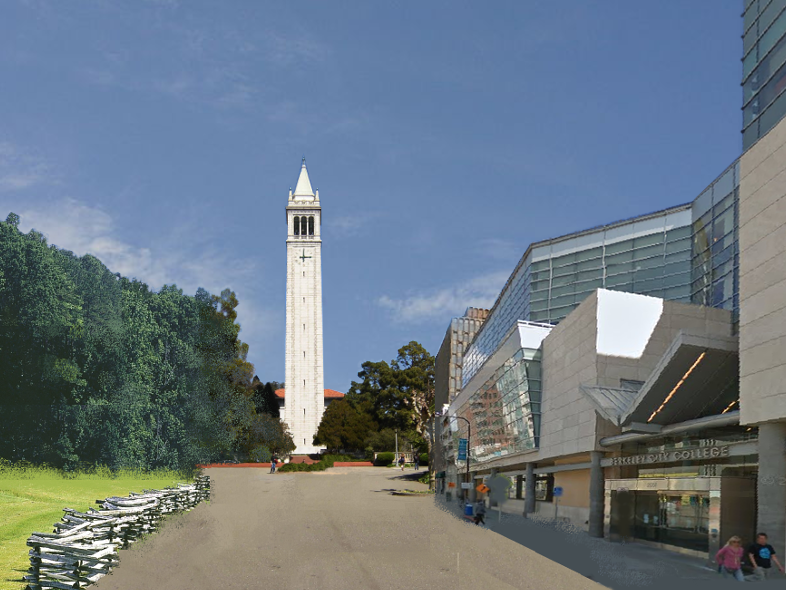
A mashup I made from a google map image of Berkeley City College, a picture of the Campanile at UC Berkeley and an inviting meadow leading into a thicket.

Above – Stay on the Path
A mashup I made from a google map image of Berkeley City College, a picture of the Campanile at UC Berkeley and an inviting meadow leading into a thicket of distractions.

One year ago (April 2017), having struggled with the culture of incompetence across the Peralta Community College District (PCCD) during my years of service as a student representative, I emailed my counselor and asked what was needed to complete my two Associate’s degrees. She replied; “I am on spring break and will check when I return on Monday.” The following week she checked with the Admission and Records Office (A&R) and reminded me of the classes I needed to complete my education plan. Life intervened again (but in a good way this time) and I didn’t finish my final class until Fall semester. As soon as grades are posted I emailed my counselor my completed education plan and pointed out my sociology degree was completed with “highest honors.” A month later she replied; “Sorry for the late response as I was out of the country. Please complete the petition for AA degree…” and added a link to the forms. Being able to access the forms online. Just a few years ago, I would have had to go to the counseling office and stand in line to pick up the forms and then stand in line again to turn them in. I filled out the forms and emailed them back to her.

After not hearing anything for 6 weeks, at the end of February I emailed my counselor to ask if there was anything left to be done. She replied; “I have submitted your petition to the Admission and Records Office. I think we are waiting for the substitution approval for Psych 1A from Rio Hondo. You will receive a status of your petition in April and invitation for the graduation ceremony in May.” This referred to a class I took a 1973, on a transcript they had received more than five years ago. Last week (April 9th) I received three letters fromPCCD, one stating I still need “Substitution/waiver for Psych 1A to meet the requirement” for my Sociology degree. I emailed my counselor and asked “how long can this possibly take?” She replied; “I am in a meeting and will check if substitution for psych 1A is approved when I return to the campus this afternoon. Will get back to you then. By the way, I will be on vacation for the next 2 weeks. If there is any question, please see a counselor or go to admission office.” Groan That afternoon she checked with A&R and my substitution was approved, I’m going to receive my degrees. Also, according to the letters I received, my diplomas will be available sometime in August. I also received a follow-up email:

Dear 2018 Berkeley City College Graduates!!!
On Behalf of the Berkeley City College Graduation Committee, Congratulations on your recent accomplishment!
…
A black gown & cap with a tassel is required for all graduates. The cap and gown will be available for purchase at our campus bookstore located on the 5th floor after May 1, 2018. The regalia purchase price is $35 + tax, which includes the cap, gown, tassel and courtesy 5-pack of announcements. At the commencement ceremony graduates will also receive a BCC diploma cover and BCC zipper pull. The regalia set that you purchase is yours to keep. It is not a rental. (my emphasis) Since there are no dressing rooms at Zellerbach, you are encouraged to arrive in your cap and gown. Note: The bookstore only accepts cash, credit and debit cards for payment.
Honor Students: If you are an academic honor student, your honor cord will be included in your cap & gown set. Please refer to the section of this letter regarding “honors at graduation” to see if you are eligible to receive the honor cord (Honors pertains only to Associate Degree candidates). Your name will be on an honors list at the bookstore.

After my experiences in the PCCD (Berkeley City College is one of the four Community Colleges that make up the PCCD), I have no interest in participating in the graduation ceremony. I would like my “honor card” and tassle but doubt I’ll go to the “GradFest” (is everything branded?) and pay another $35 + tax. From the posting of my final grades to receiving an official document of my accomplishment – eight months. Good thing I don’t need my diploma to get a job; and this is the new and improved Peralta Community College District! The email thread with my counselor showed it was exactly one year to the day from my inquiry about graduating to receiving notice that my forty-five year old transcript was accepted. Happy Friday the 13th to me!

Last month, based on my experiences in the Peralta Community College District, I called my Distance Education (DE) advisor at my new school Metropolitan State University (Metro State), inquiring about registering for summer classes. I was concerned about an Incomplete grade I have and wondered if I had to clear it before registering. She told me she didn’t think the incomplete would affect my ability to register and I should wait until my registration date and try to register. I followed her advice and the day my registration window opened, I tried to register. I was blocked by a hold for a math assessment placed last fall until my transcripts could be articulated (classes checked to conform to Metro States class descriptions). Soon afterwards I received a “Math Assessment Exemption Granted” based on my C in Trigonometry from 1982. After failing to register I went to my eServices account to check my Degree Audit Report (DAR). I had already pointed out to my advisors how hard it is for a DE student to find their DAR, it was a constant topic on the discussion boards in our orientation class. Five clicks through three menus, but that’s another story. My “Math Assessment Exemption Granted” with a green check mark was still there. I went to the Contact Us page and submitted a request through Student Services; “Can someone review my DARS and remove the assessment hold…?” I got a quick response; “Upon reviewing your account, I do see that you have an assessment hold on your account. It states that the Math Assessment is needed. …If you need someone to review your DARS, please contact your academic advisor…” I replied I do not need a math assessment and sent a screenshot of my DARS, with the green check mark. They replied I needed to contact the Assessment office. I emailed my academic advisor informing him of my predicament. To make a long story short(er), it took ten days of daily emails between my academic advisor and the Assessment office with me trying to register each day to see if the hold was removed. This reminded me of when I had recently gone online and updated my address for my bank account. My checking account and debit card were frozen for ten days, with daily calls to my “Private Banker” until the IT department figured out why. Imagine what regular customers have to endure.

Finally I was able to register at Metro State, but when I went to the payment page I was shocked to see $138 in fees for services I will never use as a DE student. Then I remembered I was sitting on a deck at Stanford University waiting for a meeting when I was cleared to register last fall. I was surprised and happy to find out I could register using my phone. I don’t recall seeing a list of fees. For students in a hurry to complete a degree, that’s $414 a year (with summer session) for services we will never use, including a $48 parking pass! I emailed a screenshot of the fees to my DE and academic advisors, the director of student life and the student ombudsperson and asked why students are charged for services they can never access. The silence was deafening. After 10 days I called my DE advisor and asked if she had seen my email. She replied that she had been at a conference the past week and was just catching up on email. I mentioned that no one else had replied and asked what could be done. “Nothing” she replied, the state trustees had approved the fees and it would take a statewide campaign to get them to remove them. I couldn’t find the number of DE students statewide in Minnesota, but Metro State has $1,500 DE students. That’s over $400,000 for two semesters and over $600,000 for three semesters, each year. Nevermind academic fraud, isn’t this consumer fraud?

A screenshot of the student fees charged at registration at Metro State U.

I’m the first student at Metro State approved to document their learning for college credit on a personal e-portfolio, on my own domain, through prior learning assessment (PLA). I’ve been working with e-portfolios for a few years and have been a member of the Association for Authentic, Experiential and Evidence-Based Learning (AAEEBL) since attending their conference in Boston three years ago. Last year, for the first time, the conference was in a different city, Portland, Oregon, so I attended. I had seen a presentation on e-portfolios for adults in Canadian native cultures at an Association of American Colleges & Universities (AAC&U) conference in San Francisco. I saw the author at the AAEEBL conference and after introducing myself and telling him about my project, he introduced me to the DE advisor for Metro State. That’s how I became a Metro State student, but I digress.

After my first AAEEBL conference I started a dialog with the President, Dr. Trent Batson, about creating an ontology (or controlled vocabulary) for eportfolios. This would help students, faculty and adult learners connect and share resources on the internets (Semantic Web 2.0). He approved of my idea but cautioned AAEEBL was focused on a research project that would lead to e-portfolios being added to Dr. George D. Kuh’s list of “High-Impact Educational Practices” and thus promoted by the AAC&U. Last year the research was published as “High-Impact ePortfolio Practice: A Catalyst for Student, Faculty, and Institutional Learning” by Drs. Bret Eynon and Laura M. Gambino, with a foreword by Dr. George D. Kuh. I’m proud to have read their book as soon as it was published as I participated in Open Learning 2017, an open online collaboratory hub where Dr. Eynon and “High-Impact ePortfolio Practice” were featured. Now that this project was finished, I took the opportunity of being at the AAEEBL conference to present my ontology idea to the Practices & Pedagogies Special Interest Group (P&P SIG). It was favorably received, with several AAEEBL officers voicing their approval. As fall became winter, not much was happening in the P&P SIG. I continued to ask the SIG leaders about moving forward and finally created a model ontology for the groups consideration. I received zero constructive feedback. Then the call for conference proposals went out. I contacted the P&P SIG leaders inquiring if they had plans for a proposal. They suggested I submit one. I submitted three: one for my ontology idea, one to promote a student self-assessment rubric developed by two Professors at California State University, Sacramento, who can’t attend the conference, and one about my portfolio for Metro State. As an opportunity to learn about conference presentations, I made each a proposal for a different presentation format. When I got my responses, each was an almost identical form letter stating there were too many submissions in my preferred format, and then suggesting I resubmit my proposals for another presentation format. None of the letters referred to a specific proposal. I think I could decipher which is which, and modify them accordingly, but I wanted to be certain. I emailed my contact at AAEEBL but she said the President had sent the letters and would have to be the one to respond. I reminded my contact that the deadline was approaching but she responded that she was leaving her role at AAEEBL. The due date for the revised proposals has come and gone and I have yet to hear anything more. I have other influential AAEEBL members to reach out to, but my enthusiasm for doing all the work alone by myself has waned.

I won’t even start to include the ICT (information and communication technologies) issues I’ve experienced during this time. Why aren’t ISPs (internet service providers) regulated as public monopolies? Distance education still holds tremendous promise, especially for adult learners, but it sure can be alienating for students.
What does it digital spring break look like anyway?

California Sociological Association Annual Conference

Network Map of Nugan Hand Ltd private bank and connections by Mark Lombardi.

I was recently in Sacramento, California, at the annual meeting of the California Sociological Association. Two years ago I attended the meeting in Oakland, where I live. I again saw none of my sociology teachers or classmates from any of the four Peralta Community Colleges. I did run onto William Ochoa, a former colleague and Senator in the Associated Students of Laney (Community) College, now working on his Master’s degree in Sociology at Mills College in Oakland, California.

I attended all seven sessions of the two day conference including; the Popular Culture & New Technology panel, the Community College Roundtable, Critical Perspectives in Education, The 2016 Presidential Election Revisited panel, Making Sociology Matter, Social Movements and Sociology: the Big Picture. The panels included many interesting presentations and many I attended were student driven. The highlight for me was an unusual and memorable presentation by Frank Roberts from Mt. San Antonio Community College on his project to unify the major theories of sociology. The last session of the conference, there were only five attendees which allowed a lively and prolonged discussion.

PP slide by Frank Roberts

First Roberts mapped Donald Brown’s Anthropological catalog of 369 “Human Universals” traits to Robert Nisbet’s “Unit Ideas of Sociology” using an Excel spreadsheet. Balancing Nisbet’s conservative, community oriented approach, Roberts added sociological Agency to Community, Sacred, Authority, Status, Alienation units. This accounted for many personal and creative traits. Then Roberts mapped these six unit ideas to the three major sociological theories: Structural-Functionalism, Comfit Theory and Symbolic Internationalism. I imagine the resulting integration of sociological theories can be used to describe and possibly clarify many intersectional positions. This is an idea I will continue to reflect on and try to use in my future sociological studies.

The official theme of the California Sociological Association annual meeting was “A Legacy of Sociology”: the keynote presentation was “Who rules America?” by William Domhoff, Distinguished Professor Emeritus and Research Professor in the Sociology Department at the University of California, Santa Cruz. His latest work is as co-author of Studying the Power Elite: Fifty Years of Who Rules America? (Routledge 2018). Dr. Domhoff summarized his long career in researching America’s elite and focused on the rise of think tanks (and policy discussion groups) in influencing policy and politics. This corresponded with the waning of Marxist theorists’ influence in academia and resulted in a lessening of criticism of corporate influence. Dr. Domhoff didn’t mention Louis Powell’s 1971 memorandum for the American Chamber of Commerce, “Attack on the American Free Enterprise System” but I couldn’t help wondering how Dr. Domhoff would characterize its influence. He’s inspired me to read the book that started this line of inquiry, C. Wright Mill’s 1956 book The Power Elite. Researching the interlocking nature of corporate directors, first with excel spreadsheets and now with powerful computers running social network analysis software, Dr. Domhoff has tracked how corporate power has fragmented from being centered in banks to a more distributed system of endowed academic chairs, corporate funded policy groups and think tanks, foundations and emerging industries. Dr. Domhoff concluded optimistically; there’s a new wave of power structure researchers using larger databases and the final chapter of the story of “America’s Power Elite” has not been written.

Network Map of World Finance by Mark Lombardi

Why Open Matters

A global network of social media and open resources, including Liberal, Radical and Conservative educational “canons.” Remix by MCW

A retired American scientific glassblower, I started on my career journey at a California community college after I graduated from high school. On a whim I signed up for a glass class, the teacher was a ceramicist and designer who wanted to experiment with glass so we built the equipment, made the glass and learned together how to play with this fascinating material. I soon left college to learn more about glass. It never occurred to me to go to Alfred University like my teacher had, I sought out working glassblowers and made myself useful. Eventually I ended up in Silicon Valley making high intensity lamps and LASERs. I have worked with researchers, engineers and artists and no one ever asked if I had a college degree.

In the History of the Open University Lord Perry of Walton, OU’s first Vice Chancellor is quoted on his motivation to take the job of creating the open University in 1969:

“It wasn’t that I had any deep-seated urge to mitigate the miseries of the depressed adult; it was that I was persuaded that the standard of teaching in conventional universities was pretty deplorable. It suddenly struck me that if you could use the media and devise course materials that would work for students all by themselves, then inevitably you were bound to affect – for good – the standard of teaching in conventional universities. I believed that to be so important that it overrode almost everything else.”

Returning to a California community college during the Great Recession, I found that little had changed regarding the standard of teaching and mitigating the miseries of workers was not even on the agenda. Protecting the institution during a time of budget cuts along with the jobs of the faculty and staff were the highest priorities. Despite the fact adult learners make up nearly two thirds of California’s two million community college students, there are no programs to support the taxpayers that need to retrain during capitalism’s down cycles. Night and distance students fare even worse with financial aid offices, libraries, advisors and technical support staff that all work bankers hours.

I managed to graduate even after falling into the “Community College Trap” and am now designing my Individualized Studies Bachelor’s degree. As a distance student, I’m finding the same structural problems a the University as the community colleges. Open matters to me because I’ve learned to use other institutions, social media and the world wide web to gather the resources I need to learn what I choose. I intend to create an Open Heutagogy anyone with an data connection can use to gather free and open resources to create their own learning program. I think as the world economy continues to limp along and higher education divides into training for the masses and private education for the children of the elites, self directed learning will help the working class and those left behind learn what they need to build a diverse, sustainable and cooperative local economies. While the elites will still run the Universities and reproduce the managerial class to run the global economic and military empires, perhaps openness will help the rest of us survive.

My College Degree as a Digital Humanities Project

Digital Humanities by Craig Bellamy CC BY-NC-SA 2.0


I’
m developing a new model for adult learners so they can avoid the experience I had while trying to improve my skills at a Community College. Combining Self-Directed Learning, Computational Thinking, Digital Pedagogy, Open Education and Open Social Scholarship theories with Open Education Resources (OER), Free and Open Source Software (FOSS) and ePortfolios, I intend to create a free platform for any adult learner to document and reflect on their diverse learning experiences. I think simplifying all these dense and often conflicting learning theories into an approach (Praxis) any adult student can use to design their own self-directed education pathway will be useful. (Heutagogy)

I’ve been working on these ideas for three years, starting with attending a presentation by faculty from Evergreen College in Washington on integrating individual courses’ homework assignments across institutional silos. That led me to eportfolios as a way to collect all types of evidence (digital objects) of learning. Learning about tagging and metadata for discoverability on the internets, I observed the need for a controlled metadata vocabulary to allow searches for emerging patterns. These new ways of looking at one’s learning has the potential to suggest new constructions of learning experiences and new areas of research.

I belong to the Association for Authentic, Experiential and Evidence-Based Learning (AAEEBL) and have attended their conferences, including a session at this year’s 8th Annual Forum on Digital Learning and ePortfolios at the 2017 AAC&U conference in San Francisco. The ePortfolio Forum is jointly sponsored by AAC&U’s project, VALUE: Valid Assessment of Learning in Undergraduate Education; the Association for Authentic, Experiential and Evidence-Based Learning (AAEEBL), the association of ePortfolio professionals; and the International Journal of ePortfolio (IjeP). At this year’s AAEEBL Conference I joined the Technology Special Interest Group and convinced them to take on my idea for an ePortfolio Ontology as their first project. I’ve also joined the Association for Learning Technology, the UK group to “advance education through increasing, exploring and disseminating knowledge in the field of Learning Technology for the benefit of the general public.”

The Hurley Information and Technology Convergence Center at the University of Mary Washington in Fredericksburg, Virginia. Photo by MCW


I
recently realized that my idea of ‘finishing a Bachelor’s degree while using Free and Open Source Software to create a learning eportfolio on my own domain and blogging about it in public’ is a Digital Humanities project. In 2016 I attended the Digital Pedagogy Lab Institute at the University of Mary Washington, VA, home of ds106 and the Domian of One’s Own initiative. I learned about UMW while attending the Digital Humanities Summer Institute at the University of Victoria, BC, where I took Critical Pedagogy and Digital Praxis in the Humanities from Jesse Stommel and Chris Friend. This year I took two courses during DHSI to support my project; ‘Open Access and Open Social Scholarship’ and ‘TEI and Metadata.’ That led me to explore metadata ‘triples’ which led to the concepts of graph databases and ‘faceted’ searches.

Lincoln as a boy reading at night. Library of Congress CollectionNow I want to learn how to integrate a FOSS graph database (Neo4j?) with FOSS curation tools (WP, Omeka, GitHub?) to utilize the power of humanities computing and the semantic web to document and reflect on my learning experiences. And then document my reflections and be able to do faceted searches of everything I’ve created together with everything I’ve curated into my database. I need to learn to appropriately tag all these digital objects with metadata so that they integrate seamlessly with the semantic web. Hopefully this can be automated to a large degree.

My plan is to structure my Metro State University’s College of Individualized Studies Bachelor’s degree as a Digital Humanities project using an eportfolio to document, reflect on and publish my learning. Which tagline do you like: Learning in Public or Learning Out Loud? Or suggest another.


In the Valley of Hearts’ Delight

Bronze bust of DeWissant by Auguste Rodin


I caught a ride to Stanford yesterday to discuss eportfolios with Dr. Helen Chen. We didn’t get a chance to talk at the recent Association for Authentic, Experiential and Evidence-Based Learning (AAEEBL) conference in Portland. My friend had an appointment at Stanford Hospital and being early for my meeting, I walked over to the Cantor Center for Visual Arts at Stanford University. I wandered around the Rodin sculpture garden and then sat on the cafe patio to wait for the museum to open.

Cantor Center for Visual Arts at Stanford University


I signed into the free wifi and checked my phone to see if the orientation hold had been lifted on my account at Metropolitan State University in St. Paul, Minnesota. One morning at the AAEEBL conference Paul Wasko had introduced me to Marcia Anderson, the director of Academic Advising in the College of Individualized Studies at Metro State. She encouraged me to apply that day in order to be enrolled for the fall semester. Metro State was founded in 1971 as a ‘University without Walls’ “serving adult students by recognizing demonstrated learning gained outside the classroom” while working toward their higher educational goals. I applied and during the one day I was home from Portland before leaving for a weekend training in LA, I went online and had my transcripts sent. From all of the eleven colleges I have attended!

Ocean Park No. 94 by Richard Diebenkorn


The email had arrived, inviting me to register for “Educational Philosophy & Planning” the foundation class all Individualized Studies students take to create their personal learning plan. I had been working with Jane Kreuger, my admissions advisor, and Marcia had contacted Dr. Tedder, the Chair of Individualized, Interdisciplinary and Life Long Learning in the College of Individualized Studies, and convinced him to enroll me in his already full class. I went to the website, selected the class (the override worked!), finished enrolling, went to the payment site and paid my fees. I still had five minutes before the museum opened so I called Jane and told her I was sitting on the Cantor Arts Center patio at Stanford and had successfully enrolled using my phone! It was Friday afternoon in Minnesota and classes begin the following Monday.

Glassblowers hand torch


I toured the main exhibit, Creativity on the Line: Design for the Corporate World, 1950–1975, and had lunch on the patio; a Cobb salad and iced tea. (only $20!) I was reminded by the planes overhead, that on Friday afternoons the private jets leave San Jose International Airport every ten or fifteen minutes. I then saw the Modern & Contemporary exhibit and some of the main collection, Object Lessons: Art & Its Histories, before meeting with Helen in her office in Wallenburg Hall.

Hoover Tower and Wallenberg Hall at Stanford University


We discussed my ‘controlled vocabulary (ontology) for eportfolios and the semantic web’ project (the reason I joined AAEEBL and went to the conference in Boston two years ago) and I shared that the AAEEBL Technology Special Interest Group had decided to take on this project. I also shared my newest project: creating a Free and Open Source Software (FOSS) stack for any learner to have the tools to create a lifewide eportfolio, on their own domain, to collect their lifetimes of learning. It all come together after I learned about semantic triples in Beyond TEI: Metadata for Digital Humanities at the University of Victoria, BC, during this years’ Digital Humanities Summer Institute. But that’s another story. Helen asked if this had anything to do with “Linked Data”, so I took out my phone and showed her the picture I had taken earlier that morning.

Recent additions to book pile on my desk


As far as I can tell (I’ll never have a degree in Library and Information Science nor Computer and Information Systems), having an ontology and using semantic triples are the basis for the latest graph databases, being able to discover fellow researchers on the internet and structuring one’s eportfolio to take advantage of ‘faceted’ (semantic) searches. It’s my theory that creating a properly structured database for an eportfolio of one’s lifetime of learning projects and products can lead to perspectives only made possible by computing. These unique clusters of data should help generate the deep reflections that are central to eportfolios function of supporting lifewide learning.

High-intensity short arc mercury vapor lamps used in the production of computer chips


Aint digital technology amazing? I’m glad I spent most of my glassblowing career supporting California’s computer industry. I regret that the term ‘Silicon Valley’ is now being used in place of ‘predatory venture capital.’ What we workers created in Silicon Valley has linked together the entire world (with some areas and peoples yet to be connected). Workers are not responsible for how their products are used, nor who buys the companies we work for. Capitalist predation is a centuries old problem. I look forward to using these new technologies and sharing FOSS platforms with everyone, especially under served adult learners. It was a good day in the (former) Valley of Hearts’ Delight.

Seaweed by Georgia O’Keefe

Digital Pedagogy redux

After hundreds of hours of research (online and otherwise), travelling to the University of Victoria, British Columbia, for the Digital Humanities Summer Institute (twice!), taking the “Digital Pedagogy and Praxis” class, and talking with several of the presenters mentioned in this story at #DHSI last month: today I discovered the Digital Pedagogy Network. I must not be asking the right questions!