Above – Stay on the Path
A mashup I made from a google map image of Berkeley City College, a picture of the Campanile at UC Berkeley and an inviting meadow leading into a thicket of distractions.
One year ago (April 2017), having struggled with the culture of incompetence across the Peralta Community College District (PCCD) during my years of service as a student representative, I emailed my counselor and asked what was needed to complete my two Associate’s degrees. She replied; “I am on spring break and will check when I return on Monday.” The following week she checked with the Admission and Records Office (A&R) and reminded me of the classes I needed to complete my education plan. Life intervened again (but in a good way this time) and I didn’t finish my final class until Fall semester. As soon as grades are posted I emailed my counselor my completed education plan and pointed out my sociology degree was completed with “highest honors.” A month later she replied; “Sorry for the late response as I was out of the country. Please complete the petition for AA degree…” and added a link to the forms. Being able to access the forms online. Just a few years ago, I would have had to go to the counseling office and stand in line to pick up the forms and then stand in line again to turn them in. I filled out the forms and emailed them back to her.
After not hearing anything for 6 weeks, at the end of February I emailed my counselor to ask if there was anything left to be done. She replied; “I have submitted your petition to the Admission and Records Office. I think we are waiting for the substitution approval for Psych 1A from Rio Hondo. You will receive a status of your petition in April and invitation for the graduation ceremony in May.” This referred to a class I took a 1973, on a transcript they had received more than five years ago. Last week (April 9th) I received three letters fromPCCD, one stating I still need “Substitution/waiver for Psych 1A to meet the requirement” for my Sociology degree. I emailed my counselor and asked “how long can this possibly take?” She replied; “I am in a meeting and will check if substitution for psych 1A is approved when I return to the campus this afternoon. Will get back to you then. By the way, I will be on vacation for the next 2 weeks. If there is any question, please see a counselor or go to admission office.” Groan That afternoon she checked with A&R and my substitution was approved, I’m going to receive my degrees. Also, according to the letters I received, my diplomas will be available sometime in August. I also received a follow-up email:
Dear 2018 Berkeley City College Graduates!!!
On Behalf of the Berkeley City College Graduation Committee, Congratulations on your recent accomplishment!
…
A black gown & cap with a tassel is required for all graduates. The cap and gown will be available for purchase at our campus bookstore located on the 5th floor after May 1, 2018. The regalia purchase price is $35 + tax, which includes the cap, gown, tassel and courtesy 5-pack of announcements. At the commencement ceremony graduates will also receive a BCC diploma cover and BCC zipper pull. The regalia set that you purchase is yours to keep. It is not a rental. (my emphasis) Since there are no dressing rooms at Zellerbach, you are encouraged to arrive in your cap and gown. Note: The bookstore only accepts cash, credit and debit cards for payment.
Honor Students: If you are an academic honor student, your honor cord will be included in your cap & gown set. Please refer to the section of this letter regarding “honors at graduation” to see if you are eligible to receive the honor cord (Honors pertains only to Associate Degree candidates). Your name will be on an honors list at the bookstore.
After my experiences in the PCCD (Berkeley City College is one of the four Community Colleges that make up the PCCD), I have no interest in participating in the graduation ceremony. I would like my “honor card” and tassle but doubt I’ll go to the “GradFest” (is everything branded?) and pay another $35 + tax. From the posting of my final grades to receiving an official document of my accomplishment – eight months. Good thing I don’t need my diploma to get a job; and this is the new and improved Peralta Community College District! The email thread with my counselor showed it was exactly one year to the day from my inquiry about graduating to receiving notice that my forty-five year old transcript was accepted. Happy Friday the 13th to me!
Last month, based on my experiences in the Peralta Community College District, I called my Distance Education (DE) advisor at my new school Metropolitan State University (Metro State), inquiring about registering for summer classes. I was concerned about an Incomplete grade I have and wondered if I had to clear it before registering. She told me she didn’t think the incomplete would affect my ability to register and I should wait until my registration date and try to register. I followed her advice and the day my registration window opened, I tried to register. I was blocked by a hold for a math assessment placed last fall until my transcripts could be articulated (classes checked to conform to Metro States class descriptions). Soon afterwards I received a “Math Assessment Exemption Granted” based on my C in Trigonometry from 1982. After failing to register I went to my eServices account to check my Degree Audit Report (DAR). I had already pointed out to my advisors how hard it is for a DE student to find their DAR, it was a constant topic on the discussion boards in our orientation class. Five clicks through three menus, but that’s another story. My “Math Assessment Exemption Granted” with a green check mark was still there. I went to the Contact Us page and submitted a request through Student Services; “Can someone review my DARS and remove the assessment hold…?” I got a quick response; “Upon reviewing your account, I do see that you have an assessment hold on your account. It states that the Math Assessment is needed. …If you need someone to review your DARS, please contact your academic advisor…” I replied I do not need a math assessment and sent a screenshot of my DARS, with the green check mark. They replied I needed to contact the Assessment office. I emailed my academic advisor informing him of my predicament. To make a long story short(er), it took ten days of daily emails between my academic advisor and the Assessment office with me trying to register each day to see if the hold was removed. This reminded me of when I had recently gone online and updated my address for my bank account. My checking account and debit card were frozen for ten days, with daily calls to my “Private Banker” until the IT department figured out why. Imagine what regular customers have to endure.

Finally I was able to register at Metro State, but when I went to the payment page I was shocked to see $138 in fees for services I will never use as a DE student. Then I remembered I was sitting on a deck at Stanford University waiting for a meeting when I was cleared to register last fall. I was surprised and happy to find out I could register using my phone. I don’t recall seeing a list of fees. For students in a hurry to complete a degree, that’s $414 a year (with summer session) for services we will never use, including a $48 parking pass! I emailed a screenshot of the fees to my DE and academic advisors, the director of student life and the student ombudsperson and asked why students are charged for services they can never access. The silence was deafening. After 10 days I called my DE advisor and asked if she had seen my email. She replied that she had been at a conference the past week and was just catching up on email. I mentioned that no one else had replied and asked what could be done. “Nothing” she replied, the state trustees had approved the fees and it would take a statewide campaign to get them to remove them. I couldn’t find the number of DE students statewide in Minnesota, but Metro State has $1,500 DE students. That’s over $400,000 for two semesters and over $600,000 for three semesters, each year. Nevermind academic fraud, isn’t this consumer fraud?

I’m the first student at Metro State approved to document their learning for college credit on a personal e-portfolio, on my own domain, through prior learning assessment (PLA). I’ve been working with e-portfolios for a few years and have been a member of the Association for Authentic, Experiential and Evidence-Based Learning (AAEEBL) since attending their conference in Boston three years ago. Last year, for the first time, the conference was in a different city, Portland, Oregon, so I attended. I had seen a presentation on e-portfolios for adults in Canadian native cultures at an Association of American Colleges & Universities (AAC&U) conference in San Francisco. I saw the author at the AAEEBL conference and after introducing myself and telling him about my project, he introduced me to the DE advisor for Metro State. That’s how I became a Metro State student, but I digress.
After my first AAEEBL conference I started a dialog with the President, Dr. Trent Batson, about creating an ontology (or controlled vocabulary) for eportfolios. This would help students, faculty and adult learners connect and share resources on the internets (Semantic Web 2.0). He approved of my idea but cautioned AAEEBL was focused on a research project that would lead to e-portfolios being added to Dr. George D. Kuh’s list of “High-Impact Educational Practices” and thus promoted by the AAC&U. Last year the research was published as “High-Impact ePortfolio Practice: A Catalyst for Student, Faculty, and Institutional Learning” by Drs. Bret Eynon and Laura M. Gambino, with a foreword by Dr. George D. Kuh. I’m proud to have read their book as soon as it was published as I participated in Open Learning 2017, an open online collaboratory hub where Dr. Eynon and “High-Impact ePortfolio Practice” were featured. Now that this project was finished, I took the opportunity of being at the AAEEBL conference to present my ontology idea to the Practices & Pedagogies Special Interest Group (P&P SIG). It was favorably received, with several AAEEBL officers voicing their approval. As fall became winter, not much was happening in the P&P SIG. I continued to ask the SIG leaders about moving forward and finally created a model ontology for the groups consideration. I received zero constructive feedback. Then the call for conference proposals went out. I contacted the P&P SIG leaders inquiring if they had plans for a proposal. They suggested I submit one. I submitted three: one for my ontology idea, one to promote a student self-assessment rubric developed by two Professors at California State University, Sacramento, who can’t attend the conference, and one about my portfolio for Metro State. As an opportunity to learn about conference presentations, I made each a proposal for a different presentation format. When I got my responses, each was an almost identical form letter stating there were too many submissions in my preferred format, and then suggesting I resubmit my proposals for another presentation format. None of the letters referred to a specific proposal. I think I could decipher which is which, and modify them accordingly, but I wanted to be certain. I emailed my contact at AAEEBL but she said the President had sent the letters and would have to be the one to respond. I reminded my contact that the deadline was approaching but she responded that she was leaving her role at AAEEBL. The due date for the revised proposals has come and gone and I have yet to hear anything more. I have other influential AAEEBL members to reach out to, but my enthusiasm for doing all the work alone by myself has waned.
I won’t even start to include the ICT (information and communication technologies) issues I’ve experienced during this time. Why aren’t ISPs (internet service providers) regulated as public monopolies? Distance education still holds tremendous promise, especially for adult learners, but it sure can be alienating for students.
What does it digital spring break look like anyway?

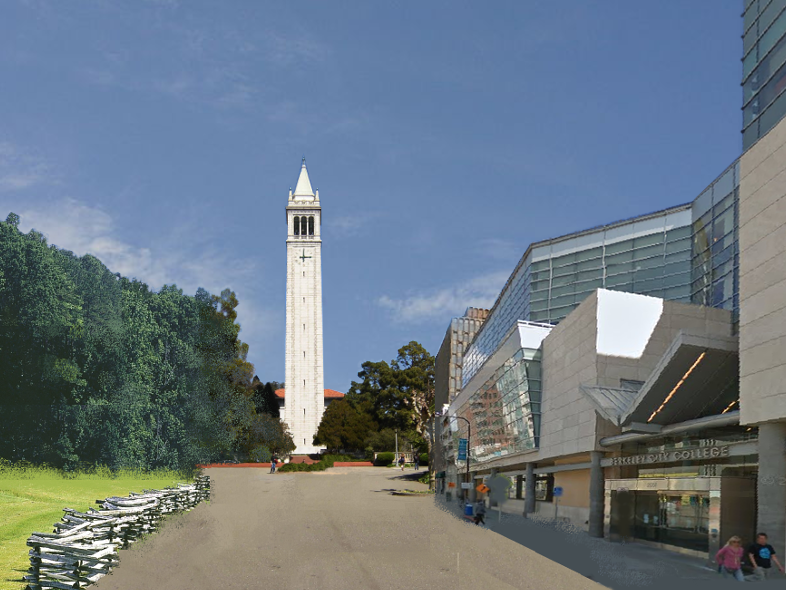


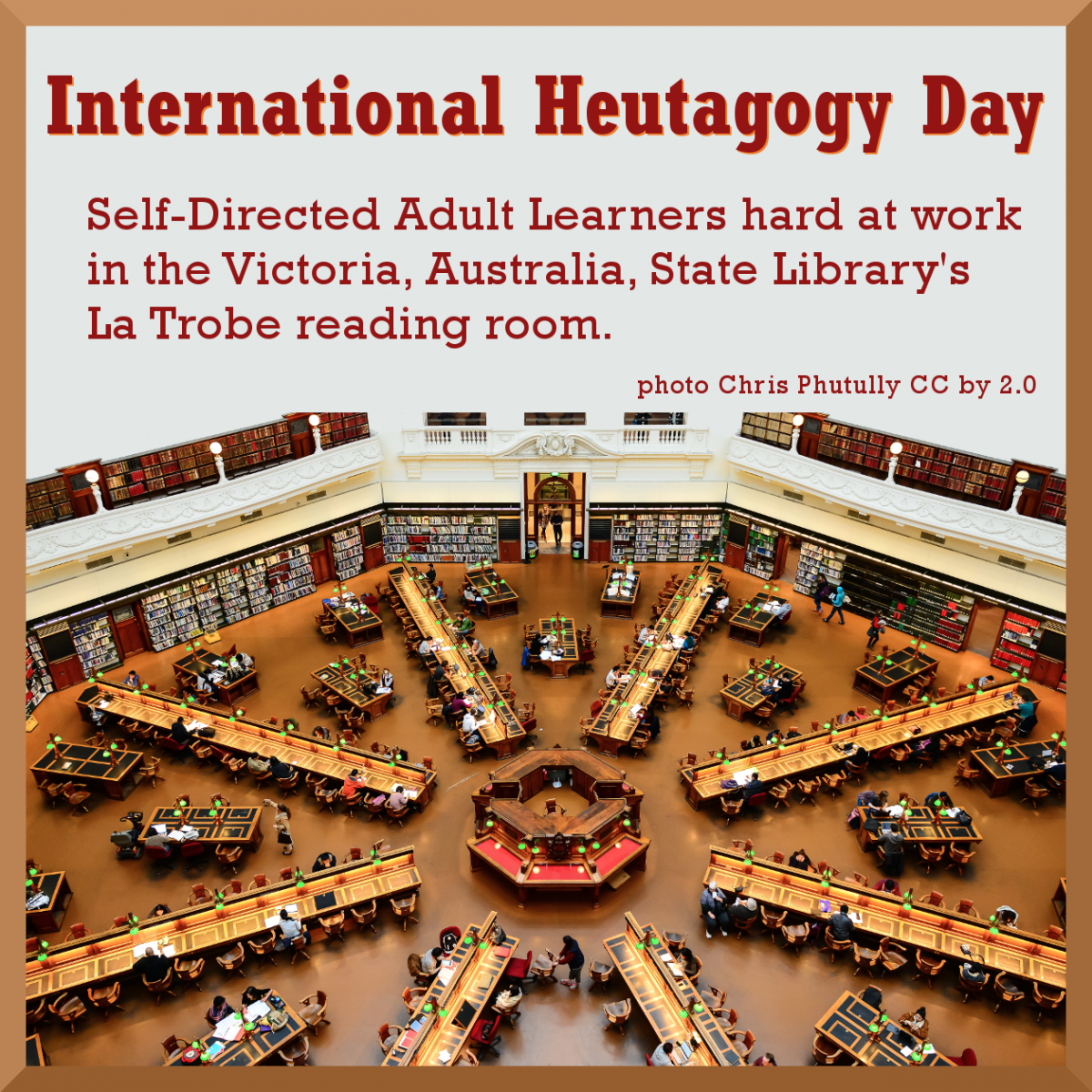


 image from pxhere CC by