I’ve been (slowly) working my way through the 23 Things List, a project on digital literacy from the University of Edinburgh. Thing number 4 was Digital Security. While we include Web Security in a lot of our digital literacy prorams, I’m not a huge WebSec person. It’s not something that I think about or worry about to the extent that ….. does.
Probably because WebSec hasn’t been a huge concern for me, I was surprised by what I found on Google Maps Timeline.
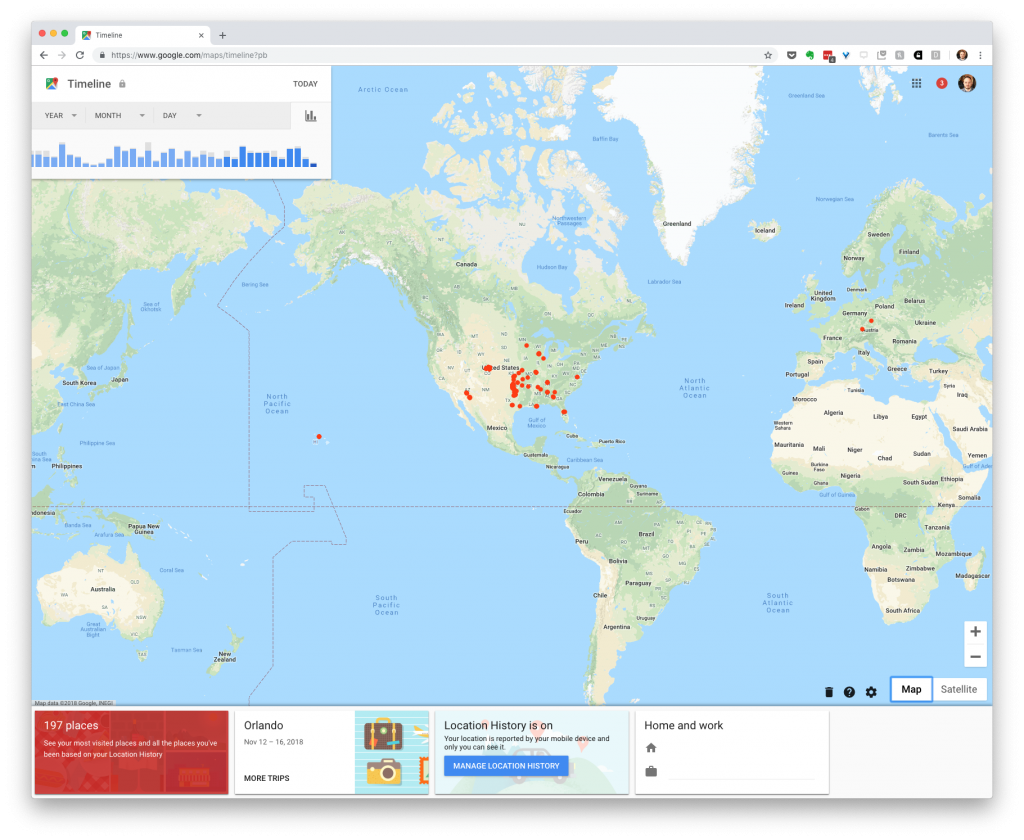
If you go to https://www.google.com/maps/timeline, you will likely find your own movement history for the past several years. As you can see in the picture above, Google knows my home and work addresses (I’ve removed them from the screenshot), the cities that I’ve been to, and even the modes of transportation I took to get there.
I can go through the data and find out how many times I’ve been to my favorite coffee shops over the past week or year. Google has data on my location dating back to 2009, which is probably when I got my first phone that tracked geolocations. The data is a bit patchy for the early years, but pretty thorough since about 2015.
My colleague Keegan Long-Wheeler has been doing some work on reconstructing his memories from the past few years. He had a brain tumor removed earlier this year, so he has been going back through the softwares that track him to retrace his steps and reflect on his activities.
If we want to be very generous to Google, we can suppose for a moment that this is how they intended such data to be used. I enjoyed spending about 15 minutes looking back through my data and remembering some of the trips from the past couple of years. Google also uses this data to send us notifications about how long it’s going to take to get to work in the morning and what the traffic is like around us. They put our maps through algorithms to understand our daily routines, and build that information into their phones, watches, and assistants.
However, I think we all realize that the reason Google collects this information is so that they can use it for marketing. Google is an ad company and a data company. They want to micro-target us with ads, and they want to sell our data to companies that will be most interested in us. Knowing literally everywhere that I’ve been over the past 10 years is valuable for their business model.
If you haven’t done it yet, go to https://www.google.com/maps/timeline and look at your data. Play around with it for a few minutes. Reminisce about those trips and your favorite spots around town.
Now look at the little black trashcan at the bottom of the screen, and seriously think about deleting all that location data. If you didn’t know about this service until today, and if you don’t care about those notifications you get to your phone, you won’t be missing anything and Google won’t be able to sell all of your location data any more. If you love your Google notifications, and you’ve got a Google Home listening to your every move at home, then maybe leave it on. Either way, control of your data should be up to you. You can find more about your data security in the Thing 4 walkthrough or check out this Medium post by Nick Rosener on Personal Cybersecurity.


