Competency-Based Medical Education – The Basics

Introduction

Like all fields, healthcare is engaging with the characteristics and consequences of our digital society. Data with varying degrees of contextualization pours in from diverse sources.  Knowledge changes fast. Problems are complex.  In this new age, healthcare professionals (like everyone else) must not only be technical experts, but also team workers, lifelong learners, creative thinkers, and great communicators.

Additionally, medical education is engaging with the same wicked problems and reform movements as the rest of higher and professional education. Competency gaps have been documented at every transition from undergraduate (UME) to graduate (GME) to postgraduate environments.  Like others, medical school faculty and program directors experience overwork, conflicting priorities, and a lack of faculty development and support around teaching and learning. A stubborn hidden curriculum chips away at the intentional approaches and lessons of the classroom.  Buzzwords like accountability; evidence-based practice; inclusivity; and active, social, and applied learning design approaches are just as dominant in the healthcare literature as they are elsewhere in educational research.

In the “Beyond-Flexner” era, the trend in medical education is to move towards competency-based education as a way to enhance program and student accountability, flexibility, and performance.

The purpose of this blog post series (and I promise – it will be a series) is to provide a little background for individuals who need an introduction to competency-based medical education (CBME).  It will review basic vocabulary: What are competencies?  Milestones? Domains? It will try to make sense of the relationships between and best uses of competency domains and EPAs while comparing these new frameworks to more traditional instructional and assessment frameworks found in medical education.  It will describe how some institutions have chosen to implement CBME and how it might manifest itself at different levels of study (e.g. pre-clerkship UME versus GME).

A blog post is a blog post. It is not a reviewed (peer, if you believe that in that sort of thing, or otherwise) article. This particular blog post introduces the basics as well as one of the best-documented examples of CBME available in the form of Vanderbilt University School of Medicine’s UME pre-clerkship curriculum.  The blog post is not meant to be comprehensive.  Rather, it represents me thinking through the articles I’ve been reading for the last week in an effort to put together a cohesive account.  It is a preliminary effort and should be considered as such.

Initiatives to Know

Highlights:

ACGME Core Competencies (US). A set of competencies (e.g. professionalism, interpersonal communication, medical knowledge) developed for graduate medical education.  Specialty-specific milestones that support the competenices have been created in colloboration with the American Board of Medical Specialities (ABMS).  Now the competencies and their milestones are being used in U.S. graduate medical education and ABMS-mandated Maintence of Certification (MOC) efforts.

Core Entrustable Professional Activities (US). Guidelines published by the Association of Medical Colleges (AAMC) for undergraduate medical education.  Currently, they are being piloted by ten medicals schools across the US. The thirteen EPAs (observable, workplace-based activities that all medical students should be able to perform successfully and with consistency when they matriculate into any residency training program) are meant to interface with the AGME’s core competencies and milestones.

CanMeds (Canada). A role-based (e.g. communicator, professional, scholar) competency framework developed by the Royal College of Physicians and Surgeons of Canada for residency training and specialty practice.  As of 2015, the Royal College is moving towards the development of milestones to support the use of CanMeds at the postgraduate continuing education level.

ACGME Core Competencies

In an effort to address the competency gap between GME requirements and the changing needs of the workforce, the Accreditation Council for Graduate Medical Education (ACGME) partnered with the American Board of Medical Specialities (ABME) in 1999 to create the six domains of clinical competency. These domains included:

  • Patient Care
  • Medical Knowledge
  • Interpersonal and Communication Skills
  • Practice-Based Learning and Improvement
  • Professionalism
  • Systems-Based Care

Over the next ten years, GME programs worked closely with the relevant ABMS-certifying boards to specialty-specific develop milestones (defined in more detail later).  The milestones provide definition around the core competencies, attributing specialty-specific activities to each competency.  These milestones assist in developing curriculum, resident assessment tools, and residency training program evaluation strategies Nasca et al., 2012).

AAMC Core Entrustable Professional Activities

In 2014, the Association of American Medical Colleges (AAMC; the accrediting arm of AAMC, in collaboration with the Amercian Medical Association, is the Liasion Committee on Medical Education – LMCE) followed in the footsteps of GME and created 13 Entrustable Professional Activities (EPAs) which will serve as a framework for assessing the readiness of medical students for graduate medical training.  They are defined as the point when a learner has demonstrated an activity at the level that they no longer require direct supervision.  They differ from traditional competencies because they address performance within distinct workplace expectations that demand trustworthiness as well as expertise (Englander et al., 2016).

As of Spring 2015, the EPAs include:

  • Gathering a history and performing a physical examination;
  • Prioritizing a differential diagnosis following a clinical encounter;
  • Recommending and interpreting common diagnostic and screening tests;
  • Entering and discussing orders and prescriptions;
  • Documenting a clinical encounter in the patient record;
  • Providing an oral presentation of a clinical encounter;
  • Forming clinical questions and retrieving evidence to advance patient care;
  • Giving or receiving a patient handover to transition care responsibility;
  • Collaborating as  a member of an interprofessional team;
  • Recognizing a patient requiring urgent or emergent care, and initiating evaluation and management;
  • Obtaining informed consent for tests and/or procedures;
  • Identifying system failures and contributing to a culture of safety and improvement; and
  • Performing general procedures of a physician (e.g. IV line insertion, phlebotomy, BVM ventilation, CPR).

The AAMC launched the Core EPA initiative: a feasibility pilot study of ten schools that aims to explore curriculum development, assessment, the path to entrustment, faculty development and ongoing development of the EPAs.

Learning Objectives: A primer

Best source for learning more: 

Thomas, P. A., Kern D.E., Hughes, M.T., & Chen, B.Y (Eds.). (2015). Curriculum development for medical education: A six-step approach (3rd ed). Baltimore, MD: Johns Hopkins University Press

There are certain terms everyone should know before entering into a conversation about competency-based education.  These conversations typically start with a discussion of learning goals and objectives. Although goals and objectives can be defined in different ways, they are typically distinguished from each other by their level of specificity.  Goals or outcomes speak to broad educational outcomes while objectives relate to specific measurable actions or concepts.

According to Thomas et al. (2016), objectives can be divided into learner, process and outcome objectives:

  • Learner Objectives.  These objectives address knowledge, attitudes, and skills at the individual student level.  More specifically
    • Knowledge (aka Cognitive) Objectives relate to a spectrum of mental skills relevant to curricular goals ranging from factual knowledge to problem-solving, and clinical decision making.
    • Affective Objectives involve attitudes, values, beliefs, biases, emotions or role expectations that can impact performance.
    • Skill (aka Psychomotor)  Objectives relate to specific actions involving hand or body movements, vision, hearing, speech, or the sense of touche.  Medical interviewing, interpersonal communication, examination, and procedural skills fall into this domain (Thomas et al. (2016), p. 55-6).
  • Process Objectives. These objectives address achievement at the program level and are often expressed as aggregations of learner objectives.
  • Outcome Objectives.  Thomas et al. (2016) points out that ‘outcome’ is not used consistently in the literature or in the world.  Sometimes these relate to patient care while at other times they relate to learner objectives.  The authors recognize that it is unreasonable to suggest that undergraduate medical schools should be held accountable for patient outcomes as their interactions are indirect or their care peripheral and/or secondary.  However, they suggest that some health outcome objectives should be included to emphasize the big picture and potentially influence curricular design choices.

CBME: The Overview

Best source for learning more: 

Carraccio, C., Wolfsthal, S.D., Englader, R., Ferentz, K., Martin, C. (2002). Shifting paradigms: From Flexner to competencies. Academic Medicine. 77(5):361-367.

Competencies are “learner outcomes which are observable behaviors that result from the integration of knowledge, attitudes, and psychomotor skills” (Thomas et al. 2016, p. 58).  These competencies are often grouped into domains.  CBME emphasizes learner objectives for the purpose of ensuring learners are progressing from novice to expert with a framework of essential competencies (Harris et al., 2010).

Some key points worth remembering:

  • CBME focuses on learner objectives. It does not specify particular learning strategies or formats (Harris et al., 2010).
  • CBME establishes a trajectory rather than a baseline for minimal competence (Pettepher, Lomis, and Osheroff, 2017).
  • CMBE requires a commitment to formative assessment, self-regulation, and personalized learning.
  • CBME can provide seamless transitions across educational levels if it is designed with each other in mind  (Harris et al., 2010).

Carraccio et al (2002) published a useful table for distinguishing between traditional and competency-based education – the following table is directly from Carraccio:

Educational program
Variable Structure- and process-based  Competency-based
Driving force for curriculum Content—knowledge acquisition Outcome—knowledge acquisition
Driving force for process Teacher Learner
Path of learning Hierarchical (teacher → student) Non-hierarchical (teacher ↔ student)
Responsibility for content Teacher Student and teacher
Goal of educational encounter Knowledge acquisition Knowledge application
Typical assessment tool Single subjective measure Multiple objective measures (“evaluation portfolio”)
Assessment tool Proxy Authentic (mimics real tasks of profession)
Setting for evaluation Removed (gestalt) “In the trenches” (direct observation)
Evaluation Norm-referenced Criterion-referenced
Timing of assessment Emphasis on summative Emphasis on formative
Program completion Fixed time Variable time

Assessment: Milestones and trajectories

Best source for learning more: 

Swing, S.R., Beeson, M.S., Carraccio, C., Coburn, M., Iobst, W., Selden, N.R., Stern, R.J., & Vydareny, K. (2013). Educational milestone development in the first seven specialties to enter the next accreditation system. Journal of Graduate Medical Education. 5(1) 98-106.

Assessment in CBME is formative, personalized, and based in the language of milestones and trajectories. Milestones describe the typical developmental pathway for a given competency.  They are best used to describe competencies that develop and must be demonstrated over time under increasingly complex clinical circumstances (Thomas et al (2016).

Milestones are defined by the following criteria:

  • Criterion-referenced. They offer a common set of benchmarks that are applicable across courses.  Milestones are standardized across a program to help students identify their personal learning trends and provide stronger evidence to support change, remediation, or growth (Lomis et al., 2017).
  • Performance-driven. Milestones are driven by performance rather than time. There may be a window of time in which – given equal opportunity and practice – most students will achieve expertise (similar to developmental milestones for children), but achievement is not dictated by time alone (Nasca et al., 2012).
  • Escalating behavioral anchors. The trajectory towards expertise is described in terms of incremental improvements in performance. The milestones described in much of the CBME literature is based on the Dreyfus Model of Learning Progression  (Novice, Advanced Beginner, Competence, Proficiency, Expertise) or Miller’s Pyramid of Clinical Skills (Knows, Knows How, Shows How, Does).
  • Indicates current status AND what behaviors are required to progress. (Schumacher et al, 2013 and Swing et al., 2013).   Swing et al. (2013) offers an annotated example of a milestone graphic designed to support the assessment of a student for a sub-competency.

Example: Vanderbilt University School of Medicine

Sometimes it’s easiest to explain something through an example.  Several years ago Vanderbilt redesigned its UME curriculum and assessment to support the development of four of the six ACGME competencies.  It is also a pilot school for the AAMC Core EPA Initiative (more to come on this in later blog posts).

This section draws from the articles that Vanderbilt has published since 2010 about their curriculum and assessment reform and the lessons they learned along the way.

Why did they do it?

Best source for learning more:

Miller, B.M., Moore, D.E., Stead, W.W., & Balswer, J.R. (2010). Beyond Flexner: A new model for continuous learning in the health professions.  Academic Medicine. 85(2): 266-272.

In 2008, Vanderbilt University School of Medicine proposed the following principles for a new model of health workforce development:

  • Learning is competency-based and embedded in the workplace.
  • All workers learn; all learners work.
  • Learning is undertaken by individuals, teams, and institutions and is linked to patient needs.
  • Learning activities are modular; the system allows multiple entry and exit points.
  • Learning is interprofessional, with shared facilities, common schedules, and shared foundational coursework.
  • A rich information technology infrastructure supports the healthcare/learning system.
  • Health outcomes and educational outcomes are directly linked (Miller et al., 2010).

As part of this larger initiative, the school decided to transition away from a traditional curriculum and assessment profile (one based primarily on medical knowledge and content-only exams) to one that was directly connected to four of the six ACGME competency domains.  They focused on the pre-clerkship years (Medical School Year 1 & 2) because they felt that the lecture-driven nature the curriculum was not allowing students to benefit as they might from the collective clinical and professional experience of the faculty.

Who actually did the work?

An interdisciplinary leadership team spearheaded the Foundations of Medical Knowledge (FMK; Years 1&2) redesign, a process which included significant research, piloting, interprofessional collaboration, and faculty training.  The team included an anatomist (PhD), biochemist (PhD), pathology (MD-PhD), and pediatric neurogenetics (MD; Pettepher et al. 2016).

What did they do?

Best source for learning more: 

Vanderbilt University School of Medicine Office of Undergraduate Medical Education. (2018). Competencies for Leaners Across the Continuum. Retrieved from: medschool.vanderbilt.edu/ume/competencies-learners-across-continuum

The leadership team worked with faculty to diversify the curriculum to include active learning (described in detail below) and small group activities which would allow for more faculty-student interaction.

They also created a new approach to assessment that was based on the four competency domains and definitions as follows: (Miller et al., 2010 and Pettepher et al. 2016):

  • Medical knowledge. Demonstrate deep knowledge of the sciences essential for one’s chosen field of practice.  Approach to learning: collect, analyze, interpret and prioritize new information to enhance one’s knowledge in the various disciplines related to medicine.
  • Practice-based learning and improvement.  Compare data about current performance at the individual, team, and/or systems level with expected outcomes, and identify and implement the learning strategies needed to improve performance. They emphasized critical reflection and self-assessment here (through group and personalized learning plans).
  • Systems-based practice. Because students are early in their training, they framed the systems-based practice domain around each student’s role in the learning (rather than care delivery) system. They emphasized interpersonal communication and teamwork skills here.  Discuss the elements of effective team building and utilize appropriate techniques to create, participate in and lead effective teams.
  • Professionalism. Demonstrate a commitment to the duties and obligations of the medical profession, its healthcare institutions and its individual practitioners to patients, communities and society. Demonstrate honesty and transparency in all dealings with patients, learners, and colleagues. Demonstrate compassion and respect for all persons regardless of differences in values, beliefs, and experiences.

For detailed sub-competencies, see the Vanderbilt webpage on competency-based education.

How…did they design and evaluate milestones?

Best source for learning more: 

Lomis, K.D., Russell, R.G., Davidson, M.A., Fleming A.E., Pettepher, C.C., & Cutrer, W.B. (2017). Competency milestones for medical students: Design, implementation, and analysis at one medical school.  Medical Teacher. 39(5), 494-504.

As outlined in Pettepher et al. (2016), the leadership team created milestones for the four ACGME competencies.

They started by using the following sources of information to define core behaviors that should be continually re-assessed throughout a student’s training: 

  • Faculty judgment of importance
  • Priorities represented in existing assessments
  • Consideration of areas in which students historically struggle
  • Areas amenable to measurement starting in the first year.

After applying a Modified Delphi technique to their findings, the leadership team established work groups to work on writing milestones for each competency domain.  They based their work on the modified Delphi results as well as grading forms from multiple UME courses, GME milestones, and GME entry-level expectations.

Next, they piloted their milestones for construct alignment and validated their construct through:

  • Expert review
  • Interrater reliability (including between student and assessor)
  • Qualitative evidence of feasibility
  • User satisfaction

Continuous quality improvement cycles are being implemented (Lomis et al., 2017).

How…did they design their curriculum?

Best source for learning more:

Pettepher, C.C., Lomis, K.D., & Osheroff, N. (2016). From Theory to Practice: Utilizing competency-based milestones to assess professional growth and development in the foundational science blocks of a pre-clerkship medical school curriculum. Medical Science Educator. 26(3). 491-497.

Vanderbilt redesigned their pre-clerkship curriculum to provide ample opportunities to practice and demonstrate competency-related behaviors. First, they rearranged coursework to create a highly integrated block schedule curriculum:

  • Introduction to the profession (1 week)
  • Foundational interdisciplinary science blocks 

    • Human Blueprint and Architecture (6 weeks)

    • Microbes and Immunity (6 weeks)

    • Homeostasis (12 weeks)

    • Endocrine, Digestion, and Reproduction (12 weeks)

    • Brain, Behavior, and Movement (12 weeks)

  • Concurrent longitudinal blocks
    • Physical Diagnosis
    • Foundations of Healthcare Delivery
    • Learning Communities and Research
      • All students are assigned a clinic-based learning community consisting of providers and postgraduate trainees who oversee the care of a population of patients and serve as teachers, advisors, and mentors  (for more information specific to learning communities, see Miller et al., 2010 and Fleming et al., 2013).

Examples of integration across the interdisciplinary science and longitudinal blocks:

  • The genetics content of Human Blueprint and Architecture took place at the same time as an ethics section in the Learning Communities
  • Chest examinations and heart sounds in Physical Diagnosis coordinated with the cardiovascular unit of Homeostasis
  • Pediatric and adult neurological examinations in Physical Diagnosis coordinated with the Brain, Behavior, and Movement block (Pettepher et al., 2016).

Then the school introduced case, team, and experiential learning activities throughout the year.  In fact, they built courses around a similar weekly template of learning activities in order to implement consistent assessment events across the FMK phase.

Case-based learning sessions were student-run, problem-based learning sessions. Groups were crafted intentionally so that they included students from diverse academic backgrounds.  Groups re-formed every twelve weeks to help students practice transitioning in and out of new teams (Pettepher et al. 2016).

Team-based learning sessions were differentiated from case-based learning sessions, but the details were not evident from available publications (for the general differences between case-based and team-based learning see Koles et al., 2005).

Experiential learning was promoted through dissection teamwork (integrated into all basic science blocks) and patient-focused activities.  As described by Miller et al. (2010):

“Whereas most medical schools now include clinical experiences in the preclinical years, this model eliminates the “preclinical” and “clinical” distinction by giving students real responsibility for clinic operations and patient care from the start of their professional education  and by making the learning-working team the focus of their educational experience.” (p. 4)

How…did they design their assessments?

Best source for learning more:

Pettepher, C.C., Lomis, K.D., & Osheroff, N. (2016). From Theory to Practice: Utilizing competency-based milestones to assess professional growth and development in the foundational science blocks of a pre-clerkship medical school curriculum. Medical Science Educator. 26(3). 491-497.

The leadership team sought to design competency-based assessments that facilitated the collection of many low-stake data points for every student.  These touchpoints included self-, peer, and faculty feedback collected through standardized rubrics with qualitative milestone assessments.

Digital milestone forms included six observable behavioral anchors for each competency and described escalating levels of performance from unacceptable to aspirational. Over the course of the phase, minimally acceptable levels of performance were raised to parallel the maturation of the students. Identical milestone descriptors were utilized across the entire four-year curriculum and shift as the student level and experience progresses (Pettepher et al. 2016 includes real examples).

Self-, peer-, and faculty feedback were sought at scheduled intervals.  This included initial self-assessment exercises, standardized rubric assessments, and qualitative “global” questions:

  •  What is at least one valuable contribution this person has made to your team?
  • What is at least one important thing this person could have done to more effectively contribute to your team?

Assessment of the medical knowledge competency domain includes weekly low-stakes assessments consisting of multiple choice questions (autograded by the learning management system) and brief online essays (graded by the case-based learning facilitators).  End-of-block examinations consist of NBME shelf exam questions (autograded on the NBME website) and online essays/short answer questions (graded by block faculty).

All blocks are graded on a pass/fail basis.  Competency domains are weighted equally. Students achieving target scores in all domains pass, while those who receive a threshold score in one competency generally pass, but must set additional learning goals for the weak domain.  Learning goals were established and assessed with the student’s portfolio coach (described below).  

Students with received one sub-threshold score in any domain or multiple threshold scores across domains are handled on a case-by-case basis. Sub-threshold scores in the medical knowledge domain resulted in students passing a remediation exam (at minimum).  Deficiencies in the other domains were remediated through ongoing targeted coaching and monitoring of peer and faculty milestone assessments (Pettepher et al. 2016).

How…did they personalize learning and assessment (beyond remediation)?

Best sources for learning more:

Vanderbilt University School of Medicine Office of Undergraduate Medical Education. (2018). Personalized Learning.  Retrieved from: medschool.vanderbilt.edu/ume/personalized-learning

Spickard, A., Ahmed, T., Lomis, K., Johnson, K. & Miller, B. (2016). Changing medical school IT to support medical education transformation. Teaching and Learning in Medicine 28(1), 80-87.

As described above, the leadership team was interested in providing students with a multitude of low-stakes data points across standardized milestones so that they could follow their trajectory over time and make adjustments as necessary.  These data points are collected at the individual student level in longitudinal e-portfolios. The data collected in these portfolios are reviewed regularly by students and their personal learning coaches who work together to create and monitor a personalized learning plan.  An illustration of the portfolio-user interface can be found in Lomis et al., 2017.

Portfolios are linked to other digital platforms for streamlined data integration and visualization.   This includes the student clinic digital platform, which allows for seamless integration of patient-care skills assessment.


There is more to come on personalized learning, and medical school IT in future blog posts (coming soon). Also additional examples of how different institutions are implementing CBME.

Featured Image by jesse orrico on Unsplash

Why Domain

As part of his work in introducing Domain of One’s Own at Ontario Extend, Alan Levine posted the questions that I answer below. I haven’t been blogging enough recently, so I thought this was a good chance to document some of my own DoOO thoughts and kickstart my writing.

What is your domain name and what is the story, meaning behind your choice of that as a name?

My domain name is https://johnastewart.org. From front to back, the difference between https and http is a security certificate. Our partners at Reclaim Hosting make it dead easy to get an SSL certificate, and I think all of the internet search engines are going to increasingly favor sites with security certificates over the next few years.

My domain name itself is just my name. John Stewart is an incredibly common name, so I threw in my middle initial for some small degree of disambiguation.

I chose .org rather than .com because of their historical significance. Originally, .com meant that you were visiting a commercial website, and .org signified a non-profit organizational site. I work for a university, and when I set up my site, I was an adjunct lecturer, which is about as non-profit as it gets. I still advocate open pedagogy, OER, open note-taking, open coding, and a general distrust of capitalism, so I think it fits.

What was your understanding, experience with domains before you got one? Where were you publishing online before having one of your own?

I had been trying to set up a couple of .php based websites for a few years before I started this domain. Early in my grad career, I tried to start an online, open journal for publishing work by graduate students studying the History of Science. At the time, my university only offered 5MB of webspace and only supported HTML in that space. Eventually, I registered both that journal and a separate Digital Humanities project (situatingchemistry.org) with a corporate web host.

In 2013, the University of Oklahoma launched the pilot for OU Create, a Domain of One’s Own initiative. I went to the initial pitch by Jim Groom and Adam Croom, and was user number #13 with this domain.

What was a compelling feature, reason, motivation for you to get and use a domain? When you started what did you think you would put there?

I really wanted to be able to run modern CMS apps, particularly Drupal. Both my Situating Chemistry site and the Open Journal System I built are built on Drupal and require a LAMP environment. With this site, I wanted to start blogging – or thinking out loud as Laura Gogia and others in the DoOO community call(ed) it.

What kinds of sites have you set up one your domain since then? How are you using them? Please share URLs!

I’m currently the project manager for OU Create. We have about 5000 users and 6000 websites, so I feel like all of them are part of my current work on domains. You can see recent posts on our Feed WordPress site, community.oucreate.com/activity and you can get a sense of what type of sites people are using at community.oucreate.com/sites.

I have about 30 sites up and running on my domain. Most are demonstration sites that I use when introducing DoOO to either classes or faculty development groups. My larger projects include the Situating Chemistry site and subdomains like my Wiki faculty development workshop: flc.johnastewart.org. I also have designed sites for faculty projects on the history of education in Oklahoma (docnarr.oucreate.com):

Screen shot of docnarr.oucreate.com

and progettovitaliano.com:

Screen Shot 2017-12-04 of progettovitaliano.com

What helped you or would have helped you more when you started using your domain? What do you still struggle with?

I really like sites like cog.dog. I think these simple sites built in HTML are faster and more elegant than most WordPress based sites. If I had to do it over again, I’d build my main site using an HTML5up.net landing page with lots of other projects in subdomains.

What kind of future plans to you have for your domain?

I think I will probably do what I said above. I think I can move the blog feed into a subdirectory (johnastewart.org/blog), leave all the posts where they are, and create a space for a nice landing site.

For OU Create more broadly, we are playing with what DoOO v2 looks like. We are trying to figure out how to help people get into the apps they want to use more quickly, how to support non-SQL based systems (MongoDB, node.js, etc), and how to keep costs as low as possible.

What would you say to other educators about the value, reason why to have a domain of your own? What will it take them to get going with their own domain?

My usual pitch centers on the superabundance of information available to us now. When I start a research project or try to figure out some new system, I search the  internet. There’s a cornucopia of resources, so I generally find a ton of great information, and I quickly start working through my project. If you’re not on the internet, if you don’t have a website, there’s a roughly 0% chance I will come across your work. It doesn’t matter if you’ve written 5 books and 20 great articles, if you and they are not online, I’m not going out of my way to find them. But if I come across one of your articles, and I can look you up and find your other work, I will do a deep dive into everything you’ve ever said. Your discoverability as a teacher is also vital to attracting grad students who want to know what you’re researching.

My Digital and Medical Education Mash-up

It’s been almost a year since I joined the iDesign team as a learning architect and nine months since I was promoted to senior learning architect.  For much of that, I have worked with Mayo Clinic School of Medicine on the creation of a flipped classroom experience for first- and second-year medical students.  We designed templates, iconography, workflows, material tracking systems, organizational and file naming structures, transition policies and procedures, and change management strategies even as we designed courses at a remarkable pace. It’s been an intensely creative experience and I am so grateful to Mayo and iDesign for giving me the opportunity to learn from and contribute to this project.

Our task was to design a new digital component for the pre-clerkship (undergraduate medical education Y1 and Y2) learning experience.

Learning to be a doctor is hard. An unprecedented amount of content must be committed to memory with a fluency that is not interchangeable with being information literacy.  Don’t get me wrong – the information literacy is important for lifelong learning, problem-solving,  communication, and collaboration.  The best physicians are digital thinkers, but their capacity for connected learning is situated in a larger context characterized by the ability to manage massive amounts of data in their own heads. 

The face-to-face learning experience at Mayo Clinic already includes the best teaching and learning practices of our times: case-based and team-based learning, interactive whole group sessions, simulations, early clinical and patient interaction, integrated curriculum.   It is a lively, rigorous, multifaceted, active learning program with a lot of moving pieces as well as a lot of course content.  However, from my viewpoint as an educated observer, I think it might be easy for students (and maybe some faculty) to get caught in the busy weeds and lose sight of the big picture.

Our vision for the digital learning space was to provide a deceptively simple map that organizes course logistics, materials, activities, assessments, and resources through motifs that repeat themselves across all courses. If successful, the map would work to strip away cognitive clutter and convey information so clearly that pedagogical meaning and relationships reveal themselves without additional words.

My medical background facilitated an intuitive understanding of how the learning activities fit together (and to what end). However, I leaned heavily on information sciences to inspire design. I read cartography texts.  I studied maps and infographics as influencers and storytellers. I referenced Edward Tufte almost every day.  I placed it all in the pedagogical context of Vannevar Bush, George Siemens and my previous experience with designing connected courses.

As I transition away from the Mayo Clinic Project, I am thinking about writing an article about what it means to design a course site as a map. If anyone thinks that might be of interest, please let me know.


Featured Image by rawpixel on Unsplash


Can Democrats learn from President Macron’s example?

French President Macron snubs Donald Trump at the new NATO headquarters.


At the 2017 ceremony to open the new NATO headquarters in Brussels, Belgium, French President Macron demonstrated how to communicate with a bully. I added the Belgian national anthem, performed by the US Navy band, for atmosphere. And a fake news ending.

If the video player isn’t working for you, you can watch President Macron handle Trump on YouTube.


Further Education Adventures of an Adult Student Spring 2018

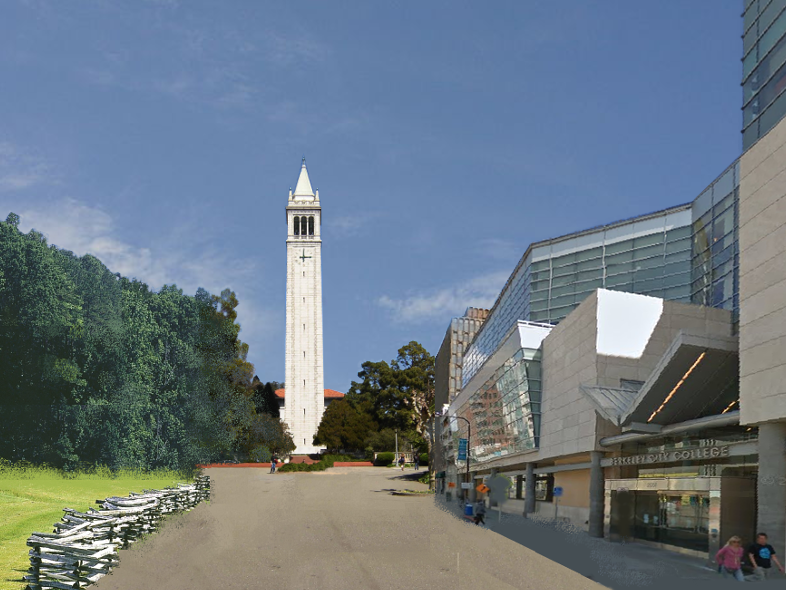
A mashup I made from a google map image of Berkeley City College, a picture of the Campanile at UC Berkeley and an inviting meadow leading into a thicket.

Above – Stay on the Path
A mashup I made from a google map image of Berkeley City College, a picture of the Campanile at UC Berkeley and an inviting meadow leading into a thicket of distractions.

One year ago (April 2017), having struggled with the culture of incompetence across the Peralta Community College District (PCCD) during my years of service as a student representative, I emailed my counselor and asked what was needed to complete my two Associate’s degrees. She replied; “I am on spring break and will check when I return on Monday.” The following week she checked with the Admission and Records Office (A&R) and reminded me of the classes I needed to complete my education plan. Life intervened again (but in a good way this time) and I didn’t finish my final class until Fall semester. As soon as grades are posted I emailed my counselor my completed education plan and pointed out my sociology degree was completed with “highest honors.” A month later she replied; “Sorry for the late response as I was out of the country. Please complete the petition for AA degree…” and added a link to the forms. Being able to access the forms online. Just a few years ago, I would have had to go to the counseling office and stand in line to pick up the forms and then stand in line again to turn them in. I filled out the forms and emailed them back to her.

After not hearing anything for 6 weeks, at the end of February I emailed my counselor to ask if there was anything left to be done. She replied; “I have submitted your petition to the Admission and Records Office. I think we are waiting for the substitution approval for Psych 1A from Rio Hondo. You will receive a status of your petition in April and invitation for the graduation ceremony in May.” This referred to a class I took a 1973, on a transcript they had received more than five years ago. Last week (April 9th) I received three letters fromPCCD, one stating I still need “Substitution/waiver for Psych 1A to meet the requirement” for my Sociology degree. I emailed my counselor and asked “how long can this possibly take?” She replied; “I am in a meeting and will check if substitution for psych 1A is approved when I return to the campus this afternoon. Will get back to you then. By the way, I will be on vacation for the next 2 weeks. If there is any question, please see a counselor or go to admission office.” Groan That afternoon she checked with A&R and my substitution was approved, I’m going to receive my degrees. Also, according to the letters I received, my diplomas will be available sometime in August. I also received a follow-up email:

Dear 2018 Berkeley City College Graduates!!!
On Behalf of the Berkeley City College Graduation Committee, Congratulations on your recent accomplishment!
…
A black gown & cap with a tassel is required for all graduates. The cap and gown will be available for purchase at our campus bookstore located on the 5th floor after May 1, 2018. The regalia purchase price is $35 + tax, which includes the cap, gown, tassel and courtesy 5-pack of announcements. At the commencement ceremony graduates will also receive a BCC diploma cover and BCC zipper pull. The regalia set that you purchase is yours to keep. It is not a rental. (my emphasis) Since there are no dressing rooms at Zellerbach, you are encouraged to arrive in your cap and gown. Note: The bookstore only accepts cash, credit and debit cards for payment.
Honor Students: If you are an academic honor student, your honor cord will be included in your cap & gown set. Please refer to the section of this letter regarding “honors at graduation” to see if you are eligible to receive the honor cord (Honors pertains only to Associate Degree candidates). Your name will be on an honors list at the bookstore.

After my experiences in the PCCD (Berkeley City College is one of the four Community Colleges that make up the PCCD), I have no interest in participating in the graduation ceremony. I would like my “honor card” and tassle but doubt I’ll go to the “GradFest” (is everything branded?) and pay another $35 + tax. From the posting of my final grades to receiving an official document of my accomplishment – eight months. Good thing I don’t need my diploma to get a job; and this is the new and improved Peralta Community College District! The email thread with my counselor showed it was exactly one year to the day from my inquiry about graduating to receiving notice that my forty-five year old transcript was accepted. Happy Friday the 13th to me!

Last month, based on my experiences in the Peralta Community College District, I called my Distance Education (DE) advisor at my new school Metropolitan State University (Metro State), inquiring about registering for summer classes. I was concerned about an Incomplete grade I have and wondered if I had to clear it before registering. She told me she didn’t think the incomplete would affect my ability to register and I should wait until my registration date and try to register. I followed her advice and the day my registration window opened, I tried to register. I was blocked by a hold for a math assessment placed last fall until my transcripts could be articulated (classes checked to conform to Metro States class descriptions). Soon afterwards I received a “Math Assessment Exemption Granted” based on my C in Trigonometry from 1982. After failing to register I went to my eServices account to check my Degree Audit Report (DAR). I had already pointed out to my advisors how hard it is for a DE student to find their DAR, it was a constant topic on the discussion boards in our orientation class. Five clicks through three menus, but that’s another story. My “Math Assessment Exemption Granted” with a green check mark was still there. I went to the Contact Us page and submitted a request through Student Services; “Can someone review my DARS and remove the assessment hold…?” I got a quick response; “Upon reviewing your account, I do see that you have an assessment hold on your account. It states that the Math Assessment is needed. …If you need someone to review your DARS, please contact your academic advisor…” I replied I do not need a math assessment and sent a screenshot of my DARS, with the green check mark. They replied I needed to contact the Assessment office. I emailed my academic advisor informing him of my predicament. To make a long story short(er), it took ten days of daily emails between my academic advisor and the Assessment office with me trying to register each day to see if the hold was removed. This reminded me of when I had recently gone online and updated my address for my bank account. My checking account and debit card were frozen for ten days, with daily calls to my “Private Banker” until the IT department figured out why. Imagine what regular customers have to endure.

Finally I was able to register at Metro State, but when I went to the payment page I was shocked to see $138 in fees for services I will never use as a DE student. Then I remembered I was sitting on a deck at Stanford University waiting for a meeting when I was cleared to register last fall. I was surprised and happy to find out I could register using my phone. I don’t recall seeing a list of fees. For students in a hurry to complete a degree, that’s $414 a year (with summer session) for services we will never use, including a $48 parking pass! I emailed a screenshot of the fees to my DE and academic advisors, the director of student life and the student ombudsperson and asked why students are charged for services they can never access. The silence was deafening. After 10 days I called my DE advisor and asked if she had seen my email. She replied that she had been at a conference the past week and was just catching up on email. I mentioned that no one else had replied and asked what could be done. “Nothing” she replied, the state trustees had approved the fees and it would take a statewide campaign to get them to remove them. I couldn’t find the number of DE students statewide in Minnesota, but Metro State has $1,500 DE students. That’s over $400,000 for two semesters and over $600,000 for three semesters, each year. Nevermind academic fraud, isn’t this consumer fraud?

A screenshot of the student fees charged at registration at Metro State U.

I’m the first student at Metro State approved to document their learning for college credit on a personal e-portfolio, on my own domain, through prior learning assessment (PLA). I’ve been working with e-portfolios for a few years and have been a member of the Association for Authentic, Experiential and Evidence-Based Learning (AAEEBL) since attending their conference in Boston three years ago. Last year, for the first time, the conference was in a different city, Portland, Oregon, so I attended. I had seen a presentation on e-portfolios for adults in Canadian native cultures at an Association of American Colleges & Universities (AAC&U) conference in San Francisco. I saw the author at the AAEEBL conference and after introducing myself and telling him about my project, he introduced me to the DE advisor for Metro State. That’s how I became a Metro State student, but I digress.

After my first AAEEBL conference I started a dialog with the President, Dr. Trent Batson, about creating an ontology (or controlled vocabulary) for eportfolios. This would help students, faculty and adult learners connect and share resources on the internets (Semantic Web 2.0). He approved of my idea but cautioned AAEEBL was focused on a research project that would lead to e-portfolios being added to Dr. George D. Kuh’s list of “High-Impact Educational Practices” and thus promoted by the AAC&U. Last year the research was published as “High-Impact ePortfolio Practice: A Catalyst for Student, Faculty, and Institutional Learning” by Drs. Bret Eynon and Laura M. Gambino, with a foreword by Dr. George D. Kuh. I’m proud to have read their book as soon as it was published as I participated in Open Learning 2017, an open online collaboratory hub where Dr. Eynon and “High-Impact ePortfolio Practice” were featured. Now that this project was finished, I took the opportunity of being at the AAEEBL conference to present my ontology idea to the Practices & Pedagogies Special Interest Group (P&P SIG). It was favorably received, with several AAEEBL officers voicing their approval. As fall became winter, not much was happening in the P&P SIG. I continued to ask the SIG leaders about moving forward and finally created a model ontology for the groups consideration. I received zero constructive feedback. Then the call for conference proposals went out. I contacted the P&P SIG leaders inquiring if they had plans for a proposal. They suggested I submit one. I submitted three: one for my ontology idea, one to promote a student self-assessment rubric developed by two Professors at California State University, Sacramento, who can’t attend the conference, and one about my portfolio for Metro State. As an opportunity to learn about conference presentations, I made each a proposal for a different presentation format. When I got my responses, each was an almost identical form letter stating there were too many submissions in my preferred format, and then suggesting I resubmit my proposals for another presentation format. None of the letters referred to a specific proposal. I think I could decipher which is which, and modify them accordingly, but I wanted to be certain. I emailed my contact at AAEEBL but she said the President had sent the letters and would have to be the one to respond. I reminded my contact that the deadline was approaching but she responded that she was leaving her role at AAEEBL. The due date for the revised proposals has come and gone and I have yet to hear anything more. I have other influential AAEEBL members to reach out to, but my enthusiasm for doing all the work alone by myself has waned.

I won’t even start to include the ICT (information and communication technologies) issues I’ve experienced during this time. Why aren’t ISPs (internet service providers) regulated as public monopolies? Distance education still holds tremendous promise, especially for adult learners, but it sure can be alienating for students.
What does it digital spring break look like anyway?

Might as Well Get Weird With It

This past weekend saw Toronto host, for the second year in a row, the 2018 Creative Commons Global Summit.

I attended last year as a participant but this year I wanted to do a little more by submitting a proposal to run a session about The Open Patchbooks. Rumour has it that my proposal arrived to CC as the very first submission. Fact has it that my session was accepted (YAY!) and slotted in as the very last presentation. Sunday evening at 5 p.m. (LOL!)

I’d been having fun throughout the weekend claiming that, technically, I am one of the headliners of the event. Like Beyonce at Coachella.

On the other hand I realized that in reality most people would be on their way home when my session occurred. Not to mention that the weather outside was utter nonsense.

Anyway, I figured I might as well get a little weird with it. I very much appreciate the eight of you who did attend. You are my heroes. You’re weird too, though.

The 31 embedded tweets below should explain things

image credit: “Warning Strange Dog” flickr photo by bixentro https://flickr.com/photos/bixentro/319724127 shared under a Creative Commons (BY) license

The Professional Ethos

Australian_Capital_Territory_Legislative_Assembly_and_the_statue_Ethos

By Bidgee – Own work, CC BY-SA 2.5 au, https://commons.wikimedia.org/w/index.php?curid=12857136

Although Open Learning ’18 has come and gone, the questions and issues linger in my mind. I continue to think about faculty development, and more widely, professional development. I wonder about the routine and damaging separation of skills and content, teaching and research, computers and pedagogy. During the thirteen years I worked in faculty development, as I worked with colleagues to foster deeper and more intellectually stimulating varieties of professional development, I saw organizational and cultural barriers of all kinds; and while I did my best to identify, address, and overcome those barriers, I feel that I failed more often than I succeeded.

Lately I’ve been thinking about how to frame professional development as an ethical project–which of course leads me to think about the ethos of the contemporary university, which is not a happy thinking spot. Still, it’s interesting to think not about programs or outcomes or assessment or any of those useful but secondary things, but about ethos, and ethics. I understand that trying to identify one ethos in the contemporary multiversity is probably a fool’s errand. I wonder, though, if we can talk about ethical higher education without asking about the ethos of the university.

In this regard, I find Jerry Z. Muller’s definition of “the professional ethos” very interesting.

The professional ethos is based on mastery of a body of specialized knowledge acquired through an extended process of education and training; autonomy and control over work; an identification with one’s professional group and a sense of responsibility toward colleagues; a high valuation of intrinsic rewards; and a commitment to the interests of clients above considerations of costs….  (The Tyranny of Metrics)

Mastery. Processes that take time. Self-regulation. Responsibility. Intrinsic rewards. Commitment to the interests of clients (not mere “customers”). It’s hard to think of what professionalism might mean without these commitments. It’s hard to watch such commitments being eroded, or forgotten, or forsaken.

When I hear vapid and damaging talk about how the university is a “business” (as if there’s only one kind of business in the world, the kind focused on making as much money as possible) or about how we need to “give the students what they want, not what we think they need,” I hear a refusal of this idea of the professional ethos.

When smart and perceptive experts feel they must problematize the idea of expertise as what I can only assume is a sincere but misguided egalitarian gesture, I hear a refusal of the idea of the professional ethos. As should be clear by now, putting the word expert in scare quotes can result in a truly frightening and harmful rejection of knowledge itself. To see any part of this rejection in higher education is to see a process of self-consumption that cannot end well.

I wonder if the assumptions underlying much (not all) professional development in contemporary higher education reflect a similar erosion of the professional ethos. Expertise is not simply a quantity or something to be certified. Expertise is a practice emerging from, and reflecting, an ethos. A professional ethos.

Food for thought.

Thoughts on Open Faculty Development

In catching up on the materials from Open Learning 18 in the past few weeks, I find myself thinking about the claim in the week 7 syllabus that “open faculty development in higher education offers a vital, unique, and uniquely effective opportunity for shared learning in the digital age.” I wanted to reflect on my own learning outcomes from this experience because I think I will draw on them for future faculty development opportunities I’ll create as an instructional designer.

I never realized how many rich conversations take place on Twitter and how valuable they can be for my own learning. I’m not really sure I had a strong opinion of Twitter. I knew it had been a powerful (if not contested) tool for social activism and I had even taught a few sessions on social media activism in my “environmental activism” course, but I didn’t really know what it was all about since I had never participated in this space myself. Once I joined Twitter a few months ago in part for Open Learning 18, I realized that there are actually really deep, rich and thoughtful conversations going on in this space. Also I never knew about Twitter Chats, but learned it was a really great way to be connected with others around a topic in a really short amount of time.

I’m still learning how to manage the flow of information from the web and there was a whole ton of information flowing from Open Learning 18. I excelled at managing information while writing my dissertation almost 2 years ago, but those skills have waned as the nature of my work changed (part-time teaching/stay at home mom-ing). Now that I find myself back in front of a computer for most days at work, I need those skills to stay focused. During one of the Twitter chats, I opened a bunch of new browser tabs with articles people had linked to. I forget what I searched for to discover the Tab Snooze browser extension, but I now use it to save browser tabs for when I’m ready to read. I’ve been using this tool regularly since that Twitter chat, as well as regularly opening lots of new tabs from what I see on Twitter. Now that  Twitter has become another portal for information in addition to Feedly, list-servs, etc. I’ve realized the need for personal information management, which perhaps is part of information literacy?

I also used Hypothes.is for the first time as part of this course. It was a really great way to feel connected to other people reading the same article. It made the articles come alive in a way that I had never really imagined, as if I could see the people reading the same articles that I do. Plus I can now read comments that people leave on any site that I visit. Actually using this tool (just like Twitter) was eye-opening.I can definitely see how this could be used for collaborative annotation in courses that faculty teach, or perhaps in faculty development contexts.

Along those lines, one of the best things I’ve taken away from Open Learning 18 is seeing how the web and digital media tools can be a platform for shared learning. In the past, I’ve only ever experienced the platform of learning management systems (Blackboard, Moodle, Google Classroom) so it was exciting to participate in a more open and fluid space for learning that creatively made use of all these other digital tools like Twitter, Hypothes.is, a mother blog, etc. Those other learning management systems now seem so static and rigid compared to this open learning hub. Experientially learning as a participant in these spaces has really helped me envision ways to tap into these powerful tools to created shared learning platforms for all sorts of contexts.

Thanks for all the inspiration Open Learning 18!


Faculty Development in the Open

What does it mean to do faculty development in the open? How is it different than typical faculty development experiences?

For me, faculty development in the open allows me to connect with learners I might not otherwise encounter. My professional development tends to focus on library conferences where I get to talk and network with other librarians and learn about things that are relevant to my day to day work. Faculty development in the open allows me to encounter colleagues from other areas of higher education that I might not otherwise have a chance to meet. We explore issues that are relevant in higher education on a broader scale than any of our respective “day jobs.” I have conversations with economists, literature scholars, education experts, historians, instructional designers, educational technologists and others. We can find connections that cross disciplines, areas of expertise, regions, and even continents. Language barriers are minimized and connections are formed over shared excitement about the possibilities of working in the open. Perhaps even collaborations emerge. I may never meet some of these colleagues face to face, but I feel a kinship having traveled on a journey with my co-learners.

OpenLearning17 and 18 have been rich experiences for me and I look forward to future iterations! I hope you will join us!

The network is the deliverable