Let’s give them something to talk about…

Okay, so that wasn’t so bad! Actually, it was great. Annotation is basically what I do normally in pdf form on journal articles for my research – so it came naturally. Plus, I like to think and talk so I may have found my outlet. I apologize (because I am Canadian and it is the polite thing to do!) ahead of time. I just write down my thoughts and ideas- and, I promise, you all will get used to my lengthy babbling ideas. The strange part was knowing that it was no longer private. It did involve some self-policing of how and what I chose to say but I attempted to keep it as open and vulnerable as possible – this is me and what I think and people are going to disagree (in which I can gain understanding) or agree (in which I can gain understanding). So, I see participating as transparently as possible as a benefit to developing a better me (and who doesn’t like that???).

Another interesting part of this exercise which peaked my interest was the possibilities of annotations. I come from a Canadian university that back in the early 2000s made the seminar system the only mode of learning for upper-level undergraduate and graduate students to shift away from traditional lecture forms. Seminars gathered in groups of usually 10-15 learners in which the students (me!) were responsible for reading and discussing our way through the material together. The leader of the seminar was only known as a facilitator and gave us guidance from time to time but otherwise, was silent and observant. Eventually, we also facilitated the seminars as well. Annotations remind me of this process but in a new environment. Actually, the entire cMOOC experience reminds me of this so far. Its constructing and building a network of knowledge based on personal understanding and meanings – I find it really cool (plus, I can sit in my pjs with mug of coffee while I learn! Shhh, don’t tell anyone!)
Open Learning

I was reading Stephen Downes’ RSS feed (oldaily) when I came across another cMOOC. His last one was so good I cannot pass up the opportunity to try another one. (Even though I have contributed to many, starting with CCK08).

Now that I am on “spring break” with graduation tomorrow and the party on St. Pat’s, I will have time to devote to this curious idea that has become a lot more relevant lately. Namely, Open Pedagogy. Looking forward to it.

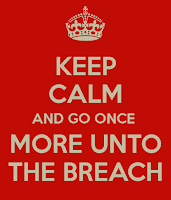
#OpenLearning2019…once more unto the breach

…of yet another connectivist #MOOC that is

… and my first post for  Open Learning 2019 because I have to post to have a feed to complete sign-up. This procedure guarantees that I will have written at least one blog post for Open Learning 2019, which puts me ahead of Open Learning 2017, although at least I came away from it with a Hypothesis account and another MOOC feed in my reader.

I’ve participated in MOOCs since 2010, including the occasional x-version.  The past few years, participation has not matched intentions, and I’ve been on an extended blogging hiatus as well. When I missed most of Open Learning 2017, I told myself next year but missed that too.

So here I am following #openlearning19 tweets, reading blog posts and collecting links. And if it helps kick starts a return to blogging? Lagniappe.

All sorted and situated for OpenLearning ’19

The third iteration of Open Learning begins next week (March 17) with a focus on Open Access and Open Educational Resources. Week Two (March 24-30) emphasizes Open Pedagogy. Week Three launches Open Learning ’19 into the future with a discussion of Open Professional Development, including the idea of openly networked faculty development that was the initial emphasis for Virginia’s participation in the AAC&U’s Faculty Collaborative project, phase II, led and inspired by Dr. Susan Albertine.

This week, then, is the warm-up week, the orientation week, the week in which new folks have a chance to get themselves sorted and situated: sorted as in “what sorts of things should I be ready to do?” and situated as in situated cognition.

First, getting sorted. Here are the primary ways in which you can co-create (i.e., learn from) this experience.

Blogging. Yes, it can be the hardest, for all sorts of reasons. But I put it first because it’s the sort of participation that can yield the greatest benefits. When you blog, you’re present to your fellow learners (and yourself!) with a depth and breadth that can’t really be achieved with shorter and less essayistic forms of participation. Remember that the word “essay” originally means “an attempt.” An essay is not a term paper. Again, with feeling: an essay is not a term paper. It’s an attempt. And yes, I forget that too, all the time. 🙂

So please consider blogging. And if you decide to blog, please syndicate your blog into the hub site here: http://openlearninghub.net/the-stream/

Tweeting. Yes, Twitter is fraught in all sorts of ways. But for now, at least, it’s also a place where you can share, link, and connect quickly and effectively. Gather ’round our hashtag the way you’d gather around a warm and welcoming campfire: #openlearning19. Be hospitable. Expect hospitality in return. If you’re new to Twitter, you’ll likely be surprised by how quickly your network grows and becomes an indispensable part of your personal and professional development. I’ve been on Twitter since 2007, and while I’m repulsed and overwhelmed and bewildered by much of what lives in the fetid parts of our global lightspeed telecommunications network, in the last few weeks I’ve also been very strongly reminded that extraordinary things are not only possible in that network but more likely than they would be otherwise.

Hypothesis. Here’s where we gather around a text and read it together, making our annotations and weaving them into conversations. So, set up an hypothes.is account, look at the quick-start guide, and maybe practice a little. Shared online annotation, in an atmosphere of hospitality and a commitment to good faith, can reveal more glorious layers of both commonality and diversity within community.

Open Learning ’19, like the two iterations preceding it, generates resources worth consulting long after the event is over. There are interviews and panel discussions archived on YouTube. There are Twitter chats, annotated documents, blog posts, lush forests of learning full of associative trails. But the resources exist because of the networks from which they emerged, and for Open Learning, the network is the deliverable. That’s the situated part, as in situated cognition. For Open Learning to be meaningful, you must situate yourself within the network. That’s the easiest part and the hardest part, too.

Welcome! We look forward to learning with you, and from you.

Open Learning 2019

I am getting ready for Open Learning 2019. I am interested in this because in cMOOCs, I have met some fantastic people which led to some great projects. I also want to keep up on the world of open and OER, but I am particularly interested in open pedagogy and practices. I am posting this to make sure my blog is connected to Open Ed Hub and also at 58, it is handy to have the relevant links and info all in one spot 🙂

From Open Learning Hub: “Open Learning ’19, a cMOOC about open learning now in its third iteration will begin on March 17th and run for three weeks. Week 1 will be preceded by a “pre-cMOOC” week for anyone who is new to connected learning.” 

And then this notice was posted by Sue Erickson on her blog:

Open Learning ’19, a cMOOC about open learning now in its third iteration will begin on March 17th and run for three weeks. Week 1 will be preceded by a “pre-cMOOC” week for anyone who is new to connected learning, new to MOOCs (and especially to cMOOCs) or new to open learning concepts. Starting on March 10th, all are welcome to join in for the pre-cMOOC week led by Gardner Campbell, Open Learning’s original hub director.

The schedule for Open Learning ’19:

3/17-3/23 Week 1: Open Educational Resources and Open Access

3/24-3/30 Week 2: Open Pedagogy

3/31-4/6 Week 3: Open Faculty Development

These are topics that we’ve explored in previous iterations of Open Learning, and you will find a wealth of resources already on the Hub site: http://openlearninghub.net/.

To begin, start tuning in to the hashtag on Twitter: #OpenLearning19 and syndicate your blog to the Hub (don’t have a blog, this is a great chance to start one!) and use #OpenLearning19 for relevant posts. See instructions in the “Join Up!” link.

I look forward to learning with you!

Your humble Hub Director for Open Learning ’19,

Sue Erickson

The network is the deliverable