Week 3: Information Literacy

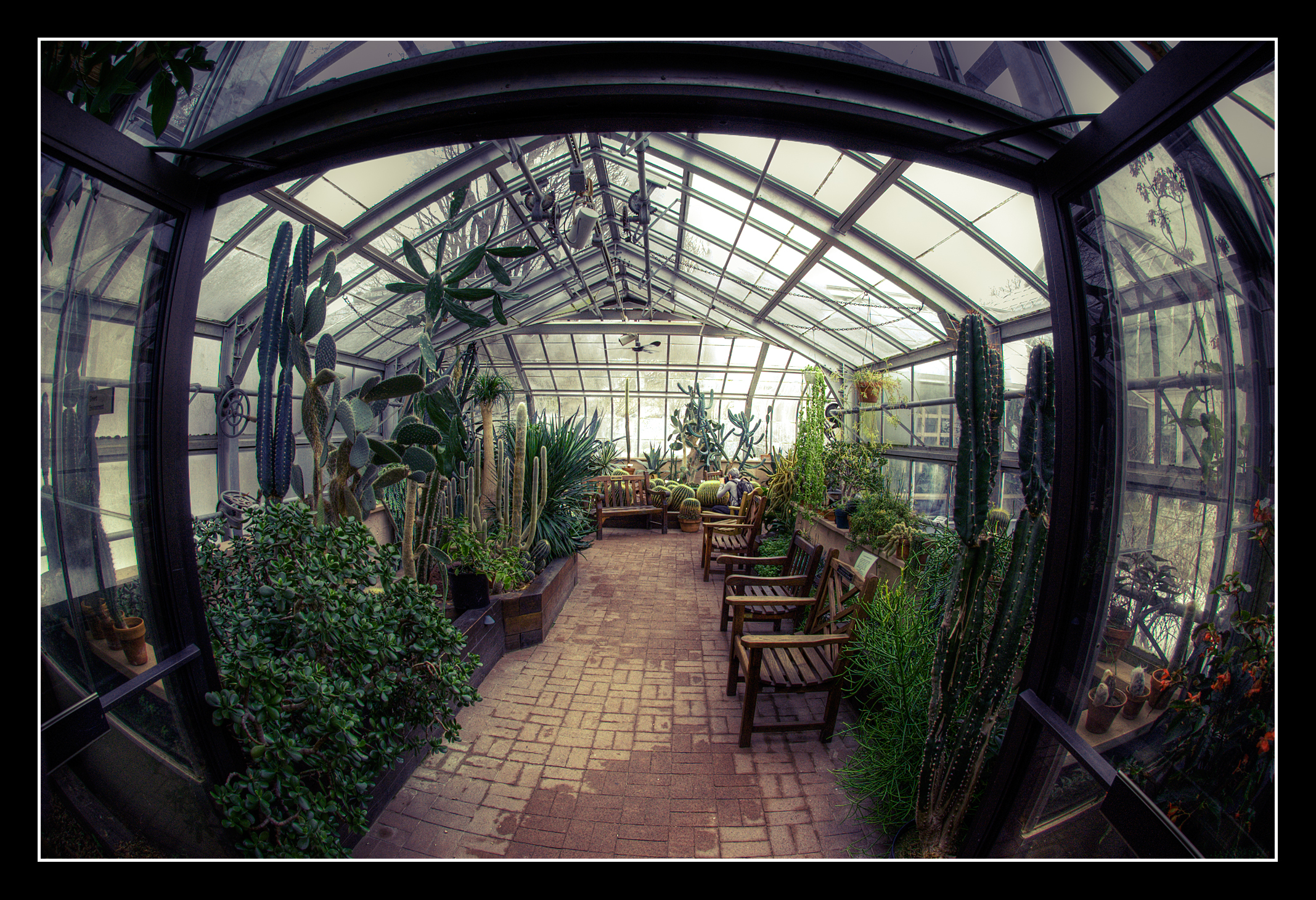
Framework for an indoor garden.
Information literacy requires frameworks to support an ecology of nodes and connections. Photo by Timothy Vogel. CC license BY-NC 2.0

OpenLearning ‘18 – Information Literacy Week (Feb. 25-March 3)

This week focuses on information literacy and its relevance for open education. We will be immersed in the ACRL Framework for Information Literacy for Higher Education and will approach it from a number of angles. A number of experts will join the conversation throughout the week.

Sunday, February 25

Core reading: ACRL Information Literacy Framework

Monday, February 26

Activity: Annotate the Framework in Hypothes.is

Event: Twitter chat at noon to discuss how IL fits into Open Learning

Tuesday, February 27

Event: 3-4pm Google Hangout with Trudi Jacobson and Craig Gibson, who co-chaired the original Framework task force.

Wednesday, February 28

Read: Zoe Fisher. “Facing the frames: Using the Framework as a guide for a credit-bearing information literacy course.” C&RL News, v. 78, no. 7, pp. 354-358.

ACRL Framework as OER.

OR

Read: Thomas P. Mackey and Trudi E. Jacobson, “Reframing Information Literacy as a Metaliteracy.” College & Research Libraries, v. 72 no. 1, 2011, pp. 62-78.

Thursday, March 1

Read: John E. Russell and Merinda Kaye Hensley. “Beyond buttonology: Digital humanities, digital pedagogy, and the ACRL Framework.” C&RL News, v. 78, no. 11, pp. 588-591.

Friday, March 2

Event: 2-3pm Google Hangout with Jenny Dale and others – the ACRL Framework Roadshow.

Activity: Blog about any of this week’s readings or activities. What are your takeaways from this week? How will you take your learning from this week into your work going forward?


Post by Sue Erickson, associate hub director
Edited by Gardner Campbell, hub director

The Internet and Higher Education

This week in #openlearning18 we are pondering the question: What is the most important thing that learners should know about the internet and the World Wide Web.  I thing the most important thing to keep in mind is that they are simply tools.   However, as with any tool, there can be many ways to use them, both fun and wonderful as well as scary and dangerous.  With that said, I am (cautiously) optimistic about the future of the internet and the Web knowing that people will invent new ways to use these tools that are unimaginable today.

What leads me to be cautious is how quickly I have seen the internet and the web change our lives.  We need to slow down a little and think about how we, both individually and collectively, want to use these tools.  We have created this amazing sort of “4th place” that blends personal, educational and professional worlds and yet sometimes, it just does not quite feel like reality–as in curated posts on social media and avatars in gaming. Will we loose true conversation to 120 characters and personal interaction to liking and following? Will there be any separation between who we are as individuals and our work world?  Or will it all blur in this new 4th place? I do not have the answers, nor am I saying this is all essentially bad.  As a private person, I sometimes find this new digital shift personally invasive, other times I find it incredibly useful and educational.

As for the higher education arena, students in college today are digital natives and they have never known a world without the internet or the web. The digital world is interwoven into their existence and higher education needs to meet them in their own environment.  However, higher education can play a role in making students slow down and think about how they use these tools by setting the example and guiding them in positive ways. As a librarian in higher education, one example would be to show students how to break down Google search results to recognize advertisements and bias.  As a teaching librarian, I always try to incorporate some sort of hands-on, digital activity since this is a familiar environment to students.  I look forward to see how this new generation chooses to incorporate these tools in the new digital age.


Visual Arguments and Explanations

Today I had the pleasure of presenting on visual arguments and explanations for Jon Becker‘s class, EDLP 717: Communicating Research Findings (aka Telling Stories with Data). For their final project, Jon has tasked his students with producing a “high-quality modern report” from real data on employee followership for a hypothetical client.  While Jon has spent the last weeks walking them through data analysis and statistics, he thought I might have something to say about information design and reporting.

I have a lot to say about information design, mostly driven from attending Edward Tufte’s day-long lecture on presenting data.  To prepare for this presentation, I reread Tufte’s books and included a lot of images directly from his books (or, more frequently, from his blog in which he uses his own book images to expand the conversation).  However, I also introduced the versatility and ubiquitousness of visual explanation through Berinato’s matrix of “data visualizations that really work” and incorporated other online resources such as the Data Visualisation Catalogue and Ann K Emery, so it wasn’t all Tufte, all the time.

This presentation came at the right time for me, personally.  The work that I do involves a lot of information design, although I did not recognize it as such until my recent deep dive into Tufte’s work.  I rely on his principles (forced visual comparisons, focus on causation, annotations, direct labeling, smallest effective difference, etc.) every day in how I communicate with the rest of my design team.  Since I’ve completed my deep-dive, I find that I am using these principles more strategically and consistently and sharing that intentionality with my teammates…which in turn has improved their information design and communication.

So thank you, Jon and EDLP 717, for giving me several hours of your time.  Once again, I learned as much as I taught.

Here are some slides.

Click to view slideshow.


Featured image by Carlos Muza on Unsplash

Mark Corbett Wilson 2018-02-23 22:20:35

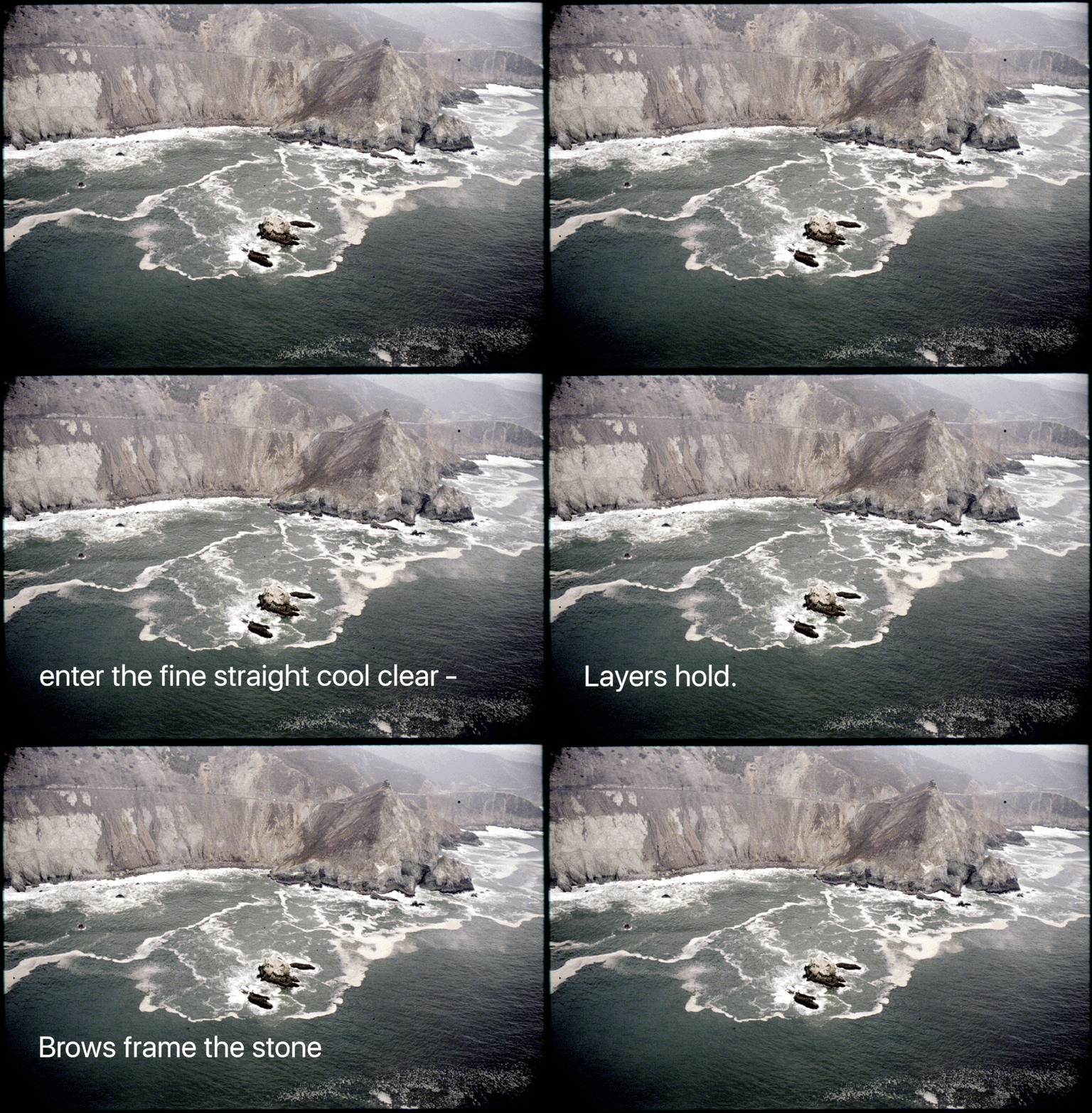
1979 archive photograph of Devil's Slide on former California Hwy 1 used as a background for a gif made with text from Nick Montfort’s dynamic poem generator

I used a 1979 archive photograph of Devil’s Slide on the former California Hwy 1 as a background for a gif made with text from Nick Montfort’s dynamic poem generator to complete today’s Daily Create for Digital Alchemy in the Open Education course Networked Narratives at Kean University in New Jersey.

#dda165 Visualize Taroko Gorge

This Daily DA published February 21st, 2018 is organized under For the Eyes (visual), Incantations

Open Nick Montfort’s dynamic, generative poem….

Let it flow by…

Relax your mind.

Now try to isolate a stanza or two. Try to copy it or save it in a screenshot. Next, connect to a photo (preferably your own). What imagery comes to mind? What gorge do you see?

What comes to mind when you let Taroko Gorge flow by? It need not be so literal as this small Arizona Gorge…

Tweet your response to @netnarr and be sure to include the hashtag #dda165

Week 2: Tim Berners-Lee article

This article gave me a lot to think about as I filtered it through a professional and personal lens.

  1.   Privacy:  Digital objects and digital content can live a very long time.  This is something that gets easily overlooked by all demographics when using the web.  I almost always think about what I share, who can see what I share, and what do the web service platforms do with my shared information.  Some schools, like UMW, are teaching students to be more aware of their digital profiles.
  2.   Copyright and openness:  While reading more about copyright law this week, it suddenly occurred to me that much of the outstanding work of the later half of the 20th century will probably not fall into the public domain during my lifetime.  What a barrier for education, and what a great reason to advocate for “open” things on campus.
  3.   Information literacy/information evaluation:  In light of current politics, I am surprised by how many people (of all demographics) can be deceived by false information on the web.  The web really has changed our information seeking and information consuming behavior (mostly for the good).  There is definitely an opportunity for higher education to help in this area.

Just a few of the things in my brain at the end of Week 2.  Have good weekend.

Nothing permanent except change

Let no one take for granted that the Internet and the World Wide Web will always be or that they will always be the same.  The bigger the phenomenon the more immoveable, immutable, it seems, particularly if it has existed for your whole life.  Enormous entities engender a feeling of permanence.

But Naughton’s article and so much that has happened since remind us that nothing about the Internet is guaranteed.  What learners need to know is this: the Internet, the most powerful tool for your education needs your tending.

What a wild idea, that something so big might need protection, might need your own personal action.  And what a stretch to believe that my actions could matter to a thing so big.  Few None of my formal educational experiences promoted the idea that I had agency.  Read this, memorize that, regurgitate the other.  Sit still.  Be quiet.

Higher education must find a way to empower learners.  To show them that it’s worth taking action; that their actions will matter.  That it is possible that you could learn enough about something to propose a valid solution, or argue effectively for a certain course of action.  That things are doable and need doing.

This post is a response to the writing prompt for Week 2 of #OpenLearning18.

We Go Down East

The University of Alberta Ski Team put on a fundraising party in the fall of 2002-ish. Being of the “drinking team with a skiing problem” mentality, they had themselves a fun slogan to print on the tickets.

We Go Down Fast

The only reason I still remember this is because the ticket printers made a little mistake and printed something else.

We Go Down East

Why did they think “we go down east” was a ticket-worthy slogan? They must have thought the fundraising was for a ski race in Quebec or something. Who’s to say? All I know is, as far as misprinted ticket stories go, it’s my all time favorite.

In another story of going “east”, a group of intrepid Ontario post-secondary educators are about to kick off the Ontario Extend East Cohort on March 6th. Together we’ll experiment, curate, and collaborate with technology for teaching and learning. We’ll do it all in the open.

It works a little (maybe a lot) differently than most P.D. events you may have come across. There are four pieces. One of them stays still and the others are on the move. The one piece that stays still are the modules themselves. Six of them: teacher for learning, curator, collaborator, technologist, experimenter, scholar.

The moving parts are where the fun happens.

  • The Activity Bank – A place to add your response to all of the various module activities. You get to see what your peers do with it rather than everyone hiding their work in a dropbox. For example, the “Please Allow Me to Introduce My Field” activity already has a few responses. You also get to add more activities. It’s a bank where any deposit one person makes can be withdrawn by anyone and everyone.
  • The Daily Extend – A place for short and sweet daily activities. Why? Two good reasons are that it allows us to easily connect with each other on a regular basis and gives us all low stakes opportunities to dabble with new tools and ideas. This is the Experimenter module reaching full actualization. And it tries to be fun. Like this one: Taylor Swift Curriculum Design
  • The Domains – This is the flow. Maybe sometimes a trickle, sometimes a babble, sometimes a flood. A central place where all of everyone’s work will appear. You’ll see blog posts that are responses to module activities, posts that are new activities, reflections, calls to action, new ideas and new plans. Hopefully even stories about misprinted fundraiser tickets. See the “East Cohort” central flow here. You’ll see this post there, because I threw my blog into the mix. We’ll show you how to do it.

What I hope and believe the Extend community can be is a slightly informal and loose yet strong and lively connection of faculty members engaged in teaching and learning with technology in the open. If you’ve ever felt lonely in your pursuit of providing great learning experiences to your students, you can say goodbye to that. It’s going to be awesome.

So far there are approximately 60 people from across Ontario signed up to participate. As in the misprinted ticket story, “east” doesn’t really mean much. Everyone is invited. And if March doesn’t work for you. We’re running the “West” cohort in May. We’ve even got a couple of current students lined up to join in and keep us on our toes.

If you want to join in, add your name here: http://bit.ly/ExtendEast

Comment below if you have any questions or comments. See you “down east”!

image credit: “No Fast Skiing” flickr photo by Joe Shlabotnik https://flickr.com/photos/joeshlabotnik/349939582 shared under a Creative Commons (BY) license

Open Learning ’18: Week 1: All The Opens!

So, I was supposed to blog last Friday about how this week’s (last week’s now) materials relate to my own ideas about open education. I think that I struggled with this fairly simple prompt because I’m still not 100% clear what my ideas are. This got me thinking about my role as a librarian and what my goals are when working with students and faculty. The thing that kept coming back to me from Fifty Shades of Open by Pomerantz and Peek was “Open means enabling openness.”

Librarianship is often misunderstood. I typically get two responses when I tell people I’m a librarian: “I’d love a job where I could read all day,” or “Isn’t that what Google’s for?” The second response is the one that I’ll focus on today. Google is an amazing tool for connecting people to information. I use it every day, much like the rest of the world. But, how many people are using it as effectively as it can be used? How many people are able to effectively sift through the results to find the “truth”? How many people don’t have the necessary tools to access Google in the first place?

As a librarian, I think my biggest role is as an enabler of openness. We offer computers, internet, resources, instruction on how to use those resources. We help you figure out what you need to get where you want to go. And so, I guess I’m coming away from reading the above article thinking about how I can be an enabler of openness on my campus. How can I not only advocate for OER, but also enable faculty to integrate them into their courses? What tools are lacking that the library can provide?

Week 2: Internet? Web? Look Again.

Twitter TAGS Explorer for Open Learning '17 and '18. Affordance created by @mhawksey (Martin Hawksey, Open University)
Twitter TAGS Explorer for Open Learning ’17 and ’18. Affordance created by @mhawksey (Martin Hawksey, Open University)

It’s 2018. What could be more familiar than the Internet and the World Wide Web?

This week may yield some surprising answers to those questions–and those answers may help us better understand, and design, architectures of productive participation within our global, light-speed telecommunications environment.

We’ll be reading, annotating, and discussing two key essays this week. In addition to blogging and a Twitter chat, you’ll need to work with hypothes.is, the affordance with which we’ll annotate these essays together, in public, on the web. In short, we’ll be making a web of annotations across documents about the Internet and the Web, and that web of annotations becomes part of the very network it seeks to understand. As we say in the biz, “recursion FTW.”

The hypothes.is website has a great quick-start guide for you. And if you run into difficulties, don’t hesitate to tweet, blog, or even email a call for help. We’re all learning together here.

https://hypothesis.zendesk.com/hc/en-us/articles/230742327-Quick-start-guide

And now, the week ahead:

MONDAY-TUESDAY, February 19-20: Read and annotate John Naughton, “The Internet: everything you ever need to know.”

WEDNESDAY, February 21: Twitter chat, NOON EST, to discuss the Naughton article.

THURSDAY, February 22: Read and annotate “Tim Berners-Lee on the Web at 25: the past, present and future,” (Wired 23 August 2014).

FRIDAY, February 23: Twitter chat, 3 PM EST, to discuss the Berners-Lee article.
Blogging opportunity: What do you think are the most important things learners should know about the Internet and the World Wide Web? How might higher education address that need?

BONUS ROUND:

A conversation featuring two leaders of the Hypothes.is annotation project: Jeremy Dean, Director of Education, and Jon Udell, Director, Integration. We discuss Vannevar Bush’s classic essay “As We May Think,” liberal learning, and Hypothes.is’ goal of empowering a conversation around the world’s knowledge.

You don’t have to read the essay to enjoy the interview, though of course it couldn’t hurt. 🙂


Page by Gardner Campbell, hub director.

The network is the deliverable