Tag Archives: #openlearning18

From Novice to Node and Back Again Through Liminal Space

I have written previously about my journey from novice to node in OpenLearning ’17. Today I had a back to novice moment and ironically it happened just before the speakers I was working with discussed liminal space. There I was in liminal space myself, grappling with new-to-me technology. I tried to take what I already knew into that space and apply, but it just didn’t work. This wasn’t what I knew, it was new and I didn’t understand how to put the puzzle together.

These moments of unknowing engender empathy for our students. I remember what it’s like to feel unsteady. It’s uncomfortable and frustrating. I want to get past it as quickly as possible. I try what I know and my strategies don’t work in this environment that is new to me. I don’t know what else to do. And then help arrives (thanks, Gardner!), a guide by my side, and I know it will be all right. We get through the problem at hand, but I still don’t know what I should do. Tomorrow we’ll replicate the scenario and I hope I will begin to understand what I need to do so that I can go it alone with confidence.

Week 3: Information Literacy

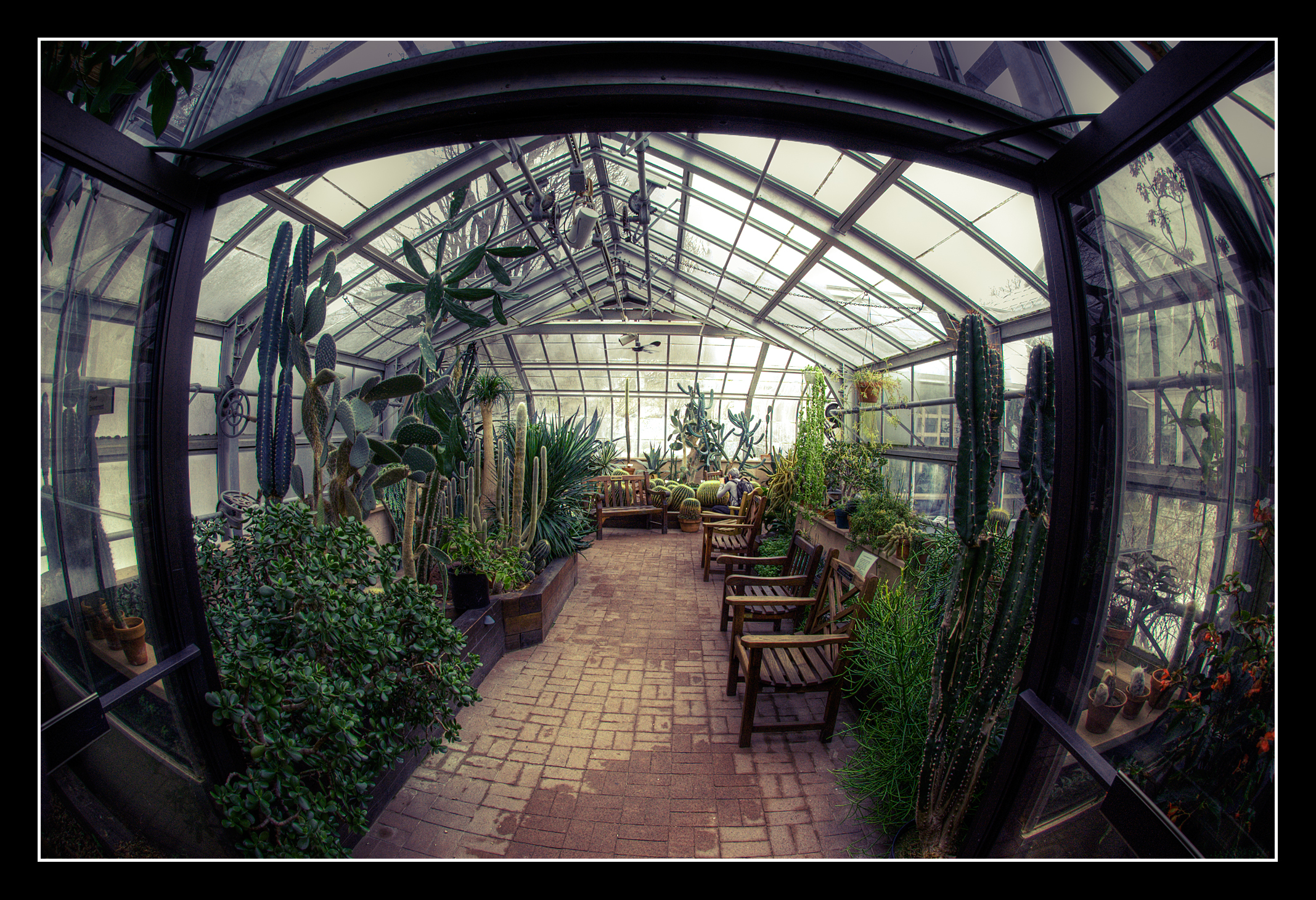
Framework for an indoor garden.
Information literacy requires frameworks to support an ecology of nodes and connections. Photo by Timothy Vogel. CC license BY-NC 2.0

OpenLearning ‘18 – Information Literacy Week (Feb. 25-March 3)

This week focuses on information literacy and its relevance for open education. We will be immersed in the ACRL Framework for Information Literacy for Higher Education and will approach it from a number of angles. A number of experts will join the conversation throughout the week.

Sunday, February 25

Core reading: ACRL Information Literacy Framework

Monday, February 26

Activity: Annotate the Framework in Hypothes.is

Event: Twitter chat at noon to discuss how IL fits into Open Learning

Tuesday, February 27

Event: 3-4pm Google Hangout with Trudi Jacobson and Craig Gibson, who co-chaired the original Framework task force.

Wednesday, February 28

Read: Zoe Fisher. “Facing the frames: Using the Framework as a guide for a credit-bearing information literacy course.” C&RL News, v. 78, no. 7, pp. 354-358.

ACRL Framework as OER.

OR

Read: Thomas P. Mackey and Trudi E. Jacobson, “Reframing Information Literacy as a Metaliteracy.” College & Research Libraries, v. 72 no. 1, 2011, pp. 62-78.

Thursday, March 1

Read: John E. Russell and Merinda Kaye Hensley. “Beyond buttonology: Digital humanities, digital pedagogy, and the ACRL Framework.” C&RL News, v. 78, no. 11, pp. 588-591.

Friday, March 2

Event: 2-3pm Google Hangout with Jenny Dale and others – the ACRL Framework Roadshow.

Activity: Blog about any of this week’s readings or activities. What are your takeaways from this week? How will you take your learning from this week into your work going forward?


Post by Sue Erickson, associate hub director
Edited by Gardner Campbell, hub director

Mark Corbett Wilson 2018-02-23 22:20:35

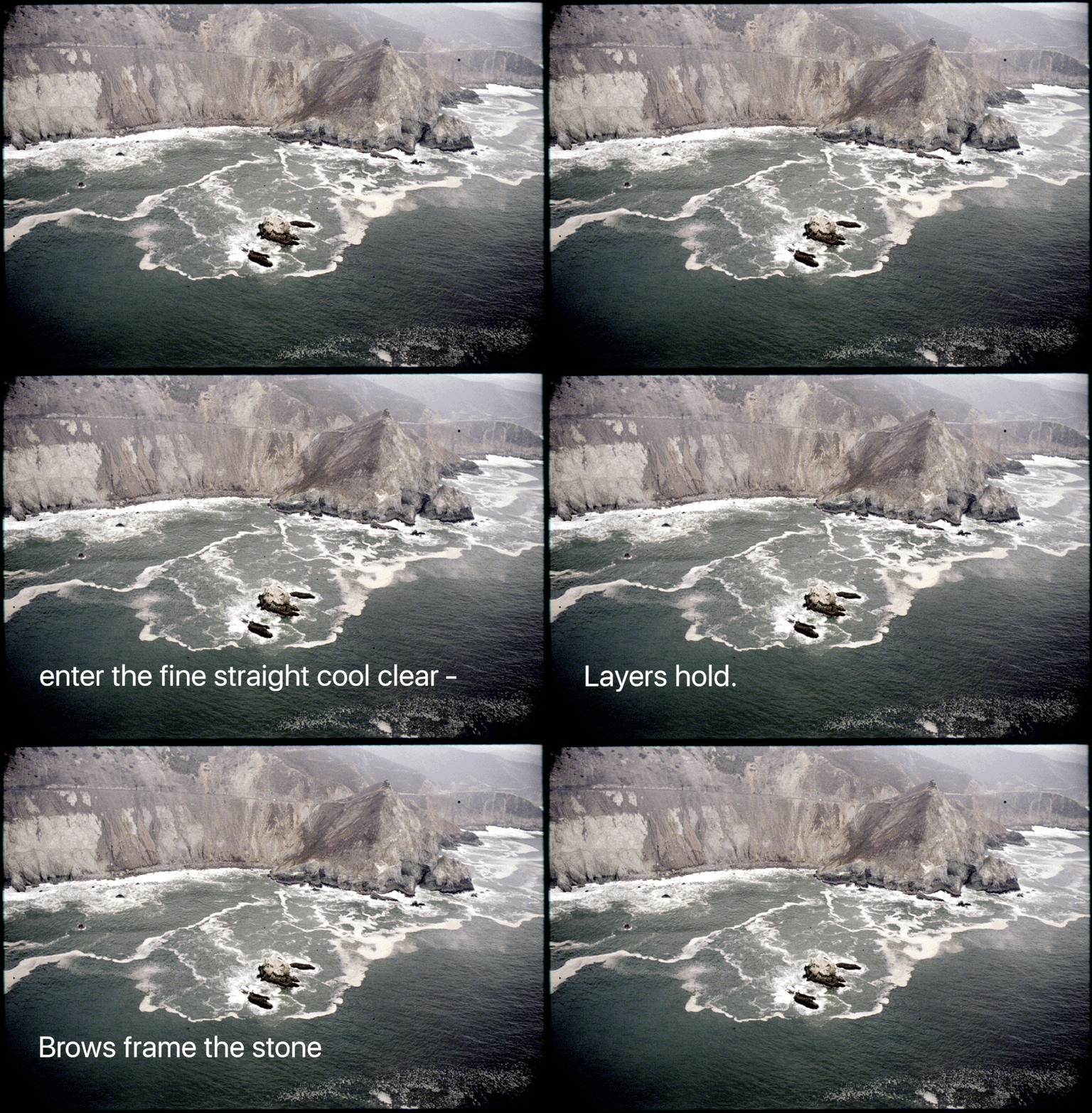
1979 archive photograph of Devil's Slide on former California Hwy 1 used as a background for a gif made with text from Nick Montfort’s dynamic poem generator

I used a 1979 archive photograph of Devil’s Slide on the former California Hwy 1 as a background for a gif made with text from Nick Montfort’s dynamic poem generator to complete today’s Daily Create for Digital Alchemy in the Open Education course Networked Narratives at Kean University in New Jersey.

#dda165 Visualize Taroko Gorge

This Daily DA published February 21st, 2018 is organized under For the Eyes (visual), Incantations

Open Nick Montfort’s dynamic, generative poem….

Let it flow by…

Relax your mind.

Now try to isolate a stanza or two. Try to copy it or save it in a screenshot. Next, connect to a photo (preferably your own). What imagery comes to mind? What gorge do you see?

What comes to mind when you let Taroko Gorge flow by? It need not be so literal as this small Arizona Gorge…

Tweet your response to @netnarr and be sure to include the hashtag #dda165

Nothing permanent except change

Let no one take for granted that the Internet and the World Wide Web will always be or that they will always be the same.  The bigger the phenomenon the more immoveable, immutable, it seems, particularly if it has existed for your whole life.  Enormous entities engender a feeling of permanence.

But Naughton’s article and so much that has happened since remind us that nothing about the Internet is guaranteed.  What learners need to know is this: the Internet, the most powerful tool for your education needs your tending.

What a wild idea, that something so big might need protection, might need your own personal action.  And what a stretch to believe that my actions could matter to a thing so big.  Few None of my formal educational experiences promoted the idea that I had agency.  Read this, memorize that, regurgitate the other.  Sit still.  Be quiet.

Higher education must find a way to empower learners.  To show them that it’s worth taking action; that their actions will matter.  That it is possible that you could learn enough about something to propose a valid solution, or argue effectively for a certain course of action.  That things are doable and need doing.

This post is a response to the writing prompt for Week 2 of #OpenLearning18.

A Conceptual Framework?


I participated in OpenLearning17 and am back for OpenLearning18.  Why you ask?  Because I learned enough last year to articulate better questions this year.  Last year, I went in somewhat blind.  (There might be something we can learn as teachers here
about the experience of our students.) This year, I have a much better sense of what’s in store for me and how to get the most out of it.

To prepare for Week 1, I read the excerpts from Doug Englebart, “Augmenting Human Intellect“.  When I’ve read it before, I found it to be powerful but abstract.  This time around, though, I saw it as a conceptual framework for OpenLearning18.  Which is to say, my experience last year helped me understand what Englebart was saying in 1962.  And what Englebart said, has informed me about what we will be doing starting tomorrow.

Image Credit: Alex Handy from Oakland, Nmibia – Dr. Douglas C. Engelbart Uploaded by Edward

Open for Blogging: Greetings, #openlearning18

There is a certain genre of blog post that is an apologetic acknowledgement of a lengthy lapse in blogging activity, coupled with a hopeful if perhaps uncertain commitment to “do better” going forward. So here you go … “bless me reader, for I have sinned, it’s been about nine months since my last blog post.”

I’m glad #openlearning18 is up and running and nudging me to write here again, in this place that I started for #openlearning17. And I’m doing so from a new place and position, as Director of Academic Technology and the Digital Liberal Arts Collaborative (DLAC) at Grinnell College, a small liberal arts college about an hour east of Des Moines, Iowa. Last year at this time I was at Austin College as a academic technologist, but the funding for the position came to an end last summer. I started the position at Grinnell on September 11, so these last few months have been occupied with transition and new beginnings. Getting the blog started again is one of those new beginnings that I’m excited about, especially as one of my roles at the college is precisely to encourage students and faculty to start up their own blog engines.

What do I hope to gain from #openlearning18? Are you asking about learning outcomes? (just kidding, Gardner). I hope to continue being part of a growing network of learners interested in promoting digital literacies and open practices in higher ed, so (re)connecting with old colleagues and new is a big part of it for me. Getting that nudge back into blogging is an incentive as well. In fact, I’m doubling up on social accountability here, as I’m writing this post at a Friday afternoon collaborative work session with a group of students here at Grinnell who are part of our Vivero Digital Scholarship Fellows program. We have what amounts to a co-working space every Friday afternoon. I think I’m more committed to getting my post written here than I would be by myself in my office.

I’m also hoping to learn more about this “faculty collaborative” model of faculty development to inform our programs at Grinnell. Now that I’m getting a bit more settled in here, we’re starting to think on a longer-term scale about what we want the digital liberal arts to look like at Grinnell. I think that vision will at a minimum involve three components—a framework for articulating desired student digital competencies and literacies (along the lines of the model developed at Bryn Mawr); the development of a digital portfolio practice and culture; and, supporting both of those, a more robust version of Domain of One’s Own. We currently have a web-hosting arrangement with Reclaim Hosting but, oddly, this is generally available only to faculty and not to students.

What do I hope to contribute to #openlearning18? Well, I hope to be a supportive colleague and friend, a good “node in the network,” and an active participant in the group. Maybe I can add some helpful resources and links to the mix and offer some perspective from where I stand. The great thing about these kind of networked opportunities is that you usually can’t predict in advance what you will learn or contribute. So I’m looking forward to unexpected joys and discoveries!

I have to add that is was really fun to meet (most of) the directors of #openlearning recently as they presented at the Educause Learning Initiative conference in New Orleans. Their session got me all excited again for what #openlearning17 was and what #openlearning18 will be. As Gardner Campbell said there,

So in that spirit, I’m glad to once again be a part of this network. Let’s deliver!